European powers and organizations warn of economic collapse as the war against Iran approaches a month away.
Posted on March 26, 2026
Fears of economic tension are growing across Europe as the US-Israel war against Iran approaches a month away.
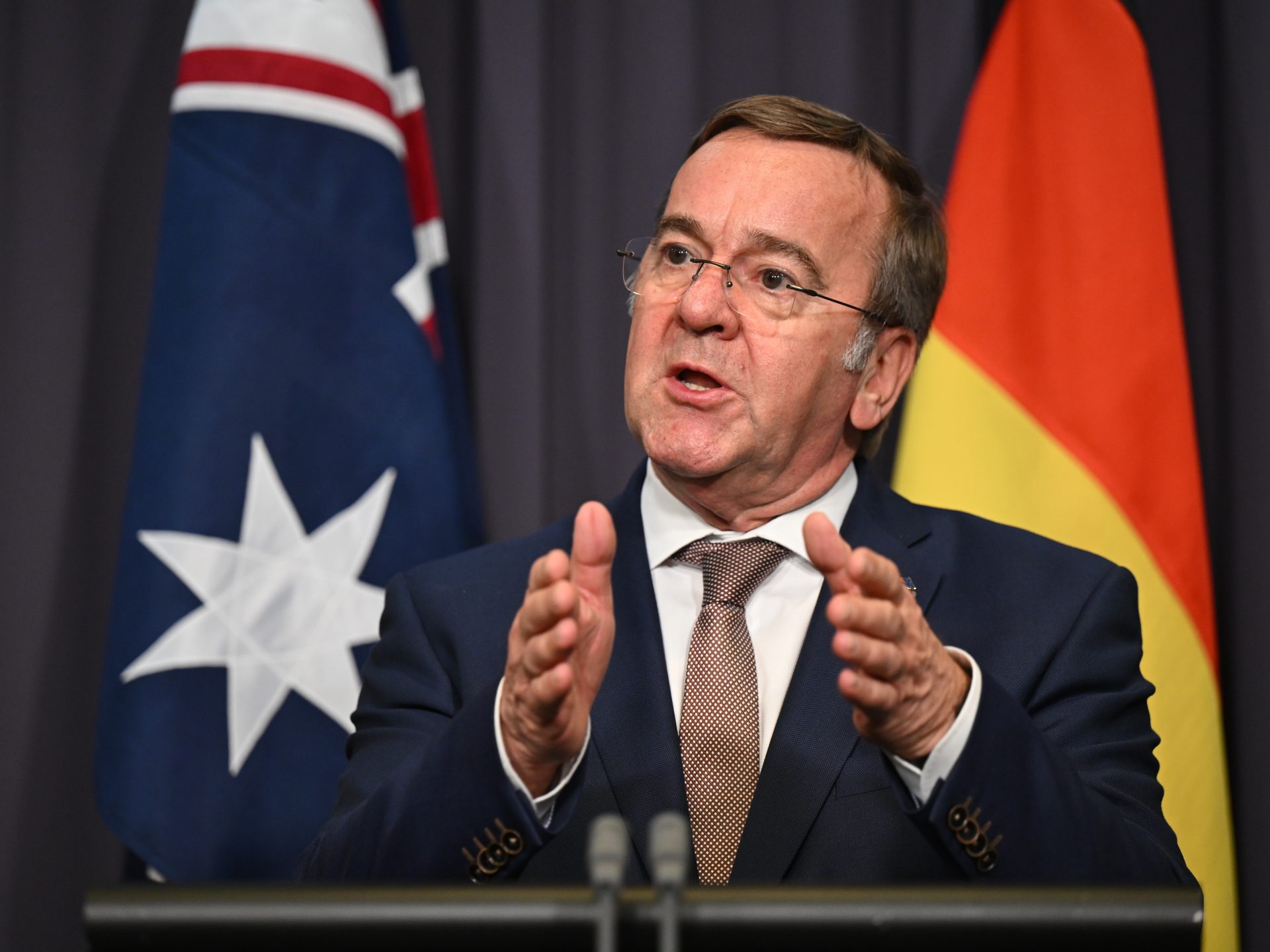
On Thursday, German Defense Minister Boris Pistorius described the conflict as an economic “catastrophe”, while the UK's economic growth prospects this year suffered a sharp downgrade.
Recommended stories
list of 3 itemsend of list
In a meeting with Australian Defense Minister Richard Marles on Thursday, Pistorius said Germany was “ready to secure any peace.”
“If there comes a point where we have a ceasefire, we will discuss all types of operations to ensure peace,” he said. “To make it very clear, this war is a catastrophe for the world's economies. The impact is already absolutely evident.”
The Organization for Economic Co-operation and Development (OECD) warned on Thursday that the global economy, which was on a path to growth, is now deviating from that path.
The Paris-based international body cut its 2026 forecast for British economic growth by half a percentage point to 0.7 percent, compared with a 0.4 percentage point cut for the eurozone and a 0.3 percentage point improvement for the United States.
“Planned fiscal tightening and higher energy prices are expected to keep growth moderate in the UK, although the impact will be tempered by lower policy rates next year,” the OECD said in its report.
“It's not our war,” says Germany
In Australia, Pistorius also addressed reporters at Parliament in Canberra and said the United States had not consulted Germany before it, along with Israel, waged a joint war against Iran on February 28.
“No one asked us before. It is not our war and therefore we do not want to get caught up in that war,” he said. “There is no strategy, there is no clear objective and the worst thing from my perspective is that there is no exit strategy.”
He urged the United States and Iran to end the conflict and said Germany would discuss operations to ensure freedom of navigation in the Strait of Hormuz if there was a ceasefire.
“But the time has not yet come and that is why we ask for a ceasefire as soon as possible,” he added.
Iran insists the strait remains open to “non-hostile” ships. The collapse of maritime traffic through the waterway has caused the biggest global energy crisis in decades.
European Commission President Ursula Von der Leyen called for negotiations with Iran and an end to hostilities, as the bloc urged member states to start early on meeting next winter's gas storage targets.
Natural gas prices in the European Union have risen more than 30 percent since the start of the war, following Israel's attack on the critical South Pars gas field in Iran and the subsequent Iranian attack on Ras Laffan in Qatar.
Spanish Prime Minister Pedro Sánchez on Wednesday called for an end to the war, saying it presented a “much worse” scenario than the 2003 invasion of Iraq.
“This is not the same scenario as the illegal war in Iraq. We are facing something much worse. Much worse. With a potential impact that is much wider and deeper,” he told Parliament.
The left-wing prime minister has been one of the strongest critics in Europe of the US and Israeli attack on Iran, describing it as “unjustifiable”.