- The White House allows Nvidia H200 to be exported to China with a 25% tariff
- U.S. officials have evaluated strategies ranging from outright export bans to flooding the market.
- President Trump says H200 exports support American jobs and manufacturing efforts
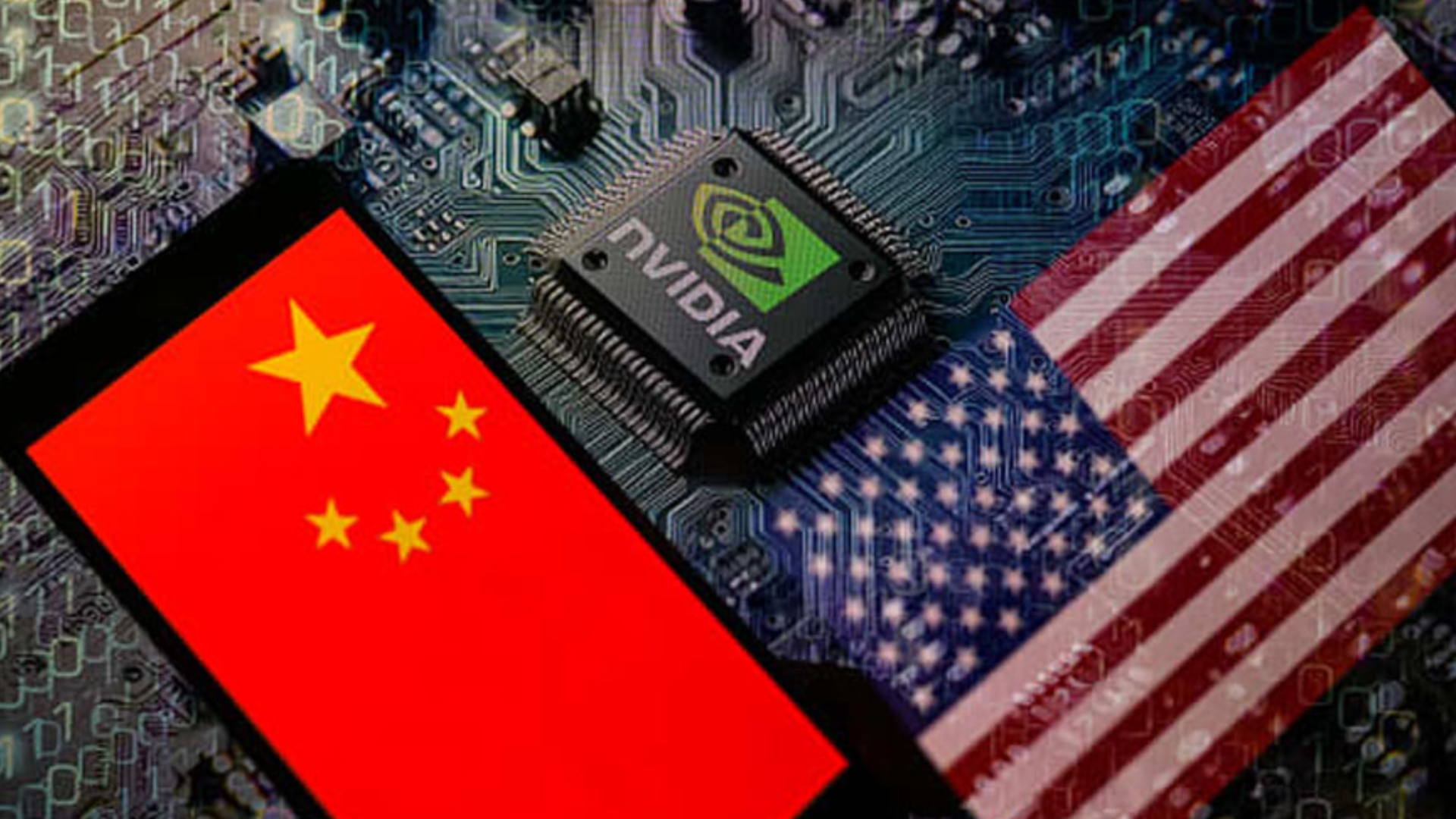
The White House has authorized the export of Nvidia H200 AI accelerators to China, applying a 25% tariff per shipment.
The decision was reportedly influenced by Huawei's rapid development of its Ascend 910C chips, particularly the CloudMatrix 384 system, which integrates 384 of these accelerators.
Insiders suggest the US move is aimed at maintaining US dominance in the global tech ecosystem while keeping the country's proprietary Blackwell and Rubin architectures restricted.
Huawei CloudMatrix 384 performance
Huawei's CloudMatrix 384 has been described as a “nuclear-grade product” capable of delivering 300 petaflops of BF16 dense computing.
It outperforms Nvidia's GB200 NVL72 system in certain performance metrics, highlighting its raw computing power.
The system also provides 3.6 times more aggregate memory and more than double the memory bandwidth compared to the Nvidia platform.
However, these gains come at the cost of nearly four times the energy consumption, raising efficiency concerns.
These accelerators have been deployed in Huawei data centers, where abundant electricity reduces the importance of energy efficiency.
The company plans to scale production of the Ascend 910C to hundreds of thousands of units next year, and projections suggest millions could be built by 2026.
Despite China's development of its own AI instruction set through CANN, Nvidia GPUs remain the preferred choice for many AI developers, including companies like Deepseek.
Huawei has made its CANN software for Ascend GPUs open source, offering multi-layer programming interfaces for AI applications.
The move aims to challenge CUDA's nearly two-decade dominance, fostering a domestic ecosystem that reduces dependence on American hardware.
Early adoption remains uncertain as the CANN ecosystem is still immature compared to the long-established CUDA platform.
With Huawei's progress, the United States reportedly reviewed multiple scenarios, ranging from outright export bans to attempts to overwhelm Huawei by flooding the market.
The final decision represents a middle ground, balancing national security, the global competitiveness of AI and economic interests.
President Trump emphasized that authorized exports will support American jobs and manufacturing while maintaining leverage over advanced artificial intelligence technology.
Nvidia CEO Jensen Huang acknowledged uncertainty over whether Chinese customers would fully purchase H200 systems, pointing to a $5.5 billion revenue shortfall on AI chips by early 2025.
The rollback therefore appears to be driven by the performance trajectory of Huawei's Ascend 910C, which poses a potential threat to US leadership in AI hardware.
While the export of H200 chips allows the United States to maintain its influence over AI software ecosystems.
It also reflects recognition of China's growing capabilities in high-throughput accelerators.
Through Tom Hardware
Follow TechRadar on Google News and add us as a preferred source to receive news, reviews and opinions from our experts in your feeds. Be sure to click the Follow button!
And of course you can also follow TechRadar on TikTok for news, reviews, unboxings in video form and receive regular updates from us on WhatsApp also.