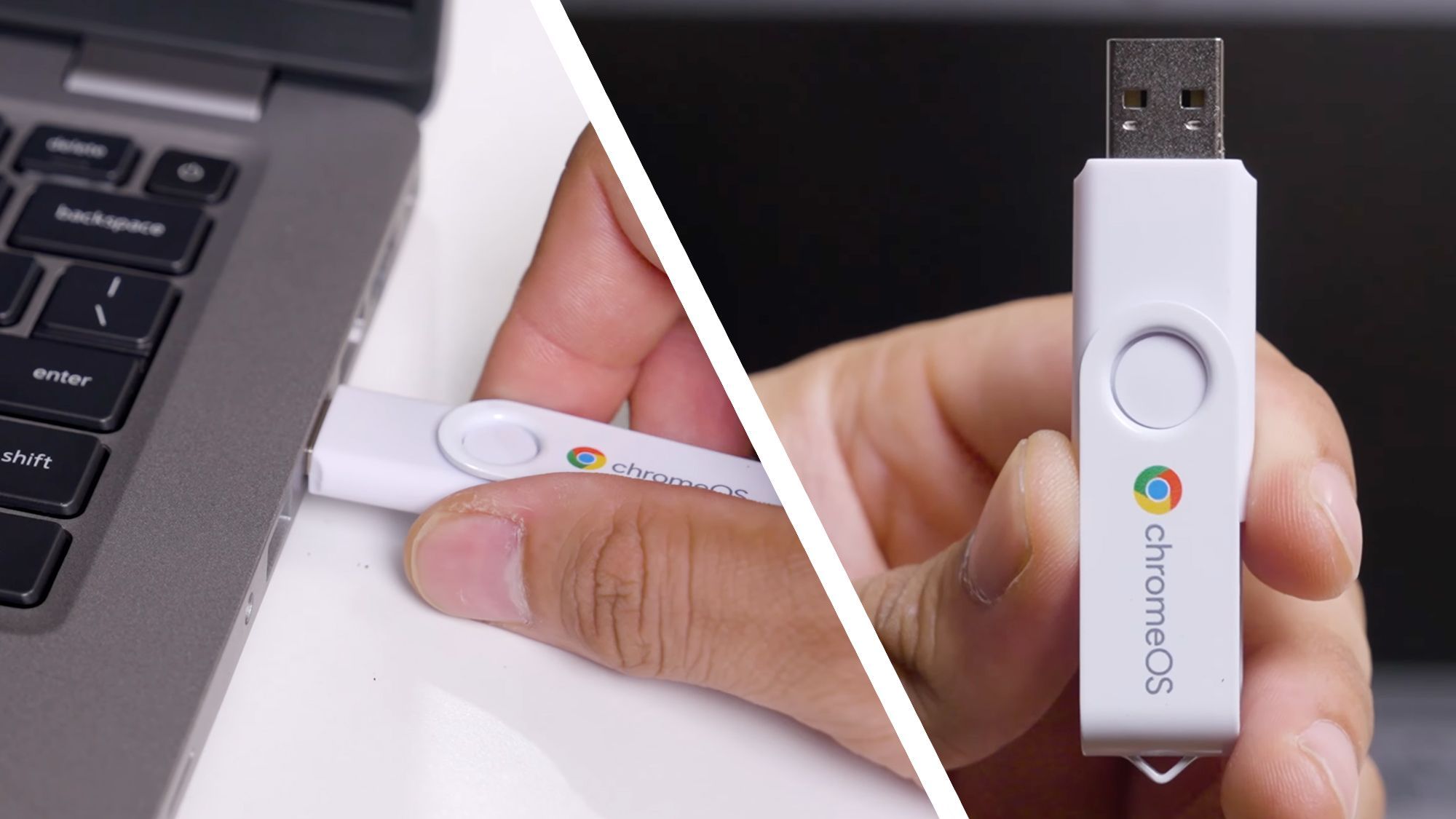
Last month, Google partnered with Back Market to launch an emergency recovery kit for older PCs: the ChromeOS Flex USB Kit. It's essentially a USB drive with ChromeOS installation files, so you can turn almost any old laptop into a Chromebook in a few minutes.
The kit costs just $3/£3 (and €3 in Europe) and, according to Windows Central, sold out pretty quickly. A new batch of USB drives should be available soon, but in the meantime, the popularity of this plug-and-play solution for aging hardware is a vindication of something I've always said about Chromebooks (and ChromeOS).
These lightweight laptops offer all the computing power most people need today and have advantages over Windows and macOS that perhaps aren't talked about enough. I'll make the case below and explain how you can take advantage of ChromeOS Flex yourself.
Article continues below.
What is ChromeOS Flex anyway?
ChromeOS is the operating system that runs on Chromebooks (essentially just the Google Chrome browser, with a few extras), and ChromeOS Flex is an installation package you can use to convert older computers into Chromebooks. Works with most PCs running Windows or Linux and Macs with Intel chips.
You don't actually need a Back Market USB stick to install ChromeOS Flex. By providing the USB drive and following these instructions, you can create your own kit. It's easy to do and free (aside from the cost of the USB drive) and is a great way to be able to continue using a laptop that's slow.
Both Windows and macOS laptops will eventually become sluggish and sluggish, no matter how fast they were when you first bought them, and instead of aggravating the world's e-waste problem, you can install ChromeOS. It is much less demanding in terms of system resources than operating systems from Microsoft or Apple.
Unless you particularly need a desktop application like Photoshop or Excel (which, by the way, now have optimized versions of web applications available), you can probably do most of your computing within a web browser these days. From Spotify and Slack to Gmail and Google Docs, web apps have become the norm, and that's part of the reason ChromeOS works.
Why ChromeOS (and Chromebooks) work

If you're as old as I am, you'll remember that Google launched its Chromebooks in 2011. At the time the reaction was pretty lukewarm: why buy a laptop that was essentially just a Chrome browser, when Windows and macOS give you the Chrome browser, any other browser you want, and much more?
Chromebooks and the ChromeOS platform were criticized for being limited and useless without Wi-Fi. However, I loved the idea from the beginning and explained it to anyone I could find; I cornered people at parties to talk about it. The classic principle of “less is more” applied, and still applies to Chromebooks today.
First of all, Wi-Fi is more or less ubiquitous now, and if you can't find a connection, you can use your phone as a hotspot. Second, apps like Gmail and Google Docs work offline anyway, so you can keep yourself busy. Third, doesn't the same criticism apply to Windows and macOS laptops? Internet access is essential for most computing tasks today.
A Chrome-only computer comes with countless advantages: it's fast, it doesn't slow down (much) over time, everything is backed up instantly, and you don't need to worry about background apps or system overload. Updates are seamless, as are updates to new Chromebooks, which is why I've used ChromeOS consistently since 2011.
The Chromebook present and future

As much as I like Chromebooks, beyond the education market they haven't taken off dramatically when it comes to sales, despite the recent popularity of the ChromeOS Flex USB Kit. Perhaps that's part of the reason why Google seems interested in evolving the platform into something more.
The 'less is more' approach that makes ChromeOS so appealing to me has already been diluted to some extent with support for Android apps on Chromebooks. That can make them more useful, especially if you want to play a little lighter, but it also means you have more to worry about in terms of app and update overload.
It looks like Google's Aluminum operating system will start replacing ChromeOS later this year, with more emphasis on Android and less on Chrome. It's still unclear exactly how this will be different from what Chromebooks already do, but I'm worried that some of the simplicity of ChromeOS will be lost.
That's for the future, and most likely Google IO 2026. For now, I encourage you to take a look at ChromeOS Flex if you need to upgrade an old laptop, or consider one of the best Chromebooks if you're looking for a new model. You may find the simplicity and ease of use a refreshing change from Windows or macOS.
Follow TechRadar on Google News and add us as a preferred source to receive news, reviews and opinions from our experts in your feeds. Be sure to click the Follow button!
And of course you can also follow TechRadar on TikTok for news, reviews, unboxings in video form and receive regular updates from us on WhatsApp also.