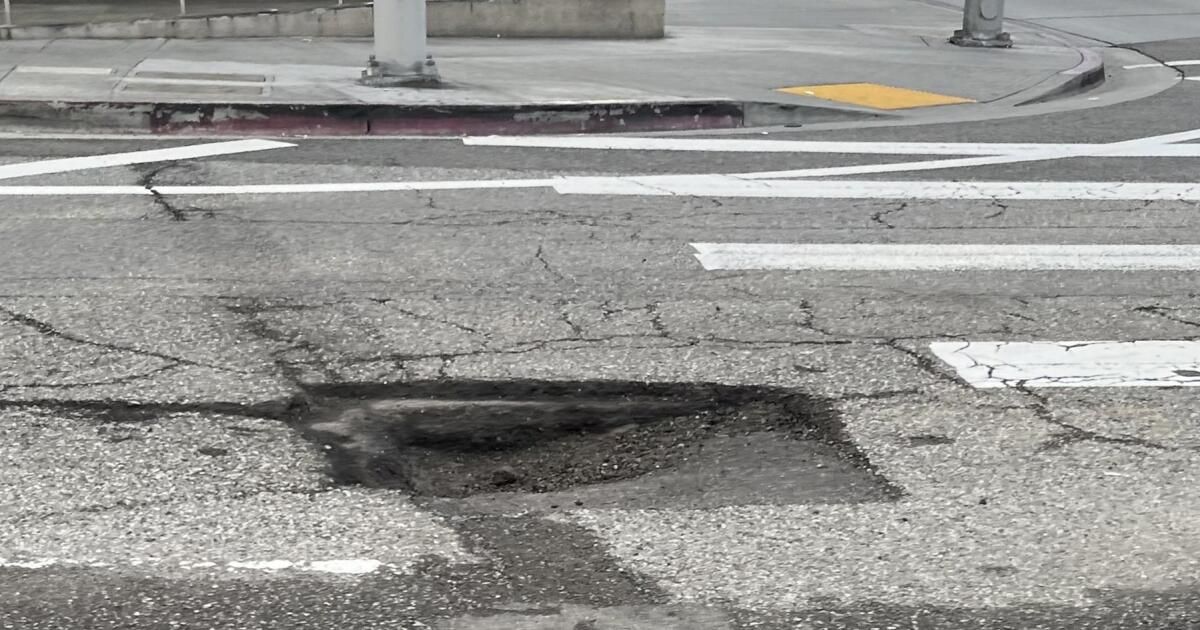
Have you noticed more potholes than usual on the streets of Los Angeles lately? More obstacles in the way while you drive your car, ride your bike or take the bus? You're not imagining things. It may be hard to believe, but Los Angeles has not repaved a single street since the beginning of summer. the city StreetStat Dashboard says crews have resurfaced zero miles since July 1, the start of the city's fiscal year. And this isn't a temporary or involuntary disruption: In its proposed budget, the city proposes zero-mile repave next year as well.
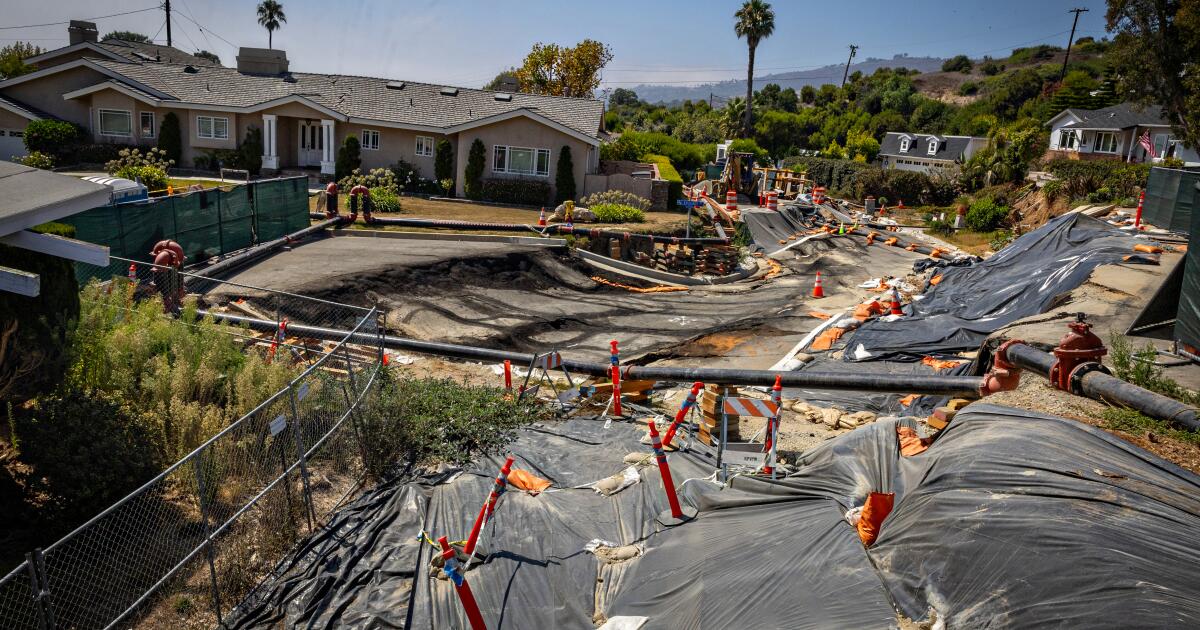
Instead of repaving, the city has shifted most of its street maintenance budget to do what it calls “major asphalt repair,” which involves patching parts of the street only where it is most worn. Patching may seem nice, but it is more expensive than completely resurfacing because the same trucks and equipment need to be mobilized for a smaller amount of work. It also doesn't update an entire street.
Less new asphalt means worse streets. The city measures the quality of our streets with something called the Pavement Condition Index. A 0 is a completely failed street and a 100 is a street in perfect condition. Under the new patch-only strategy, the city now projects its index will fall to 56 next year, a 4% drop in just one year. At that rate, it won't be long before the city turns into a big pothole. Cross over to a neighboring city and you'll see a big difference: Santa Monica's index is 82, West Hollywood's is 77, and Culver City's is 74.
Putting off repairing our streets also makes it much more expensive to fix them later. Streets that are deteriorating but still in good condition can be sealed with grout, which is a common maintenance treatment that costs only $30,000 per mile. Roads in the worst condition need to be repaved at about $200,000 per mile. If a street becomes so degraded that it must be completely rebuilt, that can cost up to a million dollars per mile. Every year we don't repave our streets we risk costing the city up to 33 times more, not to mention the human cost of people being injured on streets that are falling apart, or the large amount of money the city pays to settle lawsuits for those injured on our broken streets.
Why has the city stopped repaving? I bet you didn't have the Americans with Disabilities Act on your bingo card. The federal government says that when a street is repaved, adjacent sidewalk ramps must meet the latest ADA standards to be wheelchair accessible. If you've spent any time on Los Angeles sidewalks, you know that the city has very few updated ramps: If a ramp doesn't have one of those bumpy yellow rectangles, it's outdated and probably not accessible. Many corners do not have curb ramps.
These retrofits are expensive and updating them can double the cost of repaving a street. So the city decided that instead of fixing the ramps, it would invent a workaround: “major asphalt repair,” which it could pass off as maintenance to avoid triggering curb ramp requirements.
Of course, sidewalk ramps wouldn't have to be updated by resurfacing if the city had invested in basic infrastructure over the years. Streets for everyone found that Los Angeles spends half as much per capita on its streets and sidewalks as New York City and San Diego, and a third of what Chicago and San Francisco spend. We may be one of the richest cities in the developed world based on gross domestic product, but we are one of the poorest based on what we invest in our streets and sidewalks.
The city evades another responsibility when it does not completely repave the street: implementing the Mobility Plan. Remember Measure HLAthat voters overwhelmingly approved last year? The measure says that when a street is repaved, the city must install bike lanes, bus lanes or other mobility features provided for that street. The city may be dubiously trying to circumvent the law's requirements by working in patches rather than completely repaving.
Why are we in this situation? It all comes down to money. The city's general fund is bankrupt and much of it is the work of the City Council itself. Actions like giving big increases to the police, the Fire Department and public officials without plans to pay them, as well as expanding our convention center at a time when we can least afford it, and record of lawsuit settlement paymentswe are heading towards insolvency.
There is no single simple solution to budget problems, but there are simple steps to make transportation spending go further. For example, our Department of Transportation lines the street but does not repave it, install curb ramps, or fix the sidewalks; that's the job of another city department, StreetsLA. In other large cities like New York, the DOT is responsible for the entire street and sidewalk, resulting in more efficient use of precious dollars.
We should also make curb ramps more affordable. Los Angeles spends between $35,000 and $50,000 per corneror up to $200,000 per intersection. This is approximately 10 times what Dallas spends on its ramps and five times what Beverly Hills spends. The city is probably over-designing the ramps it creates and spending precious dollars inefficiently.
Ultimately, we will need to find more funding. One possibility, similar to how we fund libraries and parks, would be to guarantee the Department of Transportation a fixed percentage of assessed property values per year, which would fund streets even in difficult budget years; This could be done as part of the charter reform work that is currently underway and will be presented to voters in November. We could also pass a ballot measure that provides a specific source of funds to the city dedicated solely to fixing streets and sidewalks.
Los Angeles is one of the most famous and richest cities in the world and we should act like it. More funding and less bureaucracy would better maintain and repair our greatest public asset: our streets and sidewalks.
Oren Hadar is the president of Destination: Peak and write in “The future is Los Angeles.” Michael Schneider is the founder and CEO of streets for everyone.