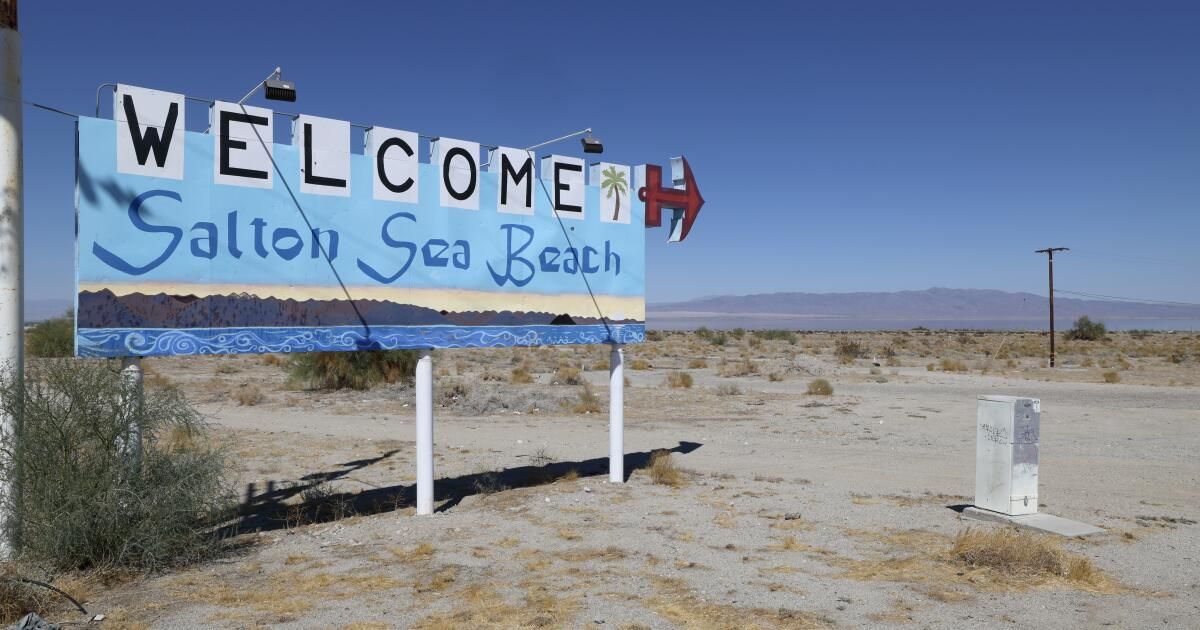
Southern California's Salton Sea was once a tourist playground, with sunny beaches, celebrities and people water skiing on the vast inland lake in the 1950s and '60s.
Today, those resorts are long gone, replaced by a dry and increasingly toxic landscape. As the lake shrinks, wind blowing across the exposed bed kicks up toxic dust left behind by years of agricultural chemicals and metals washing into the lake. That dust reaches the lungs of the children of the Imperial Valley.
New research from our team of epidemiologists at USC and UC Irvine shows that wind blowing dust is stunting lung growth in the region's children, especially those who live closer to the Salton Sea. In fact, the effects on lung function near the Salton Sea have been greater than what studies find in urban California communities near busy highways.
As the lake's water sources decline due to water use agreements related to the Colorado River, and as this region gains more industrial activity thanks to proposed lithium extractionAir pollution is likely to get worse.
The Salton Sea, California's largest inland lake at more than 340 square miles, has been shrinking for decades. It was created by a break in a canal carrying water from the Colorado River in the early 20th century. Irrigation runoff from agricultural fields kept it running. But over the past two decades, declining water flow has exposed 36,000 new acres of dry lake bed.
The largest consumer of Colorado River water, the Imperial County Irrigation District, agreed in 2003 to give up billions of gallons of water each year to support growing urban areas, a plan that went into full effect in 2018. That meant less runoff into the lake. By one estimate, the change was projected to increase windblown dust by 40 to 80 tons per day. Satellite images show rapid expansion of the exposed lake bed as the water recedes.
Predominantly low-income Latino communities living just south of the Salton Sea say they have long been ignored in conversations about the fate of the Sea. However, these communities face real health consequences tied directly to regional water policy decisions and a lack of action to manage this emerging environmental crisis.
In 2017, we started a cohort study with more than 700 elementary school-age children in five cities in the northern Imperial Valley. We followed these children for several years, documenting respiratory health symptoms and lung function measurements, as well as household, lifestyle, and behavioral factors.
Our initial findings aligned with what local residents have discussed for years:
- Nearly 1 in 5 children in the northern Imperial Valley are reported to have asthma, a rate well above the national rate.
- Higher rates of air pollution were linked to poorer overall respiratory health, such as wheezing and coughing, among all children. This indicates that while asthmatic children were more sensitive, non-asthmatic children also experienced significant health effects.
- Higher levels of dust exposure, especially among children who live closer to the sea, are linked to poorer lung function, as well as reductions in children's lung growth over time.
These findings are concerning because lung damage, poor lung function, and respiratory diseases in the first years of life can increase the risk of chronic health problems in adulthood.
Children's lungs are still developing and lung function continues to mature during adolescence, making children more susceptible than adults to the adverse effects of air pollution.
Children also have higher respiratory rates than adults, as well as a larger lung surface area relative to their body size, resulting in higher doses of respiratory pollution. And because children tend to spend more time outdoors than adults and engage in more physical activity, they may be more exposed to outdoor air pollution.
For years, community members have expressed concern about high rates of asthma and poor respiratory health among children and residents.
The new evidence is important as communities and organizations like Comito Cívico del Valle advance projects that can reduce the amount of Salton Sea dust that reaches the air, expand education about asthma management, and increase access to health care.
The children in the study were just starting primary school when they joined. Now in high school, this generation has grown up near the Salton Sea. Many have suffered from asthma and may face chronic health problems.
Having seen these effects among children living along the Salton Sea, we believe that protecting local air quality is crucial to the health of children in the Imperial Valley. Your health must be at the forefront as the public and private sectors plan future water changes, abstraction projects and other developments near the Salton Sea.
Jill Johnston is an associate professor of environmental and occupational health at UC Irvine. Shohreh Farzan is an associate professor of population and public health at USC. This article was produced in partnership with Conversation.