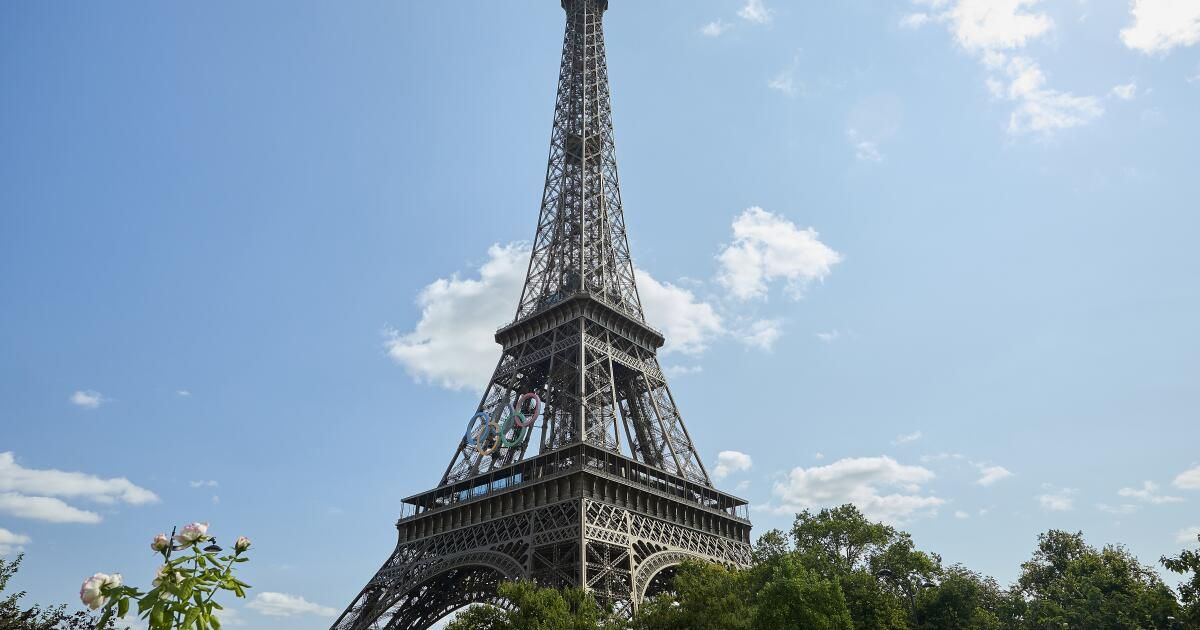
It was noon, shortly before Easter, in Paris. My niece and I walked past the city's famous opera house, where tourists lounged on its wide stairs. French soldiers armed with assault rifles walked by, a comforting sight given warnings about Iranian-backed sleeper cells and possible retaliatory attacks. A busker with a guitar and microphone entertained the crowd with a Coldplay cover.
Between songs, he asked, “Does anyone here speak English?” Incredibly, not a single hand was raised.
The street musician shrugged his shoulders, lowered both thumbs in the universal gesture of disapproval, and said, “America, huh?” I felt it.
A couple days after I got home, I saw a post on social media that reminded me of that moment. “Honestly,” @_thatambitiousgirl wrote, “I don't know how anyone could feel comfortable traveling as an American outside of the US right now.”
Anti-American sentiment is on the rise, and it sucks to be from a country whose presidents do things like threaten to end “an entire civilization,” invade Middle Eastern countries based on lies about weapons of mass destruction, or engage in pointless conflicts in distant lands. In college, I had friends who sewed Canadian flags on their backpacks because they didn't want to be associated with America's misadventures in Southeast Asia.
Polls show that half of Europeans see President Trump, who has threatened to withdraw from NATO, as an enemy rather than an ally. He has pulled off the clever trick of telling our allies they are useless while punishing them for not rushing to help with his poorly planned war against Iran. “This is not our war,” the German Defense Minister pointedly said last month. “We haven't started it.”
Simply put, with the acquiescence of the Republican Party, Trump is overturning the world order as we have known it in our lifetimes, while managing to make life more difficult for Americans at home.
“We are worse off in every way and are officially a global pariah,” New York Times columnist Jamelle Bouie said on Facebook this week. “Awesome. I love it.”
Anyway, I was happy to see that someone I know, novelist Erin Zhurkin, responded thoughtfully to @_that ambitiousgirl's Instagram post.
“I have been an American abroad for 20 years,” wrote Zhurkin, whose Russian-born American husband is a Renault executive. “Six countries so far. People in general are curious and grateful that I can see my country from all sides… I try to represent the heart of America, which I think is about being open to all people and finding common ground instead of differences.”
This, truly, is the crux of the matter.
In the fall of 1967, my family moved from Northridge to France, where my father had a year-long Fulbright teaching fellowship at the University of Pau. Before boarding the plane, my mother sat down her four unruly children.
“It's very important that they are not 'ugly Americans,'” he told us. We were too young to have read the classic 1958 novel she was referring to, but we understood that we should be curious and respectful and maybe not shout, as we unfortunately did, “Yuck, this is NOT a hot dog,” during our first meal in Paris.
One winter afternoon in Pau, my parents took us to an anti-war demonstration, as they had done many times in Los Angeles. The locals we marched with were singing something we couldn't understand. To our American ears it sounded like “Yohn-kee go ohm.” We found out pretty quickly and, frankly, it was disturbing.
Zhurkin had a similar experience in Moscow, in the early 1990s, at a kiosk near Red Square. “An older Russian lady looked at me and in a thick Russian accent said, 'Yankee, go home,'” Zhurkin told me by phone from Ljubljana, Slovenia, where she and her family had moved in September from Seoul. “It opened up this whole feeling inside of me that there's something about my country that may not be as wonderful as it seems. It was a huge perspective-shattering moment for me.”
Years later, Zhurkin lived in Paris. Trump had just been elected to his first term.
“I couldn't get in a taxi without someone asking me why I let this happen, like it was all mine,” Zhurkin said. “They said, 'I can't believe you Americans are so idiot.” I thought, 'Look, I didn't vote for him.'” Still, she said, “I feel like I'm apologizing all the time.”
When Joe Biden was elected in 2020, Zhurkin said, his family had moved to Ireland, where the atmosphere was much more: “Thank God, you guys got your act together.”
Maybe in the not too distant future we will do it again. And then we can begin to put this long national nightmare behind us.
Blue sky: @rabcarian
Rags: @rabcarian