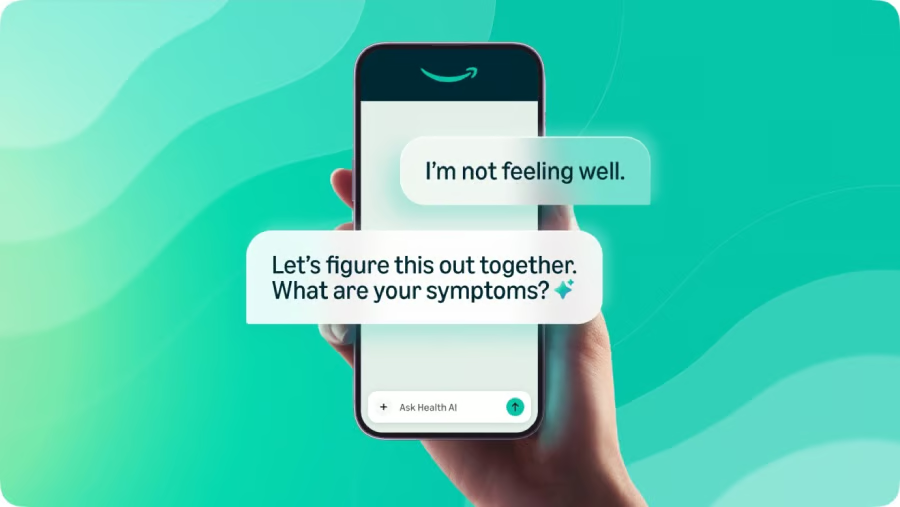
Amazon is moving Health AI, its agent health assistant, from the clinical app to its retail core, expanding the service to Amazon.com and the Amazon app. With the launch, Amazon presents its platform as more than just a place to shop, positioning it as a new entry point for AI-powered healthcare.
The company describes the service as a more personalized health assistant that can be closer to the rest of its ecosystem, bringing care-related help to a space already used by millions of people. This puts care-related support in a scalable environment, where Amazon can expose the service to a much larger group of users.
More than a symptom checker
Within the chat, the tool goes beyond basic health questions and answers. It breaks down lab results, diagnoses, and medical records into plain language, answers questions about symptoms and medications in context, and helps users map next steps.
That practical streak extends through the rest of the experience. The tool can connect users with a One Medical provider via message, video or in-person, send prescription renewal requests that can be filled through Amazon Pharmacy or another pharmacy, and display relevant health products when prompted.
In other words, Amazon's new health AI is intended to guide users from a health question to a follow-up.
How much he knows is up to you.
Personalization is only activated if users choose it. Health AI can handle general health questions on its own, but the more personalized version begins with a user giving the assistant permission to access medical history, medications, lab results, and clinical notes through the Health Information Exchange, with relevant health-related Amazon purchases, such as vitamins or blood pressure monitors.
That added context is what turns a generic answer into something more specific to the person asking. Amazon's example is an asthma patient who develops a cough during flu season: The tool can take into account that diagnosis, current medications, and previous outbreaks, and then ask follow-up questions to help distinguish a routine problem from something more serious.
This is also a story of grouping.
Health AI also gives the company a new way to bring together Prime, One Medical and pharmacy services into a single offering.
Eligible US Prime members get up to five free DM care consultations with a One Medical provider for more than 30 common conditions, including cold and flu, allergies, acid reflux, pink eye, urinary tract infections, hair loss, and anti-aging skin care.
- A medical visit payment is priced at $29 per telehealth visit.
- Prime members can sign up for One Medical for $99 a year
- The standard price for that membership is $199 per year.
- That membership includes 24/7 on-demand virtual care and in-office primary care, with additional visit fees applying for some services.
Add Amazon Pharmacy to that mix and the assistant becomes part of a broader health package.
The biggest bet depends on trust.
Trust is essential as the company asks users to hand over confidential health information.
Health AI runs in a HIPAA-compliant environment with strict encryption and access controls, and One Medical and Amazon Pharmacy protected health information is not used for general merchandise marketing or Amazon Ads. Amazon also says it does not sell customers' personal data.
The company is also emphasizing security systems around the service.
It says Health AI was evaluated through synthetic conversations covering clinical safety, emergency response and compliance, and that it directs users to a human provider when they are unsure about a clinical recommendation. The system runs on Amazon Bedrock and uses multiple agents, including audit agents and sentinels, with escalation routes to human providers for clinical review.
Amazon is also expanding the service to a broader part of the care continuum, including specialty care through partner health systems like Rush and Cleveland Clinic.
Amazon is reducing its robotics workforce while continuing to treat automation as a critical long-term investment.