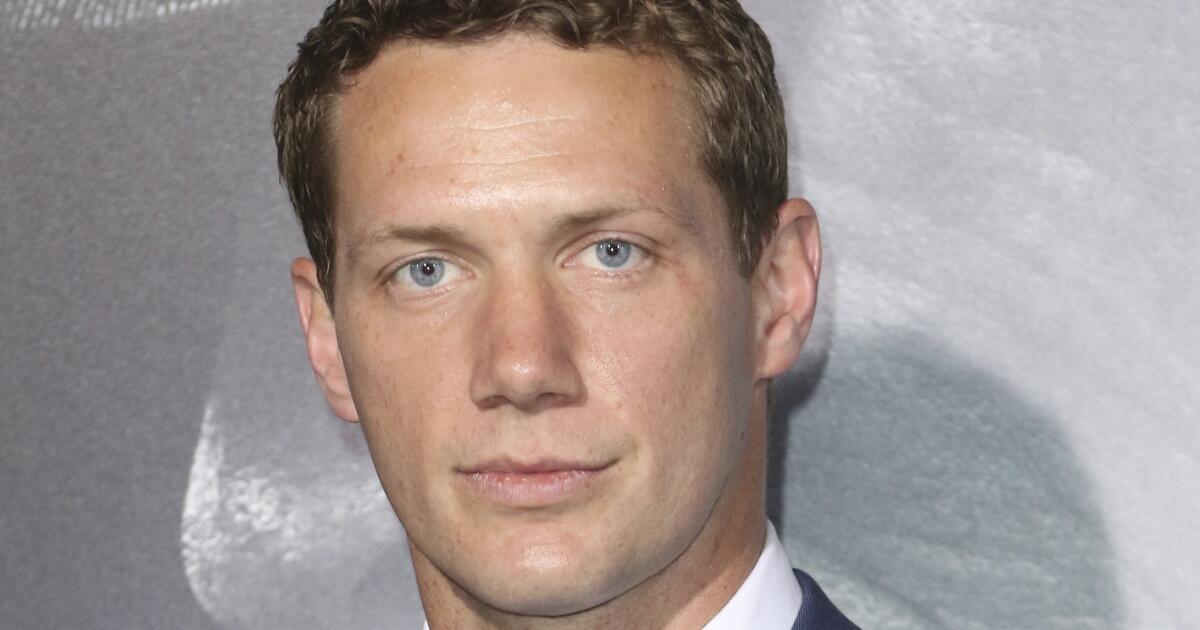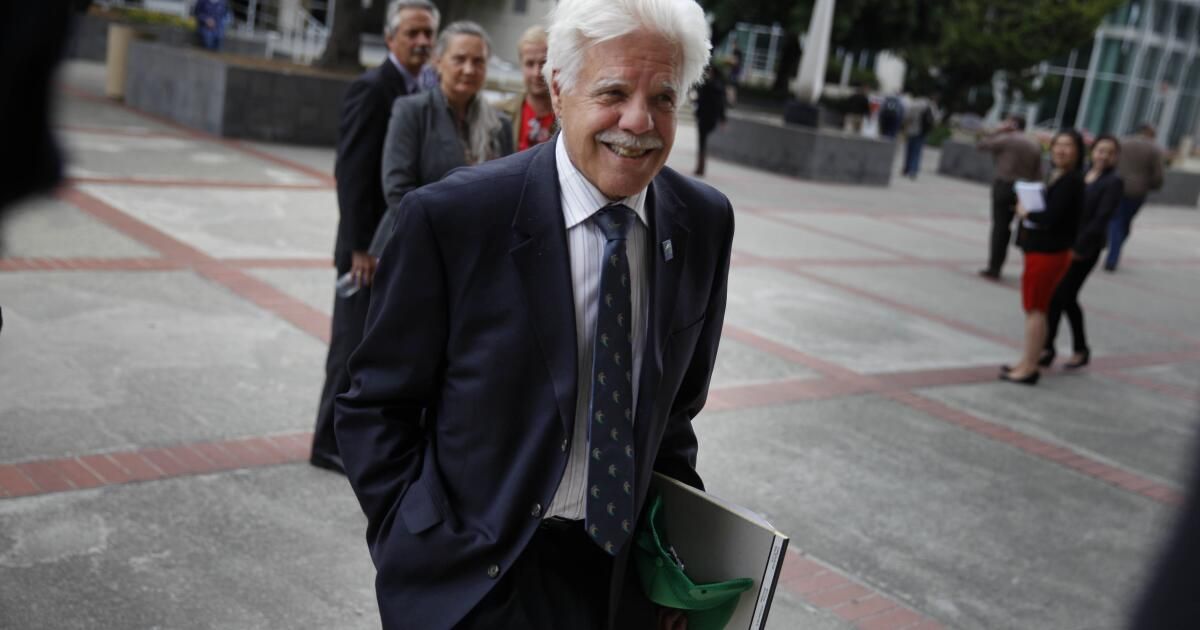
Known by friends and colleagues as a “planetary patriot,” a “happy warrior” and the “Eco-warrior of the Golden State,” Rob Caughlan, a political operative, public relations expert and one of the early leaders of the Surfrider Foundation, died at his home in San Mateo on January 17. He was 82 years old.
His wife of nearly 62 years, Diana, died four days earlier of lung cancer.
Environmentalists, political actors and friends responded to his death with grief but also joy as they remembered his passion, talent and sense of humor, and his drive not only to make the world a better place, but to have fun doing it.
“He always said the real winner in a surfing contest was the one who had the most fun,” said Lennie Roberts, a San Mateo County conservationist and longtime friend of Caughlan. “He was true to that. That's how he lived.”
“When he walked into a room, he had a big smile on his face. He was a great person, a talented person,” said Dan Young, one of the five original founders of the Surfrider Foundation. The organization was created in the early 1980s by a group of Southern California surfers who felt called to protect the coast and its waves.
They also wanted to dispel the stereotype that surfers are indifferent stoners and show the world that surfers can organize and fight for just causes, Roberts said, citing Caughlan's 2020 memoir, “The Surfer in the White House and Other Salty Yarns.”
Before joining Surfrider in 1986, Caughlan was a political operative who worked as an environmental consultant in the Carter administration. According to Warner Chabot, an old friend and recently retired executive director of the Francisco Estuary Institute, Caughlan got his start in the early 1970s when he and his friend, David Oke, formed the Sam Ervin Fan Club, which supported the Southern senator's efforts to lead President Nixon's Watergate investigation.
According to Chabot, Caughlan arranged for T-shirts to be printed with Ervin's face, beneath the text “I Trust Uncle Sam.”
“He was one of the first social influencers. for extraordinary“, said.
Glenn Hening, a surfer, former space software engineer at the Jet Propulsion Laboratory and another original founder of the Surfrider Foundation, said one of the group's initial fights was against the city of Malibu, which in the early 1980s periodically dug sand into the lagoon just off the coast and destroyed waves at one of its favorite surf spots.
According to Hening, it was Caughlin's unique ability to persuade and seduce politicians and donors that put Surfrider's efforts on the map.
Caughlan served as president of the foundation from 1986 to 1992.
The foundation gained national attention in 1989 when it went after two large paper mills in Humboldt Bay that were discharging toxic wastewater into a prime surf break in Northern California. The foundation took aim and in 1991 filed a complaint with the United States Environmental Protection Agency; The paper mills reached a settlement for $5.8 million.
Hening said the victory would never have happened without Caughlan.
The factories had tried to ignore the demand by offering a donation to the foundation, Hening said. But Caughlan and Mark Massara, an environmental lawyer for the organization, rejected the gesture.
“The paper mill employees said, 'Well, what can we do here? How can we make this go away?'” Hening said, recalling the conversation. “And Rob said, 'This isn't going away. We're not going away. We're surfers.'
Roberts said anyone who has spent time on the San Mateo County coast can feel Caughlan's legacy. In the 1980s, the two spearheaded a successful ballot measure that still protects the coast from non-agricultural development and guarantees access to beaches and cliffs. It also prohibits onshore oil installations for offshore installations.
The two also worked on a county measure that led to the development of the Devil's Slide tunnels on Highway 1 between Pacifica and Montara, designed to make that previously treacherous road safer for travelers.
The state wanted to build a six-lane highway over the area's steep hills. “It would have been dangerous because of the steep slopes, and it would have gone up into the fog bank and then back out of the fog. So it was inherently dangerous,” Roberts said.
Chad Nelsen, the current president of the Surfrider Foundation, said he was first drawn into Caughlan's orbit in 2010 when Surfrider became involved in a lawsuit involving a beach in San Mateo County. Vinod Khosla, a Silicon Valley venture capitalist, bought 53 acres of Northern California coastline for $32.5 million and closed off access to the public, including a popular stretch known as Martin's Beach, for which Surfrider sued.
Nelsen said that although Caughlan had left the organization about 20 years earlier, he reappeared with a “kind of unbridled enthusiasm and commitment to the cause,” and the organization ultimately prevailed: the public can once again access the beach “thanks to 'Birdlegs.'”
Birdlegs was Caughlan's nickname and, according to Nelsen, was probably coined in the 1970s by his fellow surfers.
“I guess he had noticeably thin legs,” Nelsen said.
Robert Willis Caughlan was born in Alliance, Ohio, on February 27, 1943. His father, who was a parachute instructor in the U.S. Army, died when Caughlan was 4 years old. In 1950, Caughlan moved with his mother and younger brother to San Mateo, where he saw the ocean for the first time.
He rode his first wave in 1959, at the age of 16, from the Half Moon Bay breakwater.