NEWNow you can listen to Fox News articles!
Kevin Smith, creator of the 1999 cult classic film “Dogma,” said the film was written by a Catholic who believed every word of it, but that its sequel will come from a man who has left his religion behind.
Despite the reaction of Christian groups at the time of the film's release, the director of “Dogma” maintains that his film “is not only pro-faith, but pro-Catholic.” Now, nearly three decades later, Smith is preparing a sequel shaped by a very different worldview.
“In making a sequel to 'Dogma,' I ran into a problem that didn't exist when I wrote and directed 'Dogma,'” Smith told Fox News Digital in an interview. “'Dogma' is a movie written and directed by someone who believes in everything you see on that screen.”
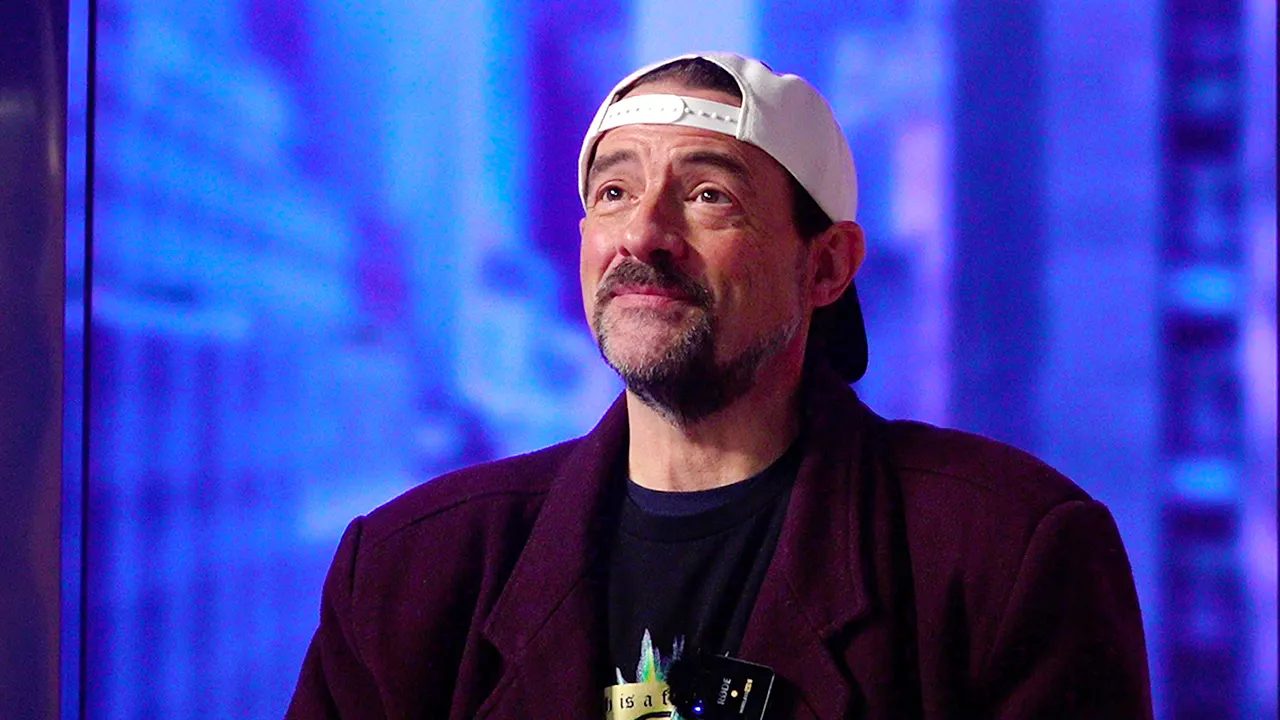
Director Kevin Smith spoke about faith and filmmaking in an interview with Fox News Digital. (Nik Lanum/Fox News Digital)
“The old man writing and directing the sequel doesn't have the same faith anymore,” Smith said, referring to himself today. “I don't carry that cross.”
ZACHARY LEVI SAYS HOLLYWOOD DIDN'T 'REALLY CARE' ABOUT FAITH-BASED MOVIES UNTIL THEY COULD MAKE MONEY
“Dogma” is a theological comedy that follows a pair of fallen angels, played by Ben Affleck and Matt Damon, who try to return to heaven. They are opposed by a distant blood relative of Jesus Christ and the angel Metatron, played by Linda Fiorentino and Alan Rickman, respectively.
The star-studded cast also includes Salma Hayek, Chris Rock, and George Carlin, among many others.
Smith shared that, at the time of the film's release, he was concerned that the controversy surrounding it might lead audiences to expect a satire in the vein of “Monty Python and the Holy Grail.” But “Dogma,” he said, is “reverent.”
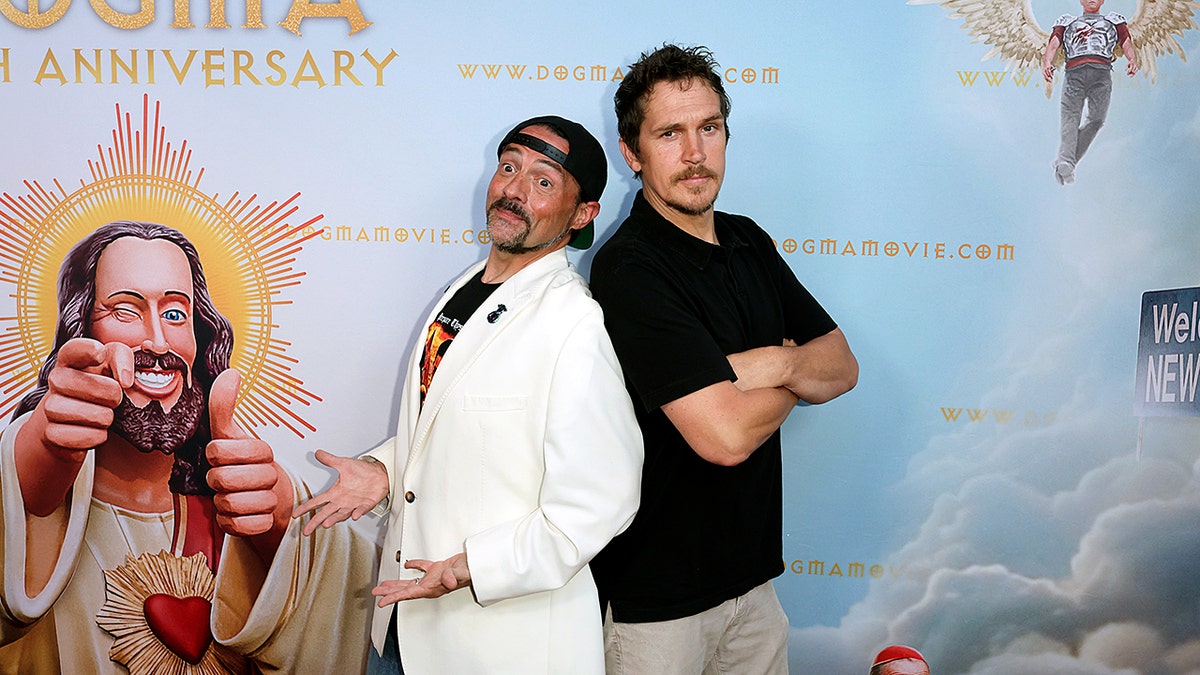
Kevin Smith, left, and Jason Mewes, right, arrive for “Dogma: The Resurrection Tour – A 25th Anniversary Celebration with Kevin Smith” at AMC The Grove 14 on April 20, 2025 in Los Angeles. (Wilbert Roberts/Getty Images for Triple Media Film)
“It defends everything, all the principles of the Catholic faith,” Smith said, adding that while the film might cast a “hairy look at the Catholic Church, the foundational organization,” he assumed that most of the film's protesters had not actually seen it.
Smith said he still has a deep respect for religious people, adding that his late mother was a believer to the end.
CHRIS PRATT ON FINDING GOD DURING THE CRISIS THAT THREATENED HIS SON'S LIFE AND HOW IT TRANSFORMED HIS SPIRITUAL LIFE
“I wish I could be one of those cats again. Life was so much easier when I had faith,” she said.
The filmmaker shared that this February would mark three years of his stay at Sierra Tucson, a residential mental health treatment center in Arizona. Looking back, Smith said losing his religion left him without the sense of security he once relied on during difficult periods.
“Honestly, I feel like I probably wouldn't have ended up in an institution if I still had my faith… you don't have any problems when you have faith, man. You'll always be protected.”
“Those of us who don't practice a faith, we don't have faith, we feel alone. And that's very easy to break when the weight of the world is on your shoulders,” he added.
When asked what changed between “Dogma” and its sequel, Smith said simply: “27 years and a lifetime.”
THE STAR OF 'THE CHOSEN' TELLS THE STORY OF TWO LIFETIME ATHEISTS WHO CONVERTED TO CHRISTIANITY AFTER WATCHING THE SERIES
He couldn't point to any particular event that led him to break with religion, but he cited two moments that were influential.
There came a time during his long-running podcast, “SModcast,” that he co-hosted with his friend and fellow filmmaker Scott Mosier. During an episode about religion, Mosier, whom Smith described as an agnostic or “borderline atheist,” questioned the idea of an afterlife.
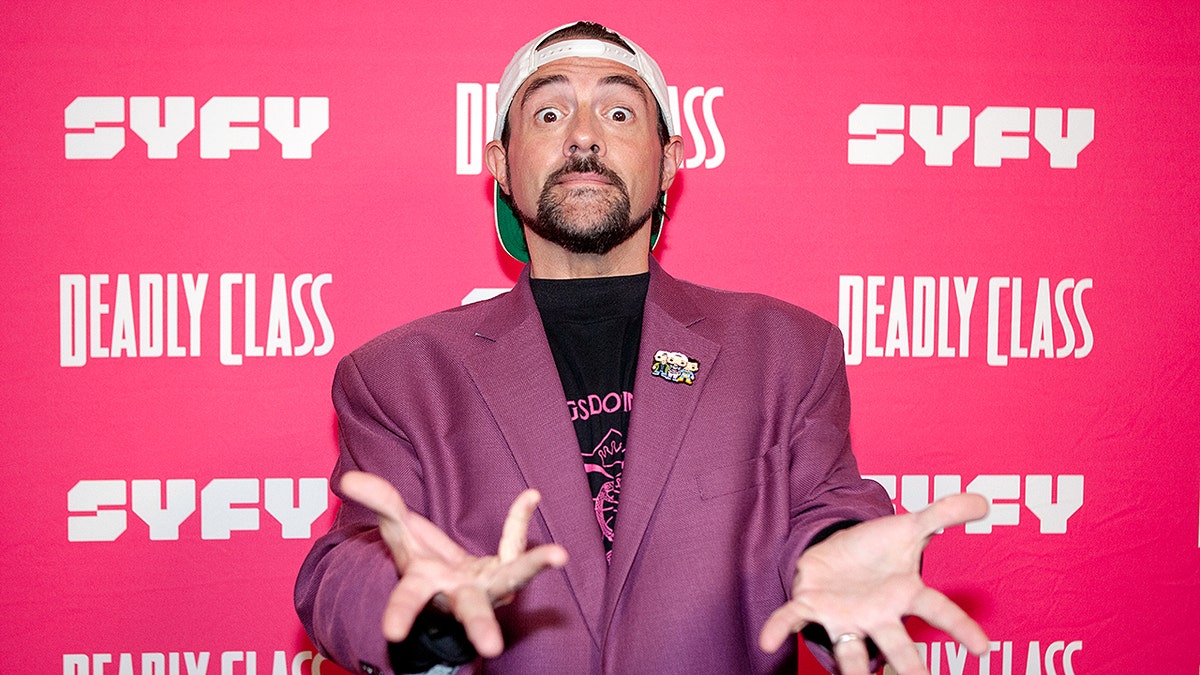
Kevin Smith attends the premiere week screening of SYFY's “Deadly Class,” presented by Smith, at the Wilshire Ebell Theater on January 14, 2019 in Los Angeles. (Paul Butterfield/Getty Images)
Mosier suggested that Smith's large ego prevented him from imagining a world that would continue without him. He compared human consciousness to data stored on a hard drive.
“And he says, 'Your laptop has a lot of information. Tons of data… What happens when it runs out? Where does that information go?' The moment I started thinking of myself as a hard drive, it was harder to think of myself as a child of light,” Smith said.
Another shocking discovery came when he noticed a Buddhist wall hanging in his own home that he had passed countless times before. It said: “May you realize your divinity in this life.”
ANTHONY HOPKINS REVEALS THE DIVINE VOICE THAT ENDED HIS LONG BATTLE WITH ALCOHOL
Smith interpreted the message as a call for individual responsibility rather than handing over control to a higher power.
“You don't need to mellow out like you did when you were a kid. It's important to remember that you're in charge. Why do you keep handing the wheel to someone who's not really there?” he told Fox News Digital, clarifying that even for Christians, “Jesus is not a physical manifestation right now, not until he returns.”
“I felt like I was being irresponsible with my life. I was giving everything to a ghost, a Holy Spirit, but a ghost nonetheless.”
That change of belief, Smith said, would define the next sequel.
“That's the prism through which I'll write the sequel to 'Dogma,'” Smith said. “This time it will be a little different, driven by a completely different spirit.”
CLICK HERE TO DOWNLOAD THE FOX NEWS APP
The director acknowledged that he might still be wrong about faith after all. But he said he feels he has lived a moral life and treated others well.
“We Catholics build insurance for ourselves. So there is always a purgatory“.