As California regulators prepare for a massive update to the state's signature climate program, they face growing pushback from lawmakers and oil industry groups who warn it could drive up already high energy costs.
Lawmakers voted last year to reauthorize the cap-and-trade program (formerly known as cap-and-trade) through 2045. The program progressively reduces the amount of greenhouse gas emissions allowed in the state and allows emitters to buy and sell unused pollution credits or allowances. It is key to California's climate strategy and generates billions in revenue for the state each year.
Although the program was always designed to reduce emitters, some lawmakers who supported the extension say the draft put forward by the California Air Resources Board could hit consumers and the energy sector hard at the wrong time.
Among the proposed updates, the plan would adjust the carbon dioxide emissions cap by 118 million tons by 2030. It would also adjust the state's system of free allowances, which have historically been given to oil refineries and other industrial facilities in the hopes of keeping them in California. It would transfer more of those free permits from natural gas utilities to electric companies.
A wave of public comments from lawmakers, oil companies, environmental advocates and consumers flooded the state Air Resources Board ahead of this week's deadline, and the agency will have until May to review the plan and put it to a final vote.
Among the most notable critics are Democratic lawmakers who voted to extend the program last year. Some worry that the plan will increase costs for refiners, driving more of them out of California and leaving the state more dependent on imported refined fuels. Others worry the plan doesn't do enough to address high electricity costs.
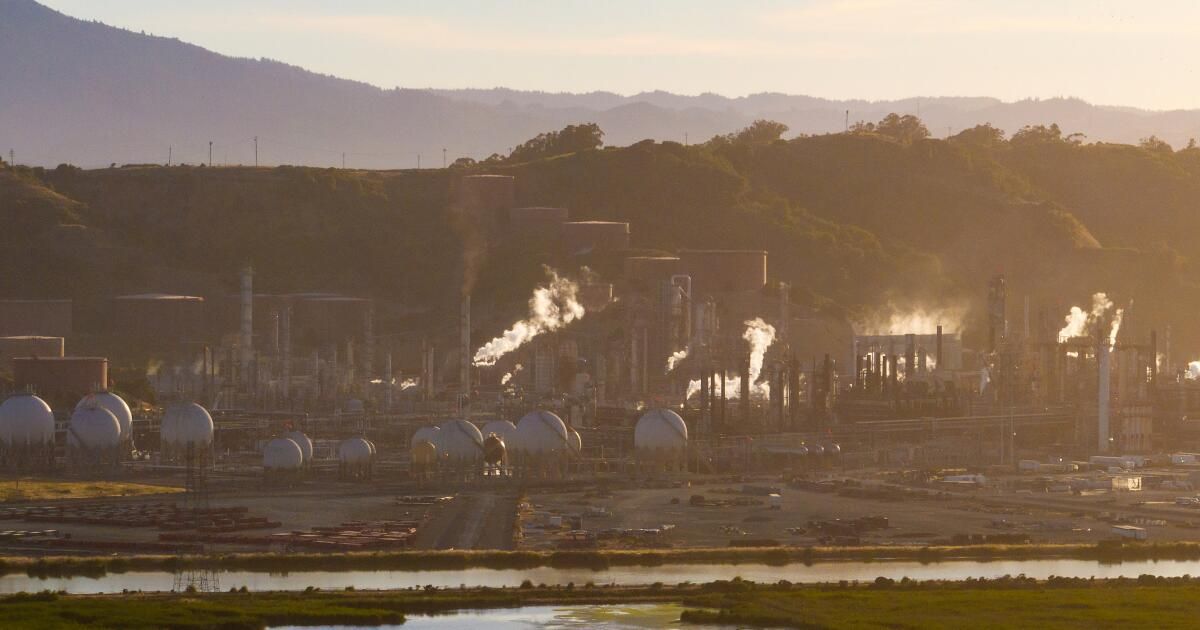
In a letter to the state's Air Resources Board, a coalition of 15 Democratic Assembly members, including Majority Leader Cecilia Aguiar-Curry (D-Winters), warned that the plan is moving too quickly for emitters to keep pace, which they said will destabilize California's complex network of fuel, gas and energy resources and push more refiners out of the state. Phillips 66 and Valero have already announced plans to close major refineries in Los Angeles and Benicia.
“This proposed regulatory update would further burden an already struggling energy market across multiple sectors and exacerbate strain on the very infrastructure that has punished California consumers with the highest energy prices in the country,” the lawmakers wrote.
Oil industry groups expressed similar concerns. The Western States Petroleum Association. which represents refiners, warned that their costs could increase by $1.5 billion annually by 2035.
Chevron executive Andy Walz said the additional costs could translate into about $1.70 more per gallon of gasoline that year.
“Affordability is a top concern for California residents and Chevron, and these proposed amendments would only exacerbate the high cost of living in the state,” Walz said.
But the extent to which regulations contribute to California's gasoline costs is disputed. State Air Resources Board officials said the proposal largely maintains the status quo for refineries. It includes “flexibilities that support doing business in California and help ensure the liquid fuel supply remains reliable, affordable and resilient during the transition to carbon neutrality,” spokeswoman Lindsay Buckley said in an email.
The updated program would also generate $180.7 billion in state-level benefits, including $123 billion in avoided health costs due to cleaner air, and up to $485 billion in global savings due to avoided climate damage, Buckley said.
“The cap and invest program is the most cost-effective way for California to meet its statutory climate goals,” he said.
At the same time, some lawmakers and advocates say the proposal places a disproportionate burden on the power sector at a time when utility bills are skyrocketing.
Assemblywoman Jacqui Irwin (D-Thousand Oaks), who authored the legislation that extended the program last year, led asseparate letter More than two dozen Democratic lawmakers are urging airline officials to expedite free permits for electric utility companies in order to “significantly address near-term electricity affordability.”
They were also concerned that the plan would result in lower climate credits for consumers — twice-yearly rebates that appear directly on people's electricity bills.
Policy analysts agreed that the current plan places a burden on electric utilities, which could translate into higher bills.
Still, the proposal is a “solid starting point” that can be adjusted to better balance emissions cuts with affordability, said Clayton Munnings, executive director of Clean and Prosperous California, an environmental economics nonprofit focused on the cap-and-invest program.
The California Air Resources Board “had a very strong first start, but I think there is a clear pattern in the feedback from stakeholders,” he said. “The intent here was to reduce utility bills and we must deliver on that promise.”
As for fuel, Munnings said the program was designed with refiners in mind and regulators still have plenty of tools to address their concerns if necessary. What's more, he said the carbon market shrugged off the proposed elimination of 118 million credits, and the cost of releasing a ton of carbon pollution fell, indicating that even stricter reductions could be justified.
In fact, a analysis Conducted by the nonprofit Environmental Defense Fund and modeling firm Greenline Insights found that the state Air Resources Board could remove up to 180 million allowances from the market and still preserve affordability benefits for households.
Ensuring the program delivers on promised emissions cuts is crucial, said California State Director of the Environmental Defense Fund Katelyn Roedner Sutter. The state is not on track to meet its goals, including a 40% reduction in greenhouse gas emissions by 2030 and at least 85% by 2045.
“Cap and invest is very important because it helps reduce emissions, generates desperately needed revenue and is the most cost-effective approach we have to reduce greenhouse gas pollution,” he said.
The debate unfolds as global oil prices soar amid the US-Israel war against Iran, which has disrupted shipping and production in the Middle East. Crude oil prices briefly rose above $119 a barrel this week.
National gas prices averaged $3.60 a gallon on Thursday, according to AAA, up from $2.94 a month ago. In California, gasoline averaged $5.37 a gallon, up from $4.55 a month ago.
But according to the California Energy Commission, only about 6% of the state's retail gasoline price is attributable to the cap-and-invest program, while nearly 37% comes from the cost of crude oil.
This is precisely why the state should stay the course, said Roedner Sutter.
“The best thing California can do is lean on its profitable climate policy, which is cap and invest, and continue to shift the state away from dependence on fossil fuels,” he said. “In the long run, that is what will protect Californians the most: not depending on this volatile industry.”
The state Air Resources Board is expected to review the proposal in the coming weeks before voting on it in May.