SACRAMENT- California and its state-funded programs are heading into a period of volatile fiscal uncertainty, driven largely by events in Washington and Wall Street.
Gov. Gavin Newsom's budget chief warned Friday that rising revenues tied to the rise of artificial intelligence are being offset by rising costs and federal funding cuts. The result: a projected $3 billion state deficit for the next fiscal year even though no major new spending initiatives have begun.
The Newsom administration on Friday released its $348.9 billion budget proposal for the fiscal year that begins July 1, formally beginning negotiations with the Legislature on spending priorities and policy goals.
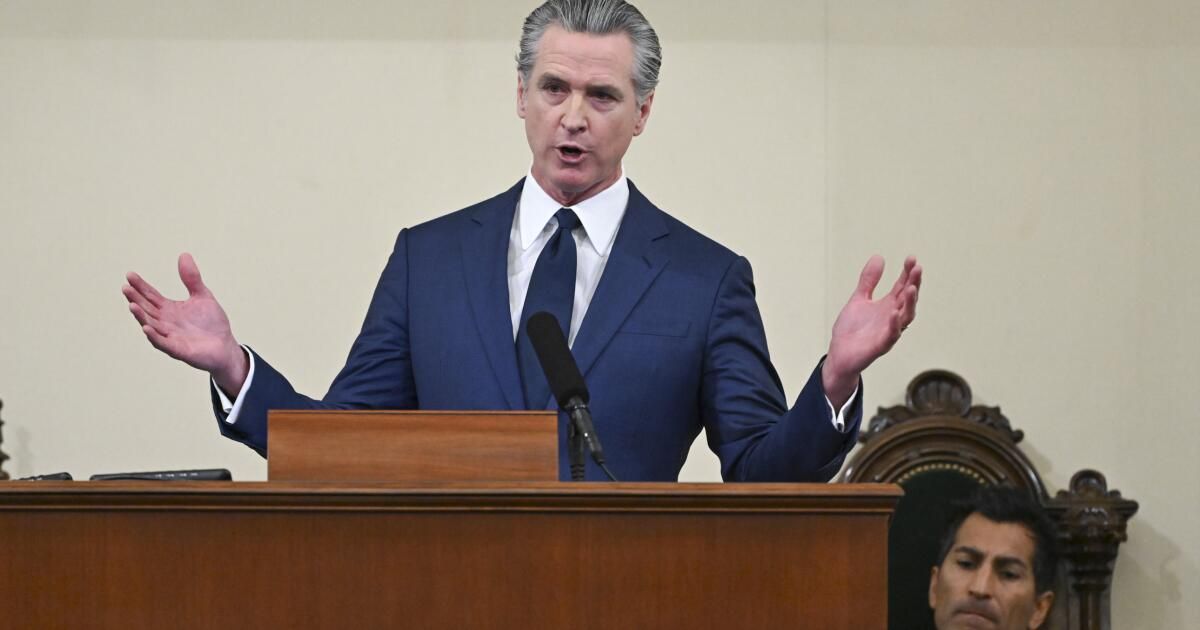
“This budget reflects both confidence and caution,” Newsom said in a statement. “California's economy is strong, revenues are exceeding expectations, and our fiscal position is stable thanks to years of prudent fiscal management, but we remain disciplined and focused on sustaining progress, not overextending it.”
Newsom's proposed budget did not include funds to offset massive cuts to Medicaid and other public assistance programs made by President Trump and the Republican-led Congress, changes that are expected to lead to millions of low-income Californians losing health care coverage and other benefits.
“If the state does not step up, California communities will crumble,” the California State Association said. Counties CEO Graham Knaus said in a statement.
The governor is expected to review the plan in May using revenue projections updated after the tax filing deadline, and lawmakers will need to approve a final budget by June 15.
Newsom did not attend the budget presentation on Friday, which was out of the ordinary, and instead opted to have California Finance Director Joe Stephenshaw answer questions about the governor's spending plan.
“Without significant spending increases, there are also no significant reductions or cuts to programs in the budget,” Stephenshaw said, noting that the proposal is a work in progress.
California has an unusually volatile revenue system, relying heavily on personal income taxes on high-income residents whose capital gains rise and fall dramatically with the stock market.
Going into state budget negotiations, many expected to see significant belt-tightening after the nonpartisan Legislative Analyst's Office warned in November that California faces a budget shortfall of nearly $18 billion. The governor's office and the Department of Finance do not always agree with or use LAO estimates.
On Friday, the Newsom administration said it is projecting a much smaller deficit — about $3 billion — after assuming higher revenues over the next three fiscal years than was forecast last year. The gap between the governor's estimate and the LAO's projection largely reflects different assumptions about risk: The LAO took into account the possibility of a major stock market decline.
“We don't do that,” Stephenshaw said.