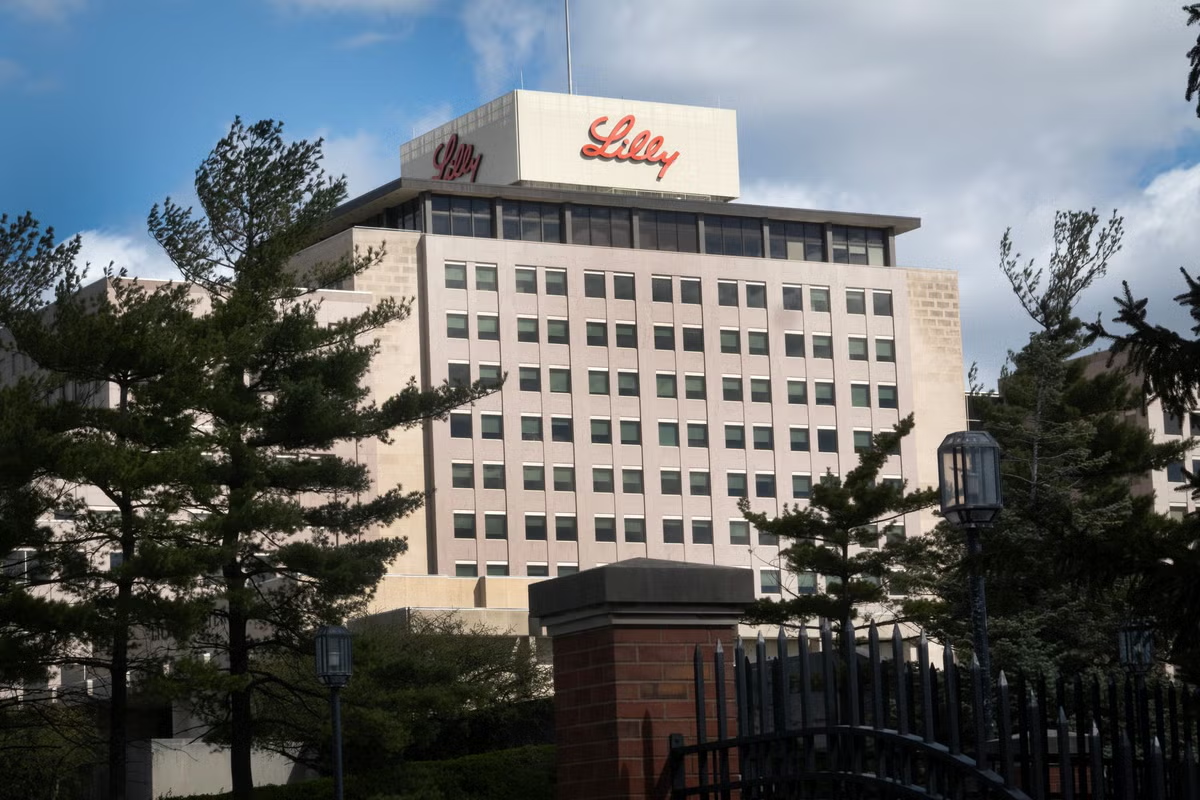
Donald Trump claimed Thursday that the CEO of pharmaceutical giant Eli Lilly informed him of plans to build six new plants in the United States.
During a Cabinet meeting at the White House, Trump praised the executive, saying, “I talked to the head of Eli Lilly, who's a fantastic guy, a star actually, he's a star, very smart, and he told me he's building six plants in the United States, big ones.”
Last year, Eli Lilly had announced its intentions to invest at least $2.7 billion in the construction of four facilities in the United States, with the aim of boosting production and strengthening medical supply chains.
The company has since detailed plans for three of these sites, located in Alabama, Virginia and Texas.
A Lilly spokesperson clarified that the company has, in fact, announced plans for nine new manufacturing sites in the U.S. since 2020, including the three detailed recently.
In November, Trump announced that his administration had reached an agreement with two drugmakers to reduce prices of the popular GLP-1 diabetes drugs for Americans with Medicare and Medicaid, as well as for those who buy the drugs on the administration's upcoming TrumpRx website.
Speaking in the Oval Office at the time, Trump said he was “delighted” to announce “tremendous cuts” and “drastic discounts” for “very effective drugs,” which he referred to as “the fat drugs” and commented that he had “never heard anything bad” about the wildly popular drugs.
Trump said GLP-1 makers Eli Lilly and Novo Nordisk were “joining the phenomenal list” of pharmaceutical companies that have capitulated to his administration's demand that they offer their products on a “most favored nation” pricing plan, reducing the cost Americans pay for their drugs to a level equivalent to that of countries that pay lower prices through their single-payer health care systems.