Last update:
Inadequate medical preparation at public events puts lives at risk. An emergency doctor explains why proper planning, trained teams and rapid response are essential.
Why medical preparation at public events must go beyond mere presence to ensure timely care that saves lives.
“As an emergency physician, I have learned a hard truth through years of practice: Emergencies do not announce themselves and survival depends on preparation, not intention. Public events, whether marathons, religious gatherings, festivals, concerts or political rallies, are meant to bring people together. However, behind the crowds and celebrations, medical preparation at many of these events remains grossly inadequate,” shares Dr. Shameem KU, clinical director, group coordinator and consultant at the KIMSHEALTH Department of Emergency Medicine. Thiruvananthapuram
“In my experience as an emergency medicine specialist, unprepared intention simply does not save lives,” says Dr. Shameem KU. “Large public gatherings expose people to physical strain, emotional stress, and delayed access to care, but medical planning is often treated as an afterthought.”
A recent public event in India clearly illustrated this failure. Despite the large turnout and obvious physical stressors, medical arrangements were minimal. When an individual collapsed and went into cardiac arrest, there was no organized emergency response. Instead, the person was transported to a hospital by a passerby in a private vehicle.
“This was not bad luck,” emphasizes Dr. Shameem KU. “It was a planning failure.”
When presence is confused with preparation
From an emergency medicine perspective, any mass gathering is a high-risk environment, explains Dr. Shameem KU. Heat, dehydration, crowd density, physical exertion, emotional stress, alcohol consumption, and delayed access to care increase the likelihood of medical emergencies ranging from minor injuries to life-threatening conditions such as heat stroke, trauma, stroke, and sudden cardiac arrest.
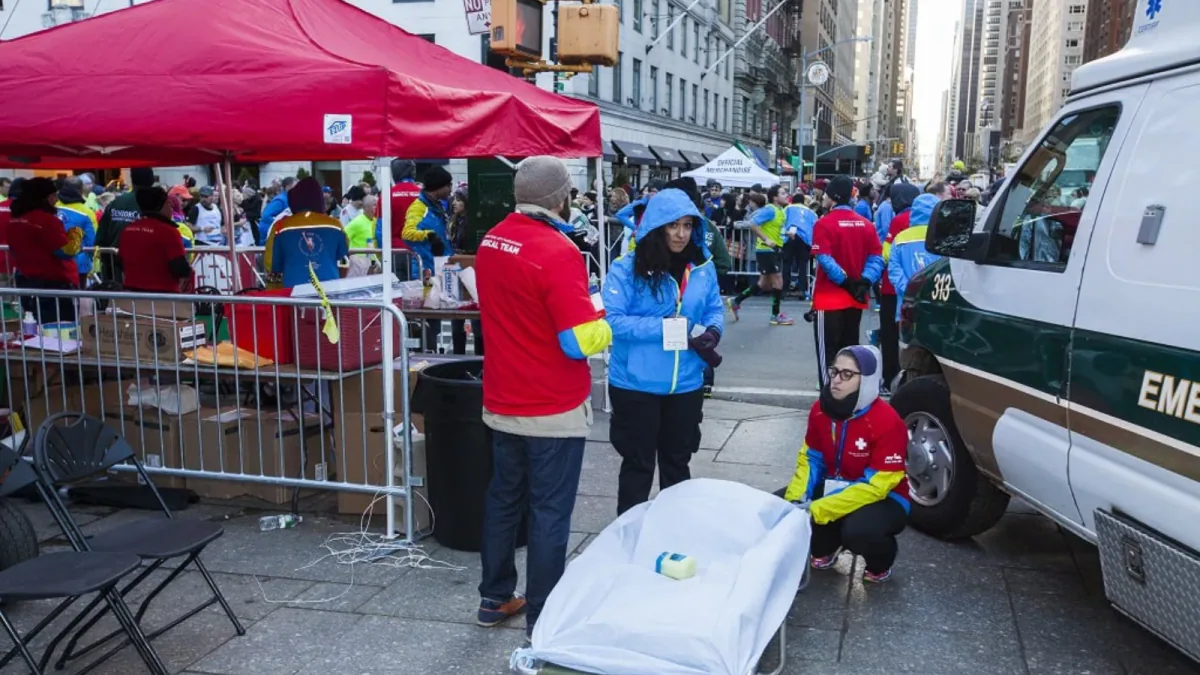
“Too often, medical coverage at public events is reduced to a symbolic gesture,” says Dr. Shameem KU. “A single ambulance, a basic first aid desk, or a few volunteers may offer comfort, but they do not provide capacity. Medical presence does not equal medical preparedness.”
Why this is important in cardiac arrest
“In cases of cardiac arrest, every minute without CPR and defibrillation reduces survival by 7 to 10 percent,” says Dr. Shameem KU. Survival depends on rapid recognition, immediate high-quality CPR, early defibrillation, and rapid transport with advanced life support.
“When trained teams, essential equipment and clear response protocols are missing, results are left to chance,” he adds. “In emergency rooms across the country, we see patients arriving too late, with severe brain injuries or irreversible organ damage that could have been prevented with timely on-site care.”
Minimum coverage is a dangerous illusion
From a public health point of view, minimal medical arrangements at large public events amount to a calculated risk, says Dr. Shameem KU. Multiple medical emergencies can occur simultaneously in large locations, and without distributed medical teams and rapid response systems, delays are inevitable and cost lives.
“Globally accepted standards for mass gatherings already exist,” he notes. “They include adequate ambulances with basic and advanced life support, trained medical and paramedical staff at all locations, accessible AEDs, and clear triage and evacuation plans. These are not excessive demands, they are minimum safety standards.”
From responsibility to regulation
According to Dr. Shameem KU, public safety cannot depend on goodwill alone. “The moment organizers invite people to gather, they assume a duty of care,” he says. “That duty must be enforced through regulation.”
Calls for mandatory national standards covering medical risk assessments, defined personnel and equipment ratios, mandatory availability of AEDs, certification of medical readiness before granting permits, and accountability when standards are violated.
A call to act
“A person who collapses at a public event should be treated by a trained medical team, not by fellow citizens improvising desperate care,” says Dr. Shameem KU.
“In the emergency room we see every day the cost of inadequate planning,” he concludes. “Being present is not enough. Being prepared must become mandatory. Lives depend on it.”
January 5, 2026, 21:24 IST