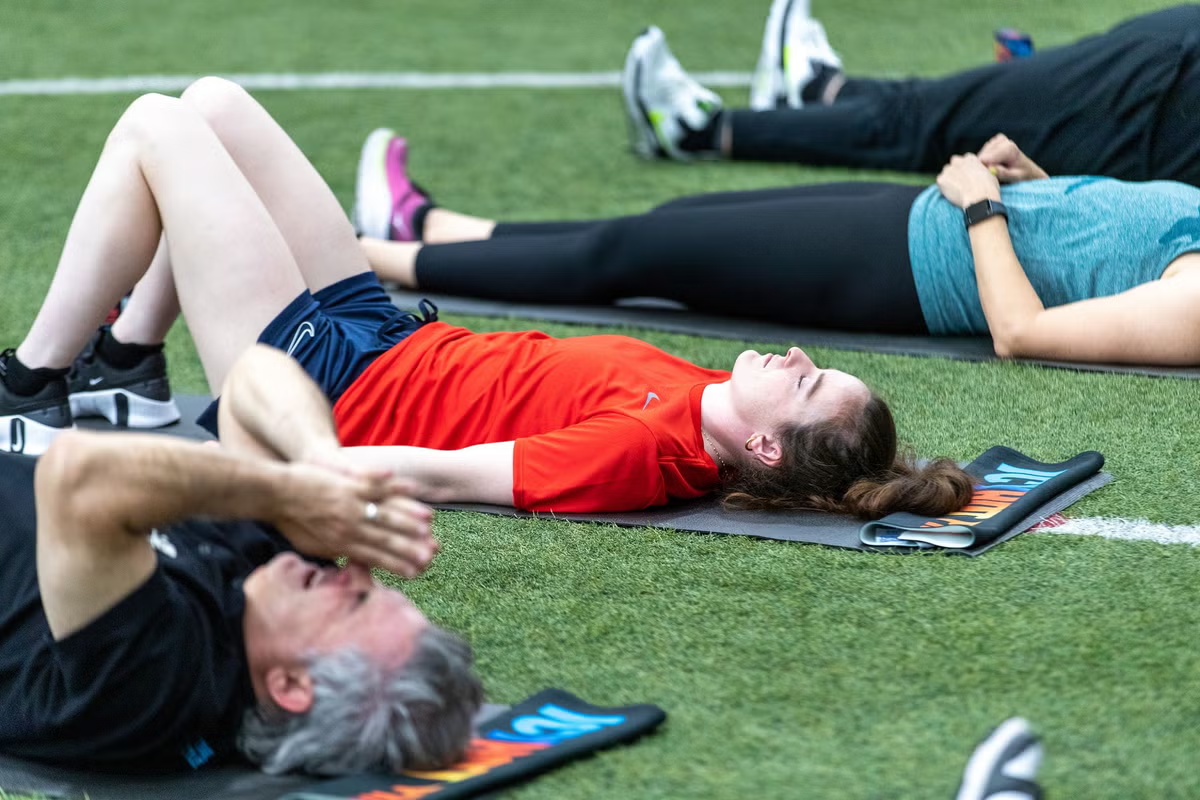
About 30 percent of Americans are participating in Dry January this year, with the goal of improving their mood, sleep and overall health.
But experts say other month-long health challenges that promote self-care may provide similar beneficial health effects for people looking for an alternative.
From focusing on fitness to heart, brain or gut health, every small step can make a big difference, at any age.
“Self-care can have a huge impact on quality of life,” Dr. Sandra Dunbar, a nurse and professor at the Nell Hodgson Woodruff School of Nursing at Emory University, said in a statement.
“Good self-care ideally starts in childhood, but it's never too late to make changes to improve your health and well-being,” she said.
A fitness cliché, for good reason
A 30+ day fitness challenge has long been a trend among wellness influencers. It still is, because it works.
No matter what you do, you only need a couple of weeks of consistent exercise to see results. But choosing the right exercise can be difficult if you're just starting out.
“I've seen some where you do 10 push-ups a day, all the way up to a 30-day challenge to start training for a 5K or a marathon,” said Zachary Sprague, a family medicine physician at Scripps Coastal Medical Center Carlsbad.
“Anything you do will be a good start, but with 10 push-ups you probably won't see any change in your fitness habits,” he said. “I would definitely recommend starting with a more complete routine.”
A more comprehensive workout could include regularly attending full-body workout classes like Orange Theory or Barry's Bootcamp, if you have the means.
However, everyone can find meticulously planned examples of both cardio and weight lifting online that they can do at home, outdoors, or in a gym. Some challenges also help isolate specific areas, such as the abs or back, for a more personalized approach.
Or you can focus on one exercise, such as jumping rope or riding a stationary bike, for a month. Almost any type of exercise increases blood flow and improves heart health.
“Aerobic exercise and resistance training are the most important for heart health,” says Johns Hopkins exercise physiologist Kerry Stewart. “Although flexibility does not directly contribute to heart health, it is important because it provides a good foundation for performing aerobic and strength exercises more effectively.”
Just make sure you like the activity and don't push yourself too hard. Exercising muscles you don't normally use over and over again could lead to injury if you're not careful.
Long live the 'vegan'
Americans are eating less animal meat, and nearly 70 percent of more than 1,200 respondents in a November 2024 survey said they had reduced their red meat consumption over the past year, according to researchers at Rutgers University.
A vegan and more plant-based diet, which excludes all animal products, has been shown to promote weight loss, reduce the risk of heart disease by lowering cholesterol levels, and reduce the risk of colon cancer, according to Rush University.
If you want to try it but don't want to fully commit, a month-long vegan excursion might be right for you. Known as “veganuary,” it has the endorsement of celebrities such as musician Billie Eilish and actor Joaquin Phoenix.
But doing it well is also important.
“You can be overweight and be a vegan; you can be malnourished and be a vegan,” said Dr. Jeffrey Soble, a cardiologist at Rush University Medical Center. “Whatever your diet choice, you need to know what foods to avoid and what foods to look for.”
For both vegans and meat-eaters, that means avoiding junk food. Ultra-processed foods have been shown to increase the risk of cancer and heart disease.
“Refined grains, sweets and junk foods cause problems for everyone, not just vegans,” Soble said. “And both vegans and non-vegans can fall into the habit of making these products the mainstays of their diet.”
Researchers have said that there can be deficiencies in plant-based diets if you don't eat enough of certain foods.
Sleep for your health
It is recommended that adults get at least seven hours of sleep each night. However, less than half of Americans said they get the sleep they need, according to a 2024 Gallup poll.
Not getting enough sleep can be dangerous for your health. According to the Mayo Clinic, prolonged lack of sleep increases the risk of obesity, diabetes, depression, high blood pressure, stroke, and heart disease.
“Actually, seven to eight hours of sleep is ideal,” explained Dr. Dexter Shurney, president of the American College of Lifestyle Medicine.
That's where the challenge of sleeping for 30 days comes into play, to accumulate the hours you need each night.
That may mean making more of an effort to stay away from screens, consuming less caffeine, turning off the lights earlier, going to bed earlier, or exercising earlier in the day so you're not excited before bed. Some challenges will ask you to track your health along with your sleep to see how it improves.
melodic medicine
For people living with dementia, singing can improve memory and improve mood. Music and singing are often treatments to help the brain function better.
“When we use music intervention, we look for areas and networks in the brain that are intact to serve as bridges and help areas that are not functioning well,” said Dr. Borna Bonakdarpour, a neurologist at Northwestern Medicine. “Singing, for example, can be a bridge to communicating better through language. The rhythmic nature of music can help people walk better.”

But the positive effects of singing are not just for dementia patients. Singing helps reduce levels of the stress hormone, cortisol, and increases the happiness hormone, oxytocin.
It can also help people lose weight. According to the London Singing Institute, just one hour of standing singing burns about 140 calories for a person who weighs 150 pounds.
But you don't have to learn an opera to reap the benefits in 30 days. According to Wisconsin researchers, just 14 minutes of singing a day has been shown to improve heart health.
This was true “regardless of singing experience (or lack thereof),” the researchers noted.
A mindset reset
According to Mental Health America, more than 21 million American adults are living with depression.
Mental health is an important component of physical health. For example, depression is a risk factor for diabetes, stroke, and heart disease—the leading cause of death in the United States.
But many may still underestimate the importance of mental health on their physical health, and spending a month focusing on your mental health can help greatly improve physical health, according to the University of Utah. For people with depression, this may mean implementing significant lifestyle changes that have been shown to improve mood, such as exercise and a healthier diet.
For many, it might mean being more mindful, stopping negative self-talk, journaling, meditating or walking, and practicing yoga every day.
It could even be as simple as making sure you do something you love every day.
“Our attitudes are often a choice,” said Karizma Maxson, nurse manager of the neonatal ICU at the Mayo Clinic. We can spend time reflecting on something that is negative and out of our control or decide to see the good in something and choose joy.”