Almost one in four store-bought soups exceeds the government's salt targets, with some cans containing most of the maximum daily limit of 6g for an adult, a new study has revealed.
Action on Salt and Sugar (AoSS) found that 48 per cent of branded soups exceeded the maximum salt target, in stark contrast to just 6 per cent of supermarket own-brand alternatives.
The group analyzed 481 ready-to-eat soups at major UK retailers and concluded that 23 per cent still did not meet the Government's voluntary maximum salt target of 0.59g per 100g, which was due to be met by the end of 2024.
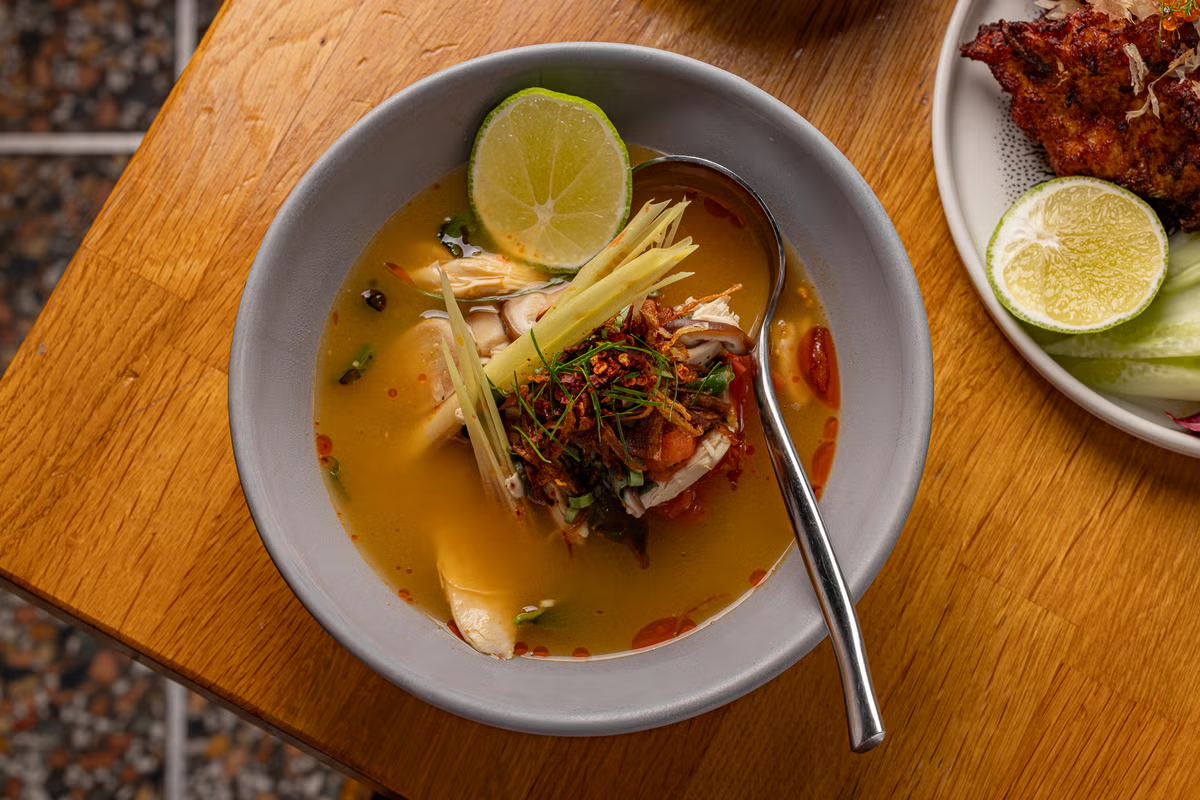
The saltiest product identified was Soup Head Tom Yum soup, which contained 1.01g of salt per 100g or 3.03g in a 300g packet, an amount comparable to more than two McDonald's cheeseburgers.
A Tom Yum Soup spokesperson said the brand “always continues to look for ways to improve our products for the consumer, and absolutely salt is very, very high on that priority list, especially with this flavor.”
AoSS warned that suggested serving sizes on packets could underestimate actual salt consumption, with many brands indicating a 200g serving (half a can), even though consumers were likely to eat more in a single meal.
Other high-salt examples included Daylesford Organic Minestrone Soup (1g per 100g) and Baxters Luxury Cullen Skink (0.95g per 100g).
Under front-of-pack labeling guidelines, one in six soups (16 percent) would receive a red warning for their high salt content, while only 11 products (2 percent) would get a green label.
Across the range, the average serving offered 1.43g of salt, while 51 products (11 per cent) contained more than 2g in a single suggested serving – more than a third of the maximum daily limit for an adult.
Sonia Pombo, head of impact and research at Action on Salt and Sugar, said: “Soup is often marketed as a healthy, everyday option, but our findings show it can be a major source of hidden salt.
“Almost one in four soups still exceeds the maximum salt target, even though food companies were expected to meet it more than a year ago. 12 months on, that level of non-compliance is disappointing and difficult to justify.
“The UK used to be a world leader in salt reduction, but progress has stalled. The government must take the lead again with stronger incentives to drive reformulation and proper accountability, so the healthier option becomes the default, not the exception.”
Asda said: “We are really proud to have set a healthy sales target based on the Nutrient Profile model – as seen in the data, all Asda brand soups surveyed in this report are healthy based on this classification.
“Reformulation and new product development are a key part of achieving this goal and salt content is a key consideration in our decision making when it comes to product formulation.”