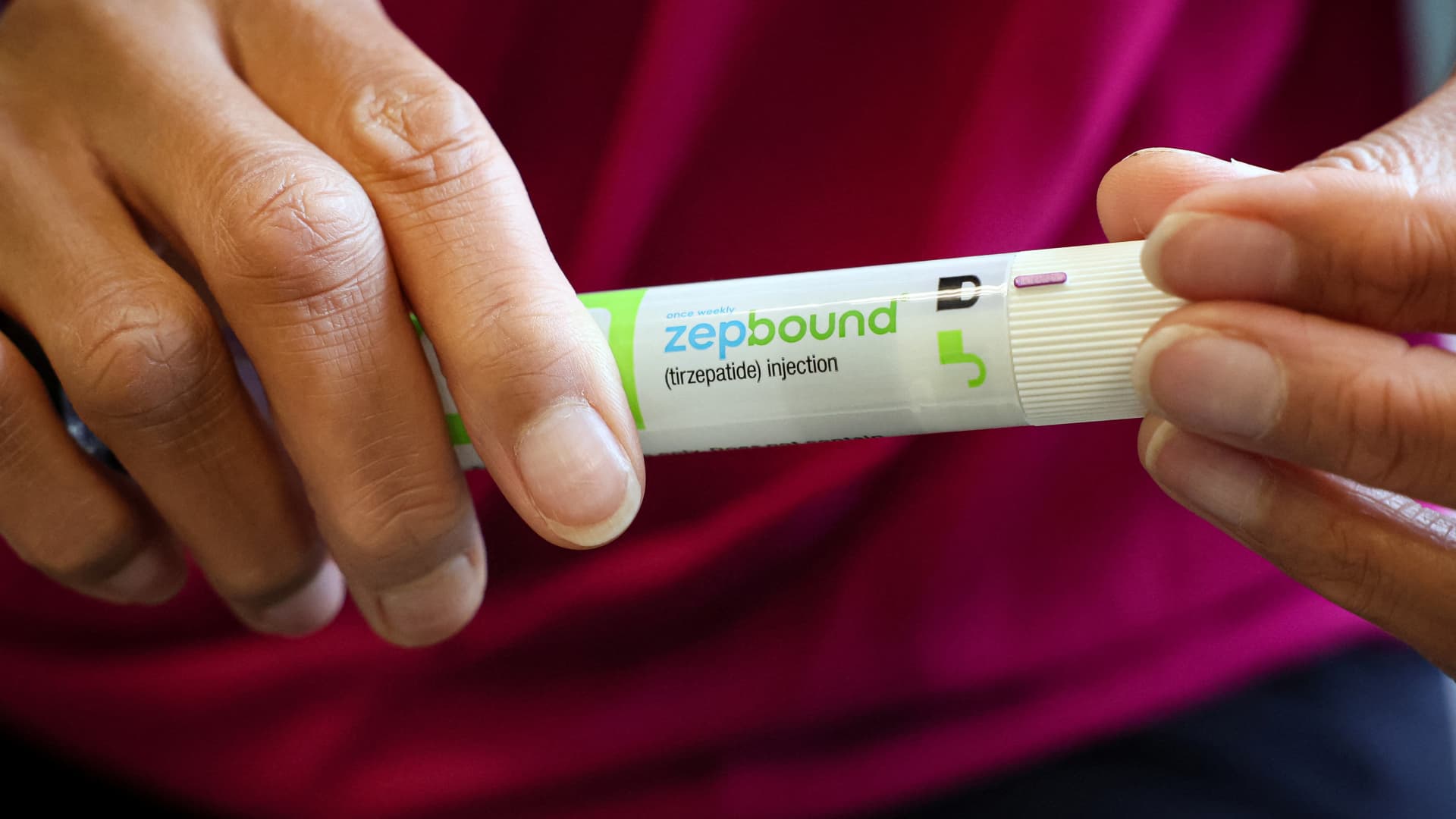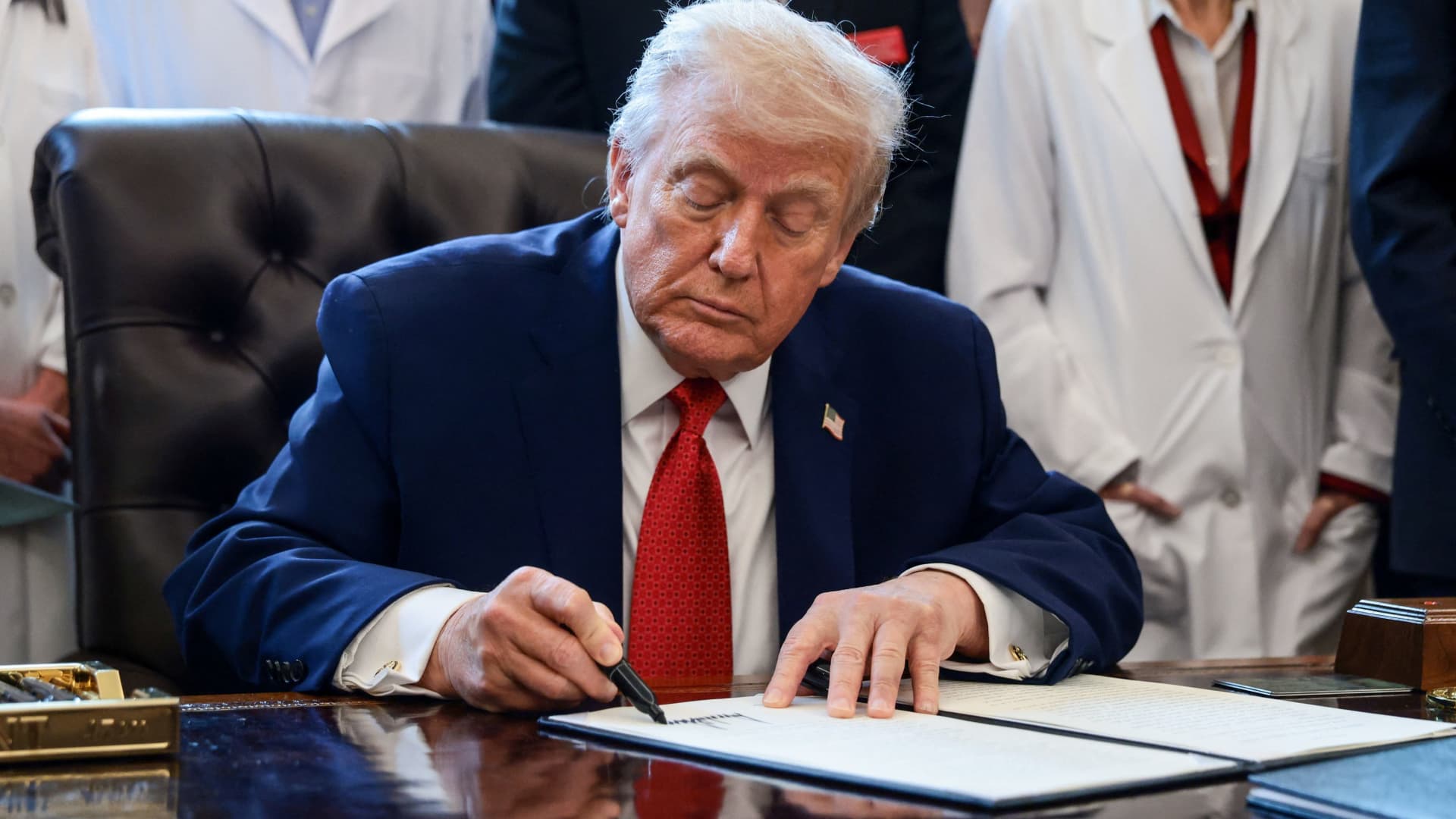
President Donald Trump has long joked about GLP-1, the breakthrough drugs that have changed care for diabetes and obesity. Sometimes called “the fat drug.” In an interview with The New York Times in January, he mused that he “probably should” take them.
A few days before the Times published that story, Trump invested in Eli Lilly, the nearly $1 trillion drugmaker whose fortunes are closely tied to its successful GLP-1, Zepbound and Foundayo, and government reimbursement for the drugs.
This week we reported on several purchases of Lilly stock made by Trump or his brokers from January to March, totaling up to $680,000, according to a disclosure signed by the president. He also bought between $250,000 and $500,000 worth of stock in West Pharmaceutical Services, a company that makes injectable drug devices. It is also benefiting from the increase in GLP-1.
While the purchases were occurring, the Trump administration was pursuing an agenda that boosted the GLP-1 market, including advancing Medicare reimbursement for drugs to treat obesity, a long-standing goal for Lilly. The deadline for drugmakers to participate in a reimbursement project was Jan. 8.
The administration also stepped up the crackdown on “compounded” GLP-1s, cheaper copycat drugs made by pharmacies that critics (and brand-name drug makers) say are unsafe. That eliminated competitors to Lilly's products. Trump's FDA also quickly approved Lilly's GLP-1 pill, Foundayo.
The timing of the Lilly purchases — among more than 3,600 transactions Trump or his representatives made in the first quarter of the year — worried government ethics experts.
“A president who buys or sells stock in a company whose value is affected by his administration's actions undermines public trust in two ways,” said Kathleen Clark, a legal ethicist at Washington University in St. Louis.
First, he said, the public should believe that government actions are motivated by the common good, not personal enrichment. Second, the public should believe that those inside the government are not benefiting from inside information.
The revelations have also intensified criticism from Trump's opponents who say he is trying to profit from the presidency.
Congressional Democrats are calling for legislative action. “Trump is the ultimate conman: he rigs the game, manipulates the rules, and reaps the benefits,” said Sen. Andy Kim (D-N.J.) in X, highlighting our report. “It's time we banned presidents from owning and trading stocks.”
Democrats could have a chance to pass a bill in 2027. Public opinion is increasingly leaning in their direction, and taking both chambers of Congress is a possibility. (Of course, even if Democrats were to reclaim those majorities and pass a bill, it would have to be signed by Trump.) If they were determined to pursue anti-corruption measures related to health issues, they would have goals beyond Trump's stock trading. Democrats have also questioned the influence of corporate taxpayers on changes to the FDA's tobacco regulation, for example.
New ethics revelations show the president invested in Eli Lilly and a company that makes injectable devices while his health agencies implemented policies that benefited them.