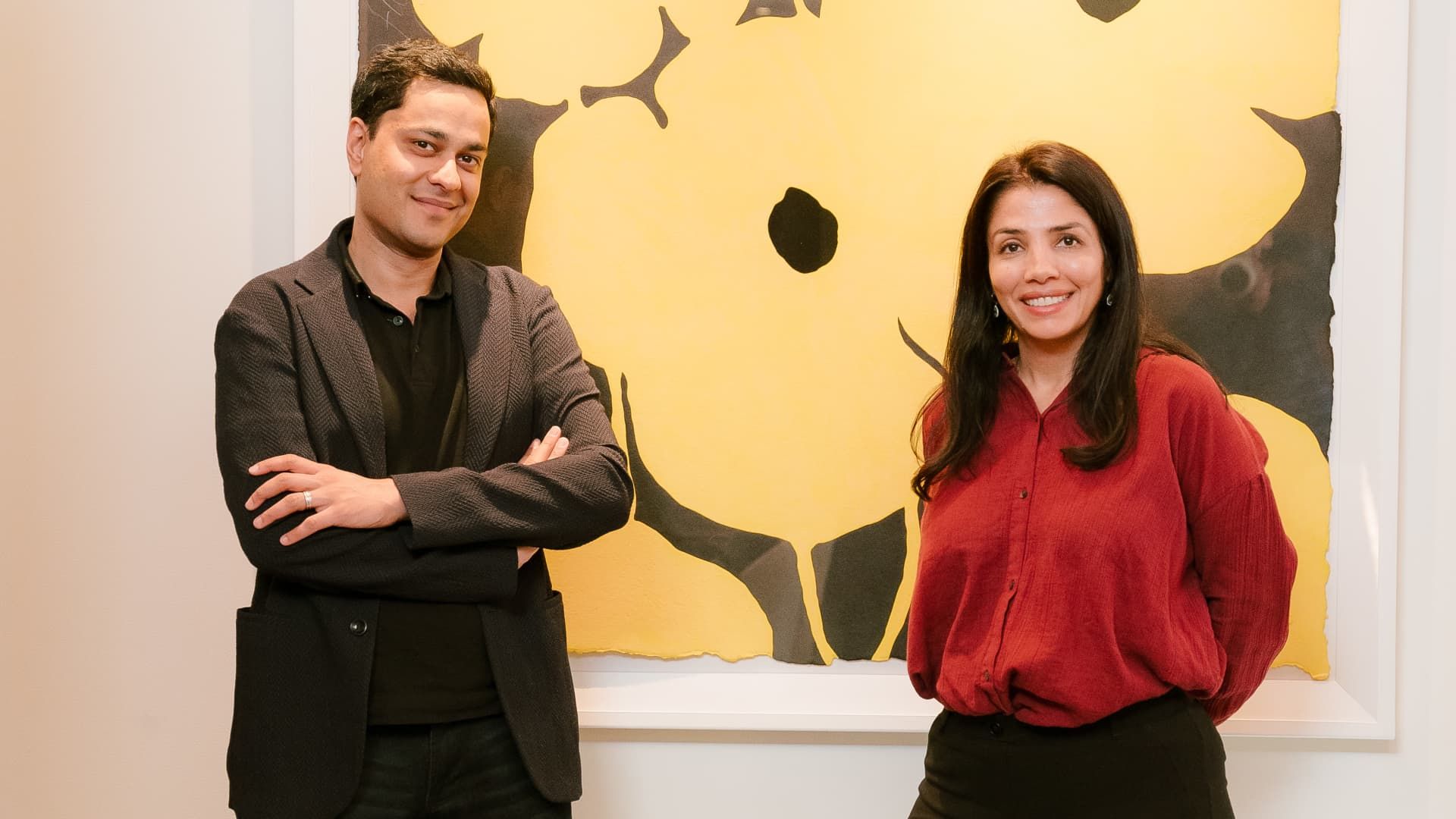
Farid Vij, CEO and Co-Founder of Citizen Health, and Nasha Fitter, Chief Business Officer and Co-Founder of Citizen Health.
Citizen Health
A version of this story first appeared in the CNBC Cures newsletter. Click here to register.
When Nasha Fitter's youngest daughter was diagnosed with FOXG1 syndrome in 2017, a rare genetic neurodevelopmental disorder, she faced a challenge that many in the rare disease community unfortunately know all too well: little to no public information about the disease or how to cope with it.
“Nothing was really done,” Fitter said. “Just getting everyday answers to my questions and problems I was facing was really piecemeal and random…it was basically going on Facebook and hoping someone would answer my question.”
At the time, Fitter was told there was no treatment for the syndrome, no research was underway and no real roadmap for what might happen next for her daughter. To address that issue, he co-founded the FOXG1 Research Foundation to work toward a cure.
But Fitter, a technology entrepreneur, also saw an opportunity to advance the way patients with rare diseases receive care, which could also accelerate the search for cures.
Working with fellow tech entrepreneur Farid Vij, the two launched Citizen Health in 2023, with the goal of building what Vij calls an “AI advocate” for the rare disease community.
“The most important thing you can have that will benefit you if you are a patient with a rare disease is an advocate by your side,” Vij said.
Often, due to the lack of information and resources available about specific rare diseases, that duty falls to a parent or loved one.
“Thousands of families have reasons not to take no for an answer, so they will try to find the next doctor, start a foundation, or try to become scientists themselves and create gene therapy programs,” he said. “But most people can't afford to do that, or don't know how to do it, and it's really hard to democratize that.”
The impact of AI in the healthcare industry
AI and LLMs are rapidly changing the healthcare industry, and more and more people are turning to these tools for advice and guidance when it comes to their health, whether it's to better understand their conditions and test results, questions they should ask their doctor, or how they should seek treatment.
Vij said this development has been great for people looking for information on common conditions and general healthcare. But for many rare disease patients, “there has been no research done, there are no approved therapies and even the leading expert has seen only a few patients, so there is nothing to model from,” he said. Ultimately, that is what causes many rare disease patients and their families to turn to Facebook and other groups where they are not even sure if the information they are receiving is relevant.
That's a problem Citizen Health is trying to solve, building one of the largest rare patient data networks of its kind. The AI-powered platform works with patients and rare disease advocacy groups to create communities for different conditions, using medical records, genetic information and other patient-reported experiences to create a data set that those same patients, their families or doctors can consult to find answers. Citizen Health also collects and organizes data from consenting patients, providing access to researchers so they can advance the development of drugs and treatments without placing additional burden on rare disease communities.
To date, there are more than 8,000 rare disease patients on the platform across more than 350 diseases, Citizen Health said. Additionally, there are more than 16 pharmaceutical companies using that data to advance treatments.
Citizen Health is free to use for patients and they can choose to make their data accessible to researchers; Vij said 98.3% of patients currently choose to share them. If a researcher wants to access that data for commercial purposes, they pay Citizen Health, which also shares a percentage of that with the patient.
“We've been able to reduce the timelines to bring these therapies to market, where they're actually based on what patients need by 30% to 50%,” Vij said. “That's our dual mission: to use this aggregate data to help patients on a day-to-day basis, and on the other hand, to use that same data to drive research so we can bring therapies to market faster.”
The company has raised $44 million since launching in 2023, including a $30 million Series A funding round in August 2025 led by 8VC. Other backers include Headline, Transformation Capital and the Chan Zuckerberg Initiative.
Nasha Ritter, Chief Business Officer and Co-Founder of Citizen Health, and her daughter, Amaya, who was diagnosed with FOXG1 syndrome, an ultra-rare neurodevelopmental condition.
Citizen Health
Using AI agent to help patients with rare diseases
Now, Citizen Health is taking its platform a step further, introducing AI agent created specifically for rare disease patients, helping them schedule appointments, navigate insurance appeals, alert them when something in their medical records requires attention, and connect them with similar patients and relevant clinical trials.
“In rare diseases, a parent spends an average of 53 hours a week providing care beyond the ordinary parenting that anyone might have to do,” Vij said. “So you get a lot of those hours back, but you also get much better outcomes for patients because you learn from the collective wisdom of the community.”
Fitter, who is not only the company's chief commercial officer but also uses it to help care for her daughter, said these types of tools and access can be critical for rare disease patients and their families struggling to find the right care or roadmap to follow.
“It's a game-changer for the individual patient: getting better care and making better decisions day to day,” he said. “For our foundation, if we didn't have Citizen, we wouldn't be dosing our first patient this year.”
Fitter said that in his foundation's case, Citizen Health data helped guide the endpoint of its treatments from seizures to movement disorders, a decision that was made after being able to analyze medical data from other patients with FOXG1 syndrome. The foundation recently had its Type D meeting with the FDA and was allowed to use patients' natural history data based on their medical records as a placebo control arm, allowing it to skip a phase three trial and a placebo, which Fitter said saved about $80 million.
“The greatest achievement is that the next patient who is newly diagnosed will have an easier life thanks to the work we have been able to do,” he said.