Agriculture Secretary Brooke Rollins told CNBC on Monday that the New World screwworm is a “little pest.” In the past, he called the parasite “scary.”
The discrepancy in messaging before and after the flesh-eating plague was detected in the U.S. offers a window into how Rollins is handling the screwworm threat now that it has reached the interior border. And it shows how the administration is rushing to ease fears that the parasite could further drive up the price of beef amid rising inflation.
Since the screwworm was detected in Texas last week, Rollins has gone on air to assure the American public that the US Department of Agriculture is ahead of the infestation and that it does not pose a risk to the food system. He also blamed the Biden administration for the spread, arguing that lax immigration enforcement at the southern border helped the parasite advance.
“The food supply is not at risk. This is not a virus, it is not a disease, it is just a small pest, a larva that lands in a calf's wound, for example, and can be treated,” he told CNBC on Monday. “Under the last administration, with the mass movement under the open border policy, the cartels, etc., border security, that's when it started to come back towards the United States.”
However, last September, Rollins was more forthcoming about the threat posed by the screwworm in an appearance on Fox News. I was talking about the screwworm as it spreads northward into the US from Central America.
“At a time when our beef supply is at its lowest level in 75 years…it's really scary, the prices are very high for that reason, it could even lead us into another phase of real commitment to getting good beef at a good price to Americans,” he said. “We have a plan, we're on it.”
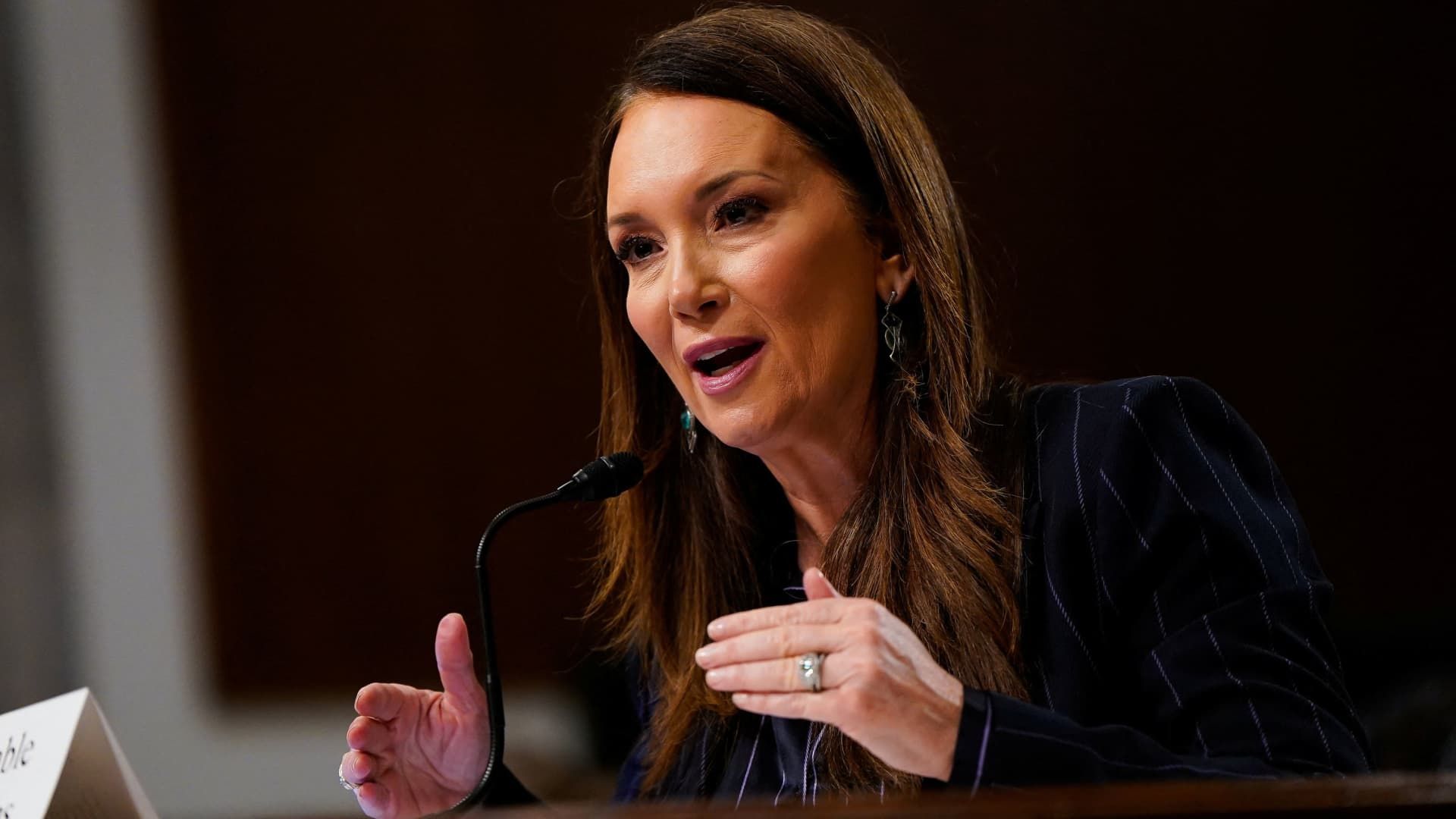
U.S. Department of Agriculture Secretary Brooke Rollins testifies before a Senate Agriculture, Nutrition and Forestry Committee hearing titled “Oversight of the U.S. Department of Agriculture.” at the Capitol in Washington on June 10, 2026.
Elizabeth Frantz | Reuters
And at a Senate hearing in May 2025, Rollins said the screwworm was a “major threat” that would “devastate our livestock industry in this country.”
On Wednesday, Rollins doubled down on his blame for the Biden administration when he appeared at another Senate hearing, arguing that “we know this development is a serious threat, but it did not take us by surprise.”
Meanwhile, Democrats are taking aim at Rollins and President Donald Trump over the screwworm outbreak.
“Under Donald Trump and Brooke Rollins, farmers and ranchers are suffering, and consumers are dealing with record prices,” said Democratic National Committee spokeswoman Kendall Witmer. “Trump's reckless and damaging cuts and his administration's incompetence have left America's food supply vulnerable to outbreaks and risk driving up already high beef prices.”
The screwworm was detected in the United States at a time when inflation is underway. Inflation rose 4.2% year over year in May, the Bureau of Labor Statistics reported Wednesday, hitting the highest annual mark in three years.
The parasite is the larvae of a fly that lays its eggs in open wounds of animals. The larvae feed on flesh and can be very harmful or fatal to livestock. When detected, the movement and supply of animals in affected areas can be restricted. Screwworm infestation can be treated if caught early and is not a communicable disease that can be transmitted to meat.
With U.S. cattle numbers already low, the plague threatens to drive up beef costs even further.
The Dallas Federal Reserve, in a May report, said that if an outbreak on the scale of the 1972 infestation, which saw the largest number of screwworm cases in the United States, occurred, it could cause approximately $3 billion in damages.
“By sickening or killing livestock, screwworm could cause shortages and higher meat prices. This implies that equilibrium prices could fall in the short term, then increase in the medium and long term,” the report reads.
As of Wednesday, six cases of screwworm have been detected in the United States, in Texas and New Mexico. The USDA is racing to contain the spread, releasing swarms of sterile flies that will mate with female screwworms and produce infertile eggs. The agency is also implementing quarantine zones, increasing capture, surveillance and disclosure.
So far, it is too early to say whether screwworm will become a full-blown infestation or whether the USDA will be able to combat it. Experts say there are correct protocols for containment, but urge people to report any cases they may see in animals.
“Hopefully, we have a contained infestation, where we are checking all the animals in the area, providing treatment to those that need it and releasing the sterile flies to eliminate the small population that we hope is in that area,” said Phillip Kaufman, professor and head of the entomology department at Texas A&M University. “What we don't want is for people to not report; the fly will continue to reproduce and grow in numbers, and then it will become a much larger and more challenging infestation.”
And while Rollins' response has received some backlash from Republicans, including Texas Agriculture Commissioner Sid Miller, she retains the support of key Republicans.
“I very much appreciate the work led by Secretary Rollins,” said House Agriculture Committee Chairman Glenn “GT” Thompson, R-Pa. “We are going to get ahead of this, we will eradicate it, the sooner the better.”
Correction: This story has been revised to reflect that Phillip Kaufman is the head of the entomology department at Texas A&M University. An earlier version misspelled his name.