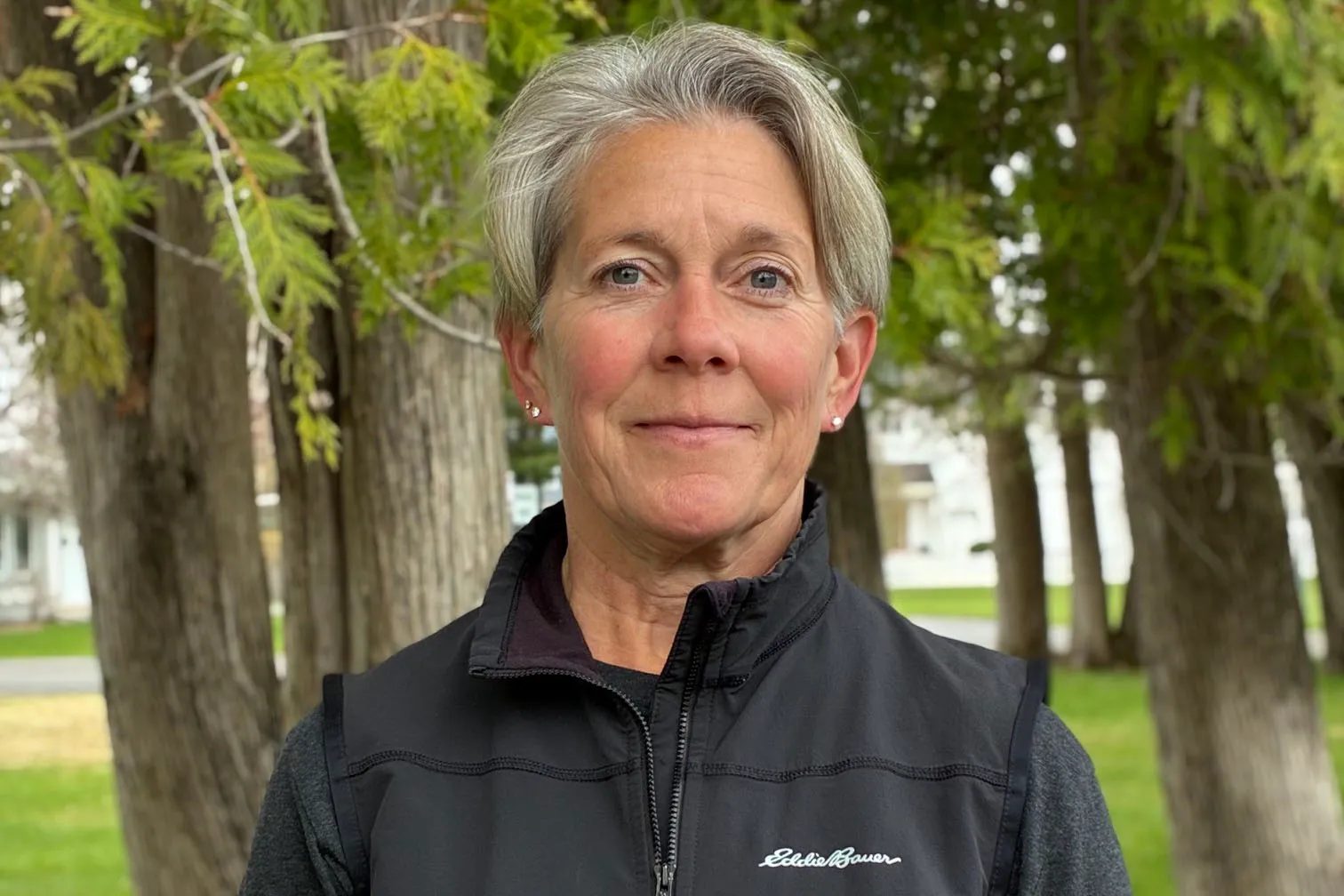
When Melanie Miller saw her health insurance premium payment almost triple to $914 a month this year, she stopped shopping in the Affordable Care Act marketplace.
The 59-year-old retired teacher, who recently moved from Ohio to Michigan, now pays $341 a month for a pair of plans, one that covers routine and urgent care and another that pays set amounts for hospital stays. Neither meets federal standards for comprehensive coverage.
Although she practices yoga and is healthy, Miller said she still feels “vulnerable.” If you end up in the hospital, your plan pays a flat amount of $2,000, a fraction of the $30,000 price of an average hospital stay.
“I don't play, but I can do it too,” he said. “This is a game of chance.”
Congress's decision late last year not to extend the marketplace's enhanced tax credits has increased the appeal of alternatives to comprehensive insurance: plans like Miller's, which have lower premiums but don't meet the ACA's standards for coverage or consumer protections. Unlike plans sold on exchanges, these options (some sold by large insurers, others by small businesses or nonprofits) can deny claims with few or no legal rights for consumers to appeal. Plans are not required to cover “essential health benefits,” such as preventive care, and may impose annual or lifetime limits on benefits.
There is debate about whether these options help or harm patients. Consumer advocates dismiss them as “junk insurance,” while advocates say restricting alternatives to expensive marketplace plans risks increasing the number of uninsured. Some states, including Kansas and Florida, and the federal government itself have relaxed regulations on such plans or created incentives to join them, while other states, including California and Massachusetts, have tried to discourage enrollment in alternative insurance. However, those regulatory barriers are now being tested as premiums collapse household budgets.
Alternative insurance takes many forms, including short-term policies, which were designed to close temporary gaps in coverage and often exclude pre-existing conditions, and fixed indemnity plans, which pay a fixed fee for service regardless of how high costs are and are intended for supplemental use. Arrangements in which people pool their money to cover each other's bills, including faith-based “health care sharing ministries,” also offer a cheaper alternative to market options. Because they are not considered insurance under federal or state laws, they are not legally required to pay even eligible medical bills.
Enrollment data for alternative plans is mostly confidential, but several indicators point to changes in the market. Recent estimates suggest that marketplace enrollment is down about 20% starting in 2025, and a KFF survey of people on the exchanges last year found that 5% switched to private, individual coverage outside the marketplace, including non-ACA-compliant plans. Covered California, the state's marketplace, plans to survey former members to find out where they went.
Insurance industry insiders also report that, amid the expiration of subsidies, alternative plans are getting a marketing boost. Colorado insurance broker Samantha Albritton said that before the ACA open enrollment, she was seeing more marketing of fixed indemnity plans than in previous years. One shared health care plan, Zion HealthShare, had more than 75,000 members in February, a 50% increase since last June, it said in a statement.
Critics of these alternative plans say the biggest problems occur when people use them as primary insurance and don't realize the coverage is inadequate until they need it most. “Human beings have bodies that can fail them,” said Amy Killelea, a research assistant professor at Georgetown University's Center on Health Insurance Reform.
An increase in premium took it out of the market. An alternative left her exposed.
Melanie Miller, 59 years old
Harbor Springs, Michigan
To avoid a $553 monthly premium increase this year, retired teacher Melanie Miller replaced its Affordable Care Act coverage with two alternative plans, one that covers preventive services and another that pays set amounts for hospital care. You consider your limited hospital coverage a calculated risk given your good health, but you are now weighing the possibility of abandoning the preventive care policy, given your difficulties finding in-network providers in your area. “I haven't had a good experience with it,” he said.
Killelea and other health insurance experts say the fine print of these plans can be difficult to parse and that enrollees don't have traditional insurance protections to fall back on. A 2023 peer-reviewed study found that after reading a summary of benefits for a sample short-term policy and a disclosure that the plan was not ACA-compliant, only half of participants understood that prescription drugs were not covered.
When Jade Ramsey was 24, she turned down her employer's insurance because of the cost of premiums. After experiencing unexplained fatigue and bruising, she sought low-cost coverage from Southern Guaranty Insurance Company through a policy similar to a fixed indemnity plan.
Two weeks after enrolling, Ramsey, who lives in Arizona, couldn't walk. A visit to the emergency room led to a six-day hospital stay and a bill of $143,823 in 2021. He was diagnosed with acute lymphoblastic leukemia. His insurer denied coverage for this and other bills, calling the cancer a preexisting condition and offering no other recourse after rejecting his appeal, he said.
Those bills ended up in collections and his credit score plummeted. Ramsey said he once visited the emergency room with chest pain that he attributed to the stress of six-figure debt. He eventually qualified for Medicaid and has since recovered his credit score even though he never paid off the debt. She said collection agencies still call, but she ignores them.
Southern Guaranty Insurance Company did not respond to requests for comment.
Alternative insurance advocates argue that stifling these more affordable options will only increase the number of people without coverage at all.
“People should be able to spend their own money financing health care in the way that works best for them,” said Brian Blase, president of the Paragon Health Institute, an influential conservative think tank. Paragon pushed to end enhanced tax credits in the marketplace, arguing that they encouraged inappropriate enrollment by increasing incentives for unscrupulous brokers to enroll people without their knowledge.
Robert Godfrey of Clearwater, Florida, appreciates having options. When Godfrey's monthly premium payment was scheduled to increase from $879 to about $1,250 this year, the 64-year-old hair salon owner switched to a $320-a-month membership with Zion HealthShare. Godfrey, who rarely needed medical care, saw the switch to a cheaper plan as a pragmatic option. “Thank God I'm healthy,” he said.
Healthy and outraged by the increase in premiums, he opts for alternative insurance
Robert Godfrey, 64 years old
Clearwater, Florida
Robert Godfreyhair salon owner, says he does not need medical care beyond preventive services and has never met his deductible. So last year, when the expiration of enhanced federal subsidies was going to increase his market premium payment by 40% (to about $1,250 a month), he pulled out. He called it a “scandalous increase.” Just months away from becoming eligible for Medicare, Godfrey opted for a cheaper alternative: a $320-a-month shared health care plan. These arrangements, in which members pool their funds to cover each other's medical costs, are not legally required to pay the expenses.
The Trump administration has relaxed regulations on some alternative plans. Federal agencies last year stopped enforcing Biden-era rules on how long short-term plans could last and how they could be marketed, and then offered states a marginal advantage in the competition for a share of the $50 billion in federal funds for rural health if they did the same.
In a statement, CMS spokesman Christopher Krepich said the administration is focused on ensuring “access to affordable coverage options, strengthening competition, and reducing unnecessary regulatory burdens, while maintaining adequate consumer protections.”
State oversight of alternative insurance is a patchwork. In much of the country, these plans face few restrictions. Many states, including Florida, Arizona and Indiana, have relaxed limits on short-term plans in the wake of the Trump administration's actions, allowing them to renew them for up to three years total.
In Kansas, lawmakers overrode the governor's veto to pass a bill in March that provided a tax break for people who enrolled in healthcare sharing ministries. In her veto, Democratic Gov. Laura Kelly warned that these ministries are unregulated, “which opens the door to all types of fraud and abuse.” Kansas House Speaker Daniel Hawkins responded in a press release that “House Republicans believe families should have more flexibility and more control over their health care decisions, not fewer options and higher costs.”
Oklahoma considered a similar bill earlier this year, although it did not pass.
Not all states are favorable to alternative plans. More than a dozen prohibit short-term policies or have rules restrictive enough to discourage insurers from selling them. California and Massachusetts are among the states with the strictest rules, prohibiting short-term plans and requiring clear warnings to people considering a shared health care ministry in certain circumstances. Both also tax adults who forgo comprehensive coverage, while subsidizing marketplace premiums to encourage enrollment.
Still, higher premiums will test these barriers, said Héctor Hernández-Delgado, director of the National Health Law Program, which advocates for quality health care for low-income people. He worries that consumers attracted by low plan prices could “be worse off in the future,” saddled with heavy medical debt.
Now in remission, Ramsey urges those considering cheaper insurance to do careful research. “Make sure it covers what needs to be covered,” he said. “It might be too good to be true.”
Are you having trouble paying for your health insurance? Have you decided to waive coverage? Click hereto contact KFF Health News and share your story.