As a reader, I'm more of a “Jane Eyre” girl than a “Wuthering Heights” girl. Of course, I first devoured the novels at an age when I was too young to understand the ourobouros dynamic between Heathcliff and Catherine; Jane, the lonely, studious orphan, was more my style.
But when I got to college and fell madly in love for the first time, I was ready for Kate Bush's version of “Wuthering Heights,” an avant-garde musical number, all screams and pleas. Somehow Bush, that '80s Ur-diva, concluded the plot of Emily Brontë's 1847 novel better than any SparkNote (this was long before AI). Wrapped in lyrics and melodies rather than chapter-wise prose, I got it: here were two people who embodied the idea behind I can't live with or without you..
Kate Bush, “Wuthering Heights” video
I am still a reader, one who spends part of my time reading professionally, as a book reviewer. We talk about wild and windy moors, temper and jealousy! Yet, I return again and again, like Cathy, to my own “only teacher,” the stories, the words, and their creators. In the words of Kate Bush, I cannot “leave my Wuthering, Wuthering, Wuthering Heights behind me…”
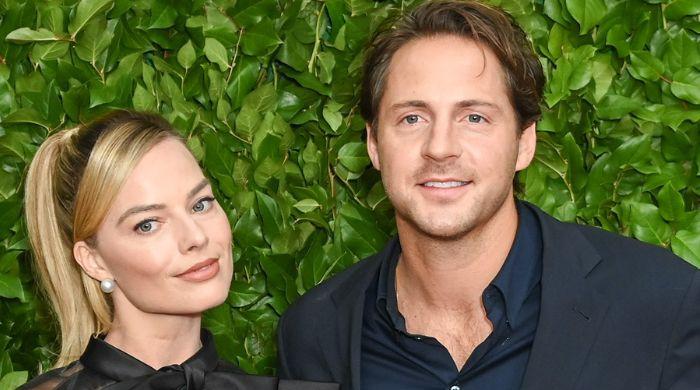
We are not the only ones. This month's Emerald Fennell's new film adaptation of Brontë's novel, starring Margot Robbie and Jacob Elordi, promises to introduce millions of moviegoers to a classic novel into which Brontë poured her soul, creating archetypal lovers: the mismatched, feverish kind who may never find happiness but can't be separated from each other.
Once I heard the song, I was hooked, both to Bush's music (we all watched “Stranger Things” bring “Running Up That Hill” back to life) and to the quest to discover how other musicians could use stories and novels in their work. Some songs are obviously based on fables and folk tales, such as “Ramble On” by Led Zeppelin and “Ain't Necessarily So” by Bronski Beat (the story of Moses, etc.). Given my addiction to fiction, I started looking for darker titles.

Well, if not dark, then at least more literary. David Bowie's “1984” was an easy win, based of course on Orwell's novel. Fans recognize that the Rolling Stones' “Sympathy for the Devil” derives from Bulgakov's “The Master and Margarita”; and Jefferson Airplane’s “White Rabbit” echoes “Alice in Wonderland.” There's even a small pop/rock subgenre of songs based on Anne Rice's vampire novels: Sting's “Moon Over Bourbon Street,” Annie Lennox's “Love Song for a Vampire,” and Concrete Blonde's “Bloodletting.”
Let's not forget the classic classics. Could two songs be more different than “Home at Last” by Steely Dan and “I am a Man of Constant Sorrow” by the Soggy Bottom Boys? However, both are inspired by Homer's “Odyssey.” Unfortunately, although inspired by Homer's “Iliad,” ABBA's “Cassandra” doesn't reach the heights of Mount Olympus in quality (there are other atrocious songs based on excellent books like Loggins and Messina's “The House at Pooh Corner”). Shakespeare's “Romeo and Juliet” receives references in many lyrics, as well as a starring role in Mark Knopfler's ballad of the same name.
Knopfler (who, not coincidentally, has a master's degree in literature) wrote my favorite song based on a literary work: “Sailing to Philadelphia.” It's a miniature version of Thomas Pynchon's 1997 “Mason & Dixon,” about the two Englishmen hired by the Penns and Calverts to “draw the line” that in 1765 began dividing the United States into North and South, through Maryland and Pennsylvania, and played an important role during our nation's Civil War. Performed as a duet by Knopfler and James Taylor, the piece uses a lot of expert fingers to imitate the sounds of wind, waves and seabirds as the two surveyors, one from the earth and one from the stars, argue over how safe and successful their expedition will be.

“Sailing to Philadelphia” inspired me to read Pynchon's novel after I first heard it in the early 2000s. I had never read anything by the famously reclusive author before (so sue me, I spent graduate school as a medievalist) and was absolutely fascinated by his sense of play, by the looseness of the joints of his sentences and paragraphs. I have since read two more (“The Cry of Lot 49” and the fairly recent “Shadow Ticket”) and hope to get to “Vineland” sometime soon.
That's what a great adaptation should do: spark curiosity about its source material. Not all listeners, of course, will connect the title of Kate Bush's song to Emily Brontë's novel (and, fortunately, most listeners will fail to connect ABBA's “Cassandra” to Homer), but those who do might choose to read the book. What could be more relevant right now than Bowie's “1984” and its basis in Orwell's novel?
Speaking of late-stage capitalism: If Taylor Swift's “happiness” (sic) sends some of her die-hard fans to “The Great Gatsby,” they may see “the green light of forgiveness,” in reference to Daisy's dock sign, as their own delusion. I have no illusions that each and every lyrical allusion to literature will foster a revolution in reading.
However, I also know that I'm far from the only book nerd who keeps a record (written or remembered) of songs based on works of literature. Which is your favorite? What is the darkest one you can remember? Let's build a great list.
In the meantime, I'll be here in my reading corner, listening to Kate Bush while I reread “Wuthering Heights.” Pro tip: The book, my friends, is always better.
Patrick is a freelance critic and author of the memoir “Life B.”