For a holiday with eight days and more than 16 different ways to spell it, Hanukkah once featured extremely limited television programming.
Today, everything from Spider-Man to Mickey Mouse, “The Nanny” to “New Girl” and “Arthur” to “Phineas and Ferb” have had Hanukkah and/or Hanukkah episodes, but for decades there wasn't much more than Ed Asner's 1973 Hanukkah PBS documentary and David Grover's singing special. While 1996's “A Rugrats Hanukkah” is often noted as the half-hour that popularized Hanukkah children's television specials in the United States, Nickelodeon the year before had its first half-hour centered around the Feast of Dedication, and it came from a special place called Weinerville.
Yes, there is a “Weinerville Hanukkah Special.”
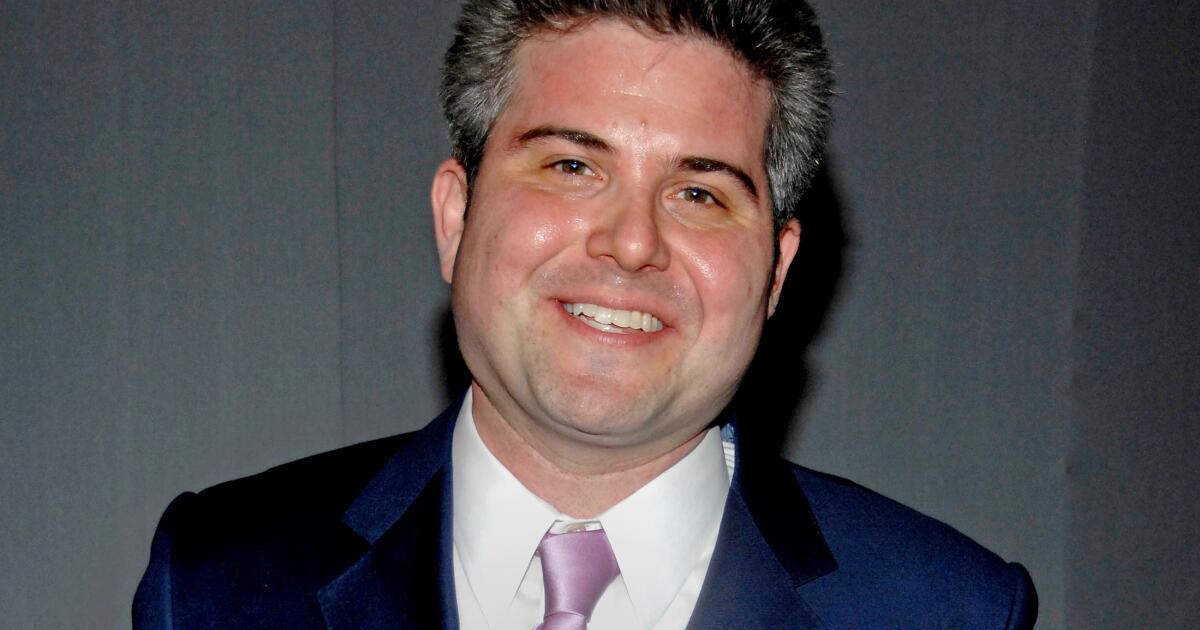
During Nickelodeon's experimental years in the early '90s, the children's channel greenlit a show starring puppet-centric comedian Marc Weiner at the helm. It was the result of a previous pilot titled “That's Not Fair” for Ha! Network (which later merged with the Comedy Channel to become Comedy Central), based on a clip from Weiner's segment on the comedy show “Random Acts of Variety”, and the test audience was younger than the channel's desired demographic. This timing, however, coincided with Nickelodeon supposedly going for “the soupy sales of the '90s.”
The pilot was brought to Nickelodeon, which picked it up. “Weinerville” premiered in 1993. Continuing Weiner's signature appearance of his human head on different puppet bodies (“Weinerettes”), the show was an episodic story of a puppet town filmed in front of a live audience, which also included an opportunity for audience members to compete in games (after being “Weinerized”) and segments around older classic cartoons. Nothing about the show was conventional in the world of children's programming, not even the time slot. While most new children's shows premiered on weekday afternoons or Saturday mornings, “Weinerville” was given two hours on Sunday afternoons to air four new episodes in a row.
In the second season of “Weinerville,” the show moved to weekday afternoons, but by then Nickelodeon's demographic began to skew older and “Weinerville” moved to weekday mornings before school. Weiner remembers always wanting to do something for Hanukkah, and originally proposed the idea of a Hanukkah public service announcement. “I went to a meeting with one of the executives and he gave me a book about a Hanukkah story and it was just strange. [He said] 'You should do a special, but your version of this story.' I asked him if I could do one 'Weinerville' style and he said 'OK.'” From there, writer Scott Fellows, who was the voice of Zip on the show, became the driving force behind the special.
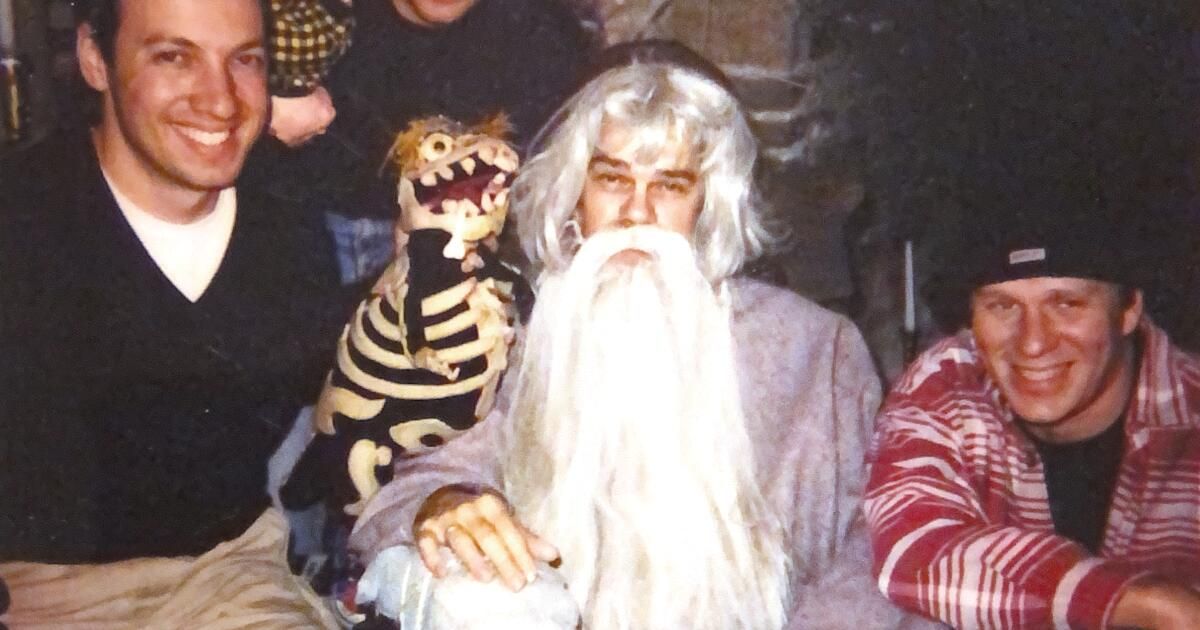
The result was one of the most chaotic half-hours of '90s children's television. Instead of being in front of a live crowd, the special was filmed in a cabin in Killington, Vermont, in October, about two months before it aired. While Snow may have been mostly fake, “The Weinerville Chanukah Special,” which features aliens and musical numbers, remained grounded in a unique foundation of reality with the inclusion of then-popular hits by the B-52s, Elastica and Gloria Estefan (which Weiner said was achieved thanks to Nickelodeon parent company Viacom's deal with MTV over the networks' use of licensed music), as well as counterculture celebrities in comedy, music and even wrestling (WWF's Diesel, aka Kevin Nash).
The plot follows two potato pancake-type aliens, called Sektals “Latkes” spelled (mostly) backwards, one played by actor Michael Gunst, who remembers it being a “fun gig” filmed in order over a few days with a crew of about a dozen) who are escaping from their people's evil overlord, Antidorkus (a riff on Antiochus), who has been using his Keerg (“Greek”) ray to make his people abandon their traditions and behave. exactly like him. So they escape to the ski lodge the “Weinerville” gang has rented while they try to find enough oil to fly back into space. Although it appears they don't have enough oil, Hanukkah magic happens, Antidorkus is taken down, and the day is saved. It ends with a big Halloween party and a quick punk rock song about different ways to make a menorah that mimics the Ramones' “I Wanna Be Sedated.”
Along the way, we hear a song about the true story of Hanukkah performed by proto-punk pioneer David Johansen (credited as Buster Poindexter), who plays wise old man Gonsah K'nocker and sings an inspired original song, “The Hammer Came Down.” Weiner remembers working with Johansen: “I'm not sure who orchestrated his acquisition, but he was brilliant at it.”
Denny Dillon also appeared, making a cameo as his character Toby from HBO's “Dream On.” Looking back on the special, Dillon appreciates its “wonderful silliness” and adds, “I think that's why the show works because you can keep going, you don't know where you're going and there's a commitment to the silliness.” Also appearing was Laura Kightlinger, who was familiar with Weiner “he was a comedian and everyone liked him” and remembers filming his scene where he holds real applesauce, which was funny and today she appreciates how fast he was, which makes it “perfect for now.”
Nickelodeon icon and “Double Dare” host Marc Summers opened the special, reading the traditional Hanukkah story and sharing the screen with “Weinerville’s” most famous character, Boney, a skeletal dinosaur who was the angry, ornery B-side to the then-famous purple dinosaur Barney.
“Boney could do absolutely anything and make me laugh,” Summers recalls. He describes Weiner as “a very religious person and he wants to spread Judaism and its traditions. It was revolutionary if you think about it.”
In the past, Summers says, Hanukkah would appear occasionally as a short segment, but no one spent much time explaining what it was about. But Weiner would do it with a point of view and a sense of humor. “People tend to stereotype everything Jewish and what they don't know about certain holidays with what they think they know,” Summers says. “So, you got it straight from the horse's mouth with the guy who understood what he was doing.”
Along with the music and aesthetic madness, what makes “The Weinerville Chanukah Special” stand out among the three decades of Hanukkah specials since is how Hanukkah is celebrated without having to be analogous to another holiday. Christmas isn't mentioned in any way, everyone knows what latkes are, and Hanukkah takes full center stage. In an interesting coincidence, the same week that the “Weinerville” special premiered, Shari Lewis’ “Lamb Chop’s Hanukkah Special” premiered on PBS. Two puppet-filled Hanukkah musical specials in the same week after decades of drought are a miracle in themselves. Equally surprising is the overwhelming critical praise that “Weinerville” received.
The New York Times praised it as “Strange, to be sure. And absolutely charming.” Reviewing it for The Times, NF Mendoza called it “Funny and vivid.” Jewish Week, while not reaching the same level of enthusiasm, did give the accurate and inadvertently tantalizing description: “this space version of Hanukkah pow! bam! sock! pie in the face, 'kicking ass' is loud. Very loud.” Weiner's manager, Lee Kernis, recalls: “Nickelodeon was very supportive…I don't remember there being any notes…Marc and people used to joke that the show was put together with superglue and tape. It wasn't a high-tech show. I think that was the charm, it leaked to Nickelodeon what Marc had to do to make that show.”
While “The Weinerville Chanukah Special” aired several times in 1995, the following year’s “A Rugrats Chanukah” (which aired a month after Nickelodeon’s final “Weinerville” production “The Weinerville Election Special from Washington BC”) became the channel’s Christmas tradition for generations to come. Although absent from the airwaves, in December 2000 and 2002, “The Weinerville Chanukah Special” was screened at the Museum of Television and Radio in New York, and thanks to the advent of file-sharing and video-streaming sites, the special gained a cult following throughout the 2010s, often the preferred choice for a Hanukkah episode of Christmas podcasts. Also a favorite of children's television podcasts, Manny Oramas of Nickelodeon's “Splat Attack Podcast” fondly reflects “when the special came out, I didn't know anything about Hanukkah, but this helped me in a subtle way. I consider it timeless.”
Weiner has remained active in the world of children's media, voicing Map and Swiper in various incarnations of “Dora the Explorer.” She has also been making tote bags from old sails used on the Hudson River sloop Clearwater (which she was on for three years in the '70s) to promote Clearwater's environmental work. Her family also continued to spread the innovative joy of Hanukkah: Her eldest daughter, Rebecca, a chef and artist living in Israel with her husband, challah artist Idan Chabasov, also known as Instagram's @ChallahPrince, has this year collaborated on an illustrated recipe for making a challah menorah—a full-circle moment when Rebecca is seen in the closing montage of “The Weinerville Hanukkah Special” showcasing her own environmentally conscious “Recyclah.” Weiner plans to stream the episode in some form this Hanukkah on his WeinervilleTV YouTube channel. Reviewing the special 30 years later, it's still impressive to see an explosively creative, puppet-centric version of Hanukkah, with no strings attached.