Once again, the story unfolds at the Milan-Cortina Winter Games as members of Team USA break records and achieve dominant wins.
But as the Games move into their second week, a different, more provocative story is beginning to repeat itself, casting a politically charged shadow over the event.
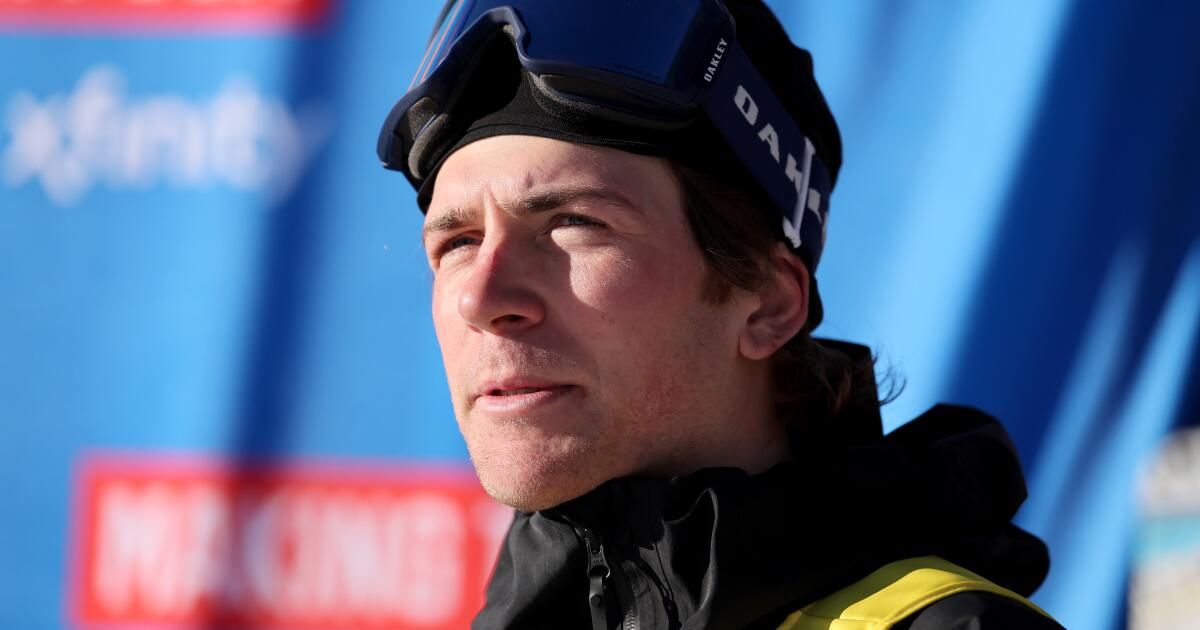
Champion skier Mikaela Shiffrin, snowboarder Chloe Kim and freestyle skiers Hunter Hess and Chris Lillas are among top athletes who have expressed concern about representing their home country during a period of deep political crisis revolving around several volatile issues, including the violent federal crackdown in Minnesota by Immigration and Customs Enforcement agents and the Trump administration's nationwide attacks on immigrants and the LGBTQ+ community.
“Representing the United States brings mixed emotions right now,” Hess said at a news conference last week. “Just because I carry the flag doesn’t mean it represents everything that happens in the United States.”
Trump criticized Hess' comments in a Truth Social post, calling him “a real loser,” adding, “He says he doesn't represent his country… If that's the case, he shouldn't have tried out for the team, and it's a shame he's on it. It's very hard to support someone like this.”
Commenting on the athletes in an interview with CNN, Vice President JD Vance, who was attending the Games, said athletes who are critical should expect “some backlash.”
Vance, who was booed when shown on a big screen during the opening ceremonies, added: “You're there to play a sport, you're there to represent the country and hopefully win a medal. Most of the Olympic athletes, whatever their politics, are doing a great job, they certainly enjoy the support of the entire country, and I think recognizing that the way to unite the country is not to show up in a foreign country and attack the president of the United States, but to play your sport and represent the country.” the country well.”
Vice President JD Vance and his wife Usha at the opening ceremony of the Winter Olympics in Milan on February 6. Vance said athletes should expect backlash if they criticize the country.
(Natacha Pisarenko/AP)
The outspokenness of the Winter Olympics athletes echoes a dramatic protest by Olympians Tommie Smith and John Carlos that electrified the 1968 Summer Games in Mexico City. The sprinters, who placed first and third respectively in the 200-meter race, spoke not with words but with raised black-gloved fists on the victory stand, producing one of the most iconic images in Olympic history.
As the national anthem played after their victories, Smith and Carlos expressed their anger over racial injustice in America by bowing their heads and raising their fists. The gesture sparked a seismic reaction internationally and angered Olympic officials who claimed Smith and Carlos used the world stage to humiliate their home country.
Smith and Carlos' salute to Black Power is explored in the HBO Max documentary “Fists of Freedom: The Story of the '68 Summer Games.” The 1999 Peabody Award-winning film chronicles the gripping moment and its aftermath for Smith and Carlos, who earned both heroic praise and outright condemnation.
George Roy, who produced and directed “Fists of Freedom,” said, “There are similarities between what happened in 1968 and what's happening now. The similarities are the Olympics and the United States, and in both cases there are athletes who say they wish they could be a little more proud given the current state of things.”

American athletes Tommie Smith (center) and John Carlos (right) raise their fists in protest after winning medals at the 1968 Summer Olympics.
(AP)
However, Roy, who has won multiple Emmy Awards and is the founder of Jersey Line Films, added that there are stark differences.
“What Smith and Carlos did was very momentous because it directly affected them,” he said. “They were protesting along with millions in their community. Their point was that they were good enough to represent their country. But when they returned to the real world, they would have trouble getting into restaurants or finding an apartment.”
He added: “It was just more personal than what's happening now.”
In an interview included in the documentary, Smith said his and Carlos's gesture was often misinterpreted.
“As soon as the national anthem played, my glove went to God,” Smith said. “The black fist in the air was just in recognition of those who were gone. It was a prayer of solidarity. It was a cry for help from my brothers and sisters in the country who had been shot, who had been bitten by dogs… It was a cry for freedom.”
He added: “I don't like the idea of people seeing it as something negative. It was just a fist raised in the air and a head bowed before the American flag. It didn't symbolize hatred towards it.”
Although he heard cheers, he also heard boos and jeers.
“Fists of Freedom” contains several interviews from sports and media figures who were present or covered the process and had strong opinions about the gesture.
Bob Paul, who was press secretary of the United States Olympic Committee in 1968, said: “[Smith and Carlos] They were wrong. “You are supposed to observe proper order and decorum to the nth degree at every victory ceremony.”
Veteran television sportscaster Brent Musburger, who at the time was a columnist for Chicago's American newspaper, wrote: “Exposing one's dirty laundry to the entire world during a fun and games tournament was nothing more than a youthful gesture. Smith and Carlos looked like a pair of black-skinned stormtroopers.”
Outraged, the head of the Olympic Committee, Avery Brundage, ordered the expulsion of the sprinters from the Games.
Despite the uproar, experts said Smith and Carlos's greeting was a defining moment for blacks, galvanizing the Civil Rights Movement. However, the two men encountered personal and professional difficulties when they returned home.
Both Smith and Carlos have participated in conferences in recent years. They could not be reached for comment.
“We are not antichrists,” Smith said in “Fists of Freedom.” “We are simply human beings who saw the need to be recognized.”