The creators of “Jury Duty” performed nothing short of a miracle when, just a few years ago, they launched and successfully produced a reality comedy hoax series that featured virtually zero marketable qualities: no guaranteed longevity, no IP-based content, no low-budget structure. In fact, the project, whose premise depended on maintaining a false reality for an unknown star, inherently ran the risk of self-destruction.
“It's one of the only TV shows that's been given the green light and there's a very real possibility that it won't make it to the end,” said co-creator Lee Eisenberg.
Eisenberg and his team breathed a huge sigh of relief when Ronald Gladden, the everyman at the center of “Jury Duty,” came to the mockumentary's final written reveal in the courtroom: There was no trial, all of his fellow “jurors” were actually actors, and the documentary Gladden believed was being filmed about the judicial process was actually a “Truman Show”-style television experiment. (Don't worry, Gladden's $100,000 cash prize cushioned the blow of James Marsden's betrayal.)
Then they were struck by lightning again.
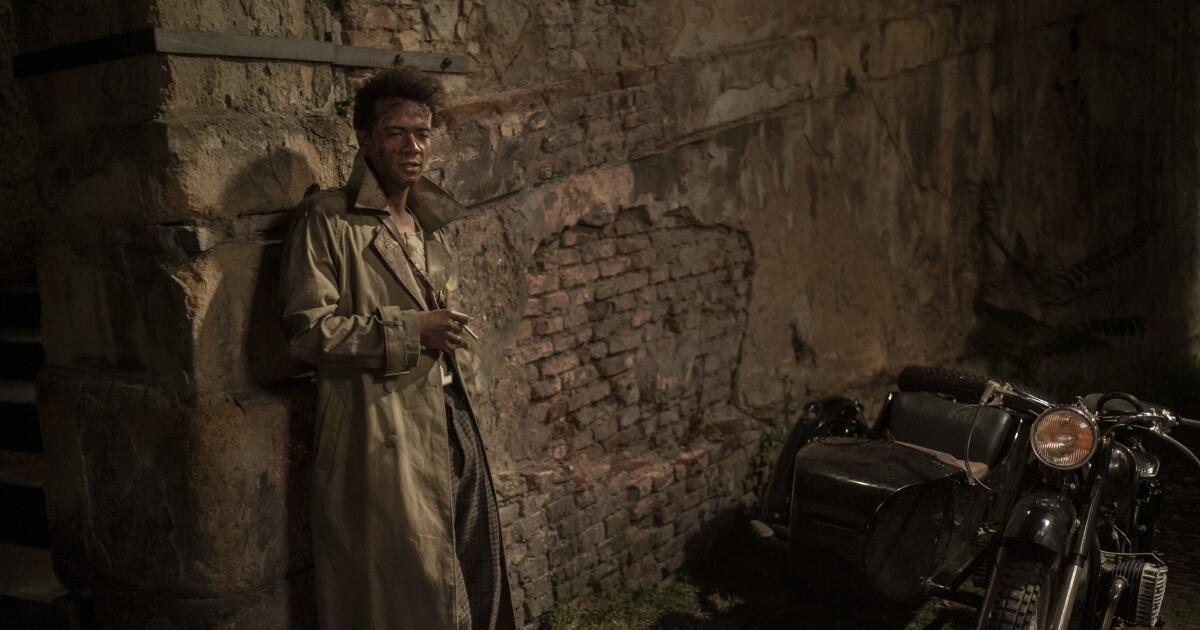
“Jury Duty Presents: Company Retreat,” premiering Friday with three episodes, takes the premise of the original reality show to a new setting: the annual retreat of a family-owned hot sauce company. Following an involuntary temp as he tries to keep his splintering small business together, the new installment delivers all the laughs of “Jury Duty” (Eisenberg and his co-creator Gene Stupnitsky's writing credits on a pair of cult “The Office” episodes, “Dinner Party” and “Scott's Tots,” help explain the top-notch comedy), but ups the ante with a set 10 times the size of its closed-movie predecessor. courtroom and a cast tasked with playing compelling long-time co-workers.
“We really wanted it to feel more cinematic, and we also had to create a lot of backstories,” Eisenberg said. “People had to know each other's stories. They needed to know who got promoted over this person and what everyone does on the weekends, whereas in 'Jury Duty' you meet a bunch of strangers. So it was a different kind of promotion.”
With so much left to chance and improvisation, “every day could fall apart,” Eisenberg said.
But that's also why it's exciting for producer Todd Schulman, who said that after working on these highly improvised shows, “it feels like cheating if both actors know what they're going to say in a scene.”
Below, Eisenberg and Schulman answer some of the biggest questions surrounding the “Company Retirement.”
Why isn't this season 'Jury Duty' as we remember it?
The obvious answer to this question would be that if the creators of “Jury Duty” repeated the courtroom premise, their “hero” would be much more likely to spot the ruse. But Schulman said inventing a new scenario was less about protecting his tactic than inventing something new and raising the stakes.
“We felt like creatively we had already explored that terrain,” Schulman said. “It was more exciting, the idea of taking this same kind of vanity of a real person in a sitcom-like setting and bringing it to other worlds.”
Who is the 'hero', the person not involved in the scheme?
Those who fell in love with Gladden in “Jury Duty” will surely fall in love with the hero of “Company Retreat,” Nashville's Anthony Norman.
Norman, who was 25 during filming, was one of 10,000 people who applied for what they believed was a documentary project about a small business. Picking a hero from such a large pool is “truly an art, not a science,” Schulman said, but Norman, like Gladden, possessed an “incredible decency and humanity that really makes you root for them.”
“You could tell there was warmth about him and a real comfort in his own shoes,” Schulman said. “He knew who he was and he wasn't going to be rattled or thrown off his game in any way by the things we were going to put him through.”
Eisenberg and Schulman agreed that sharing too much about Norman before people could see the show would ruin all the delightful surprises it offers. But Eisenberg did say that his loyalty to Rockin' Grandma's and its employees was astonishing: “You can't write something like that.”
How did you arrive at a withdrawal from the company as a new premise?
Early in talks about a second season, Eisenberg said producers and writers were looking at a number of ideas that offered an isolated jury trial-like setting, as well as potential for a storybook drama. The only idea that kept coming up, he said, was that of a corporate retreat.
“Creatively, we really liked the idea of David versus Goliath,” said the producer. “We kept talking about these '80s movie tropes of slackers versus snobs,” and how they reflected the dynamic of mom-and-pop stores versus big corporations.
At the same time, the “Company Retreat” team wanted the show to feel “like it existed within the world of ‘Jury Duty,'” but also “wanted it to feel like its own thing,” Eisenberg said.
Why use a hot sauce company on the show?
Eisenberg said the production team always wanted to focus on a consumer-facing brand, ideally one that's family-owned, to develop that “David vs. Goliath” narrative that underpins the show.
Plus, the writers loved the phenomenon of hot sauce companies having such absurd names: think “Slap Ya Mama.”
How was Norman different from Gladden as a hero?
Norman was given much more responsibility than Gladden, Eisenberg added, and he still rose to all the challenges he was prepared for. At times, he would get ahead of the narrative and make decisions that the producers anticipated would come much later than they did.
“Do you have a script that I don't see?” Eisenberg recalled thinking on set.
Additionally, although he declined to specify how, Schulman said they took steps to ensure Norman had never seen “Jury Duty.”
“We just got lucky,” he said of the budding star.