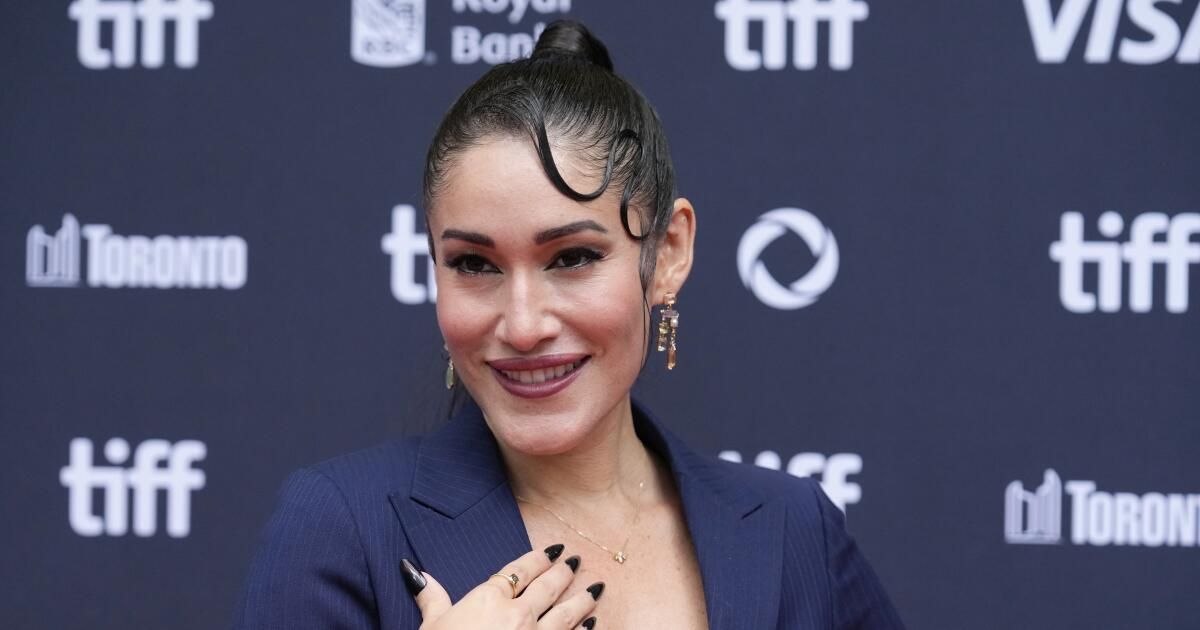
“Yellowstone” and “The New World” actress Q'orianka Kilcher has taken legal action against filmmaker James Cameron, Disney and others who she claims used her likeness in the wildly lucrative “Avatar” film franchise without her knowledge.
Kilcher, 36, filed his complaint Tuesday in the Central District Court of California and is suing on numerous charges, including misappropriation of images, invasion of privacy and interference with potential financial gain. She is seeking an unspecified amount in damages and a jury trial. The parties involved in the making of the “Avatar” film series “exploded commercially [Kilcher’s] similarity in the development and continuation of the Avatar franchise” and “consistently avoided alerting her or giving her credit,” the lawsuit states.
Disney and a legal representative for Cameron did not immediately respond to a request for comment Thursday. Cameron's production company Lightstorm Entertainment, a California-based laser scanning studio and a New Zealand-based visual effects company are also among the co-defendants.
The claim at the center of Kilcher's lawsuit is that Cameron in 2005 “extracted, replicated and commercially used her facial image” from a photograph of 14-year-old Kilcher as Pocahontas in the Terrence Malick film “The New World” and used it to inform the facial features of Neytiri, a key character in the “Avatar” franchise played by Zoe Saldaña. Cameron discussed Kilcher's influence on the character in an interview with French YouTube channel Konbini. In the video, posted in 2024 and mentioned in the lawsuit, James references Neytiri's original sketch. “The source of this was a photograph that appeared in the LA Times as part of the promotion for 'The New World,'” he said. “It's about a young actress named Q'orianka Kilcher, who played Pocahontas in 'The New World.'”
He adds in the video: “This is actually the lower part of her face. She had a very interesting face. And I ended up meeting her years later and gave her a signed copy of this.” [sketch].”
The lawsuit alleges that Neytiri's final appearance featured in the “Avatar” films “was neither a fleeting inspiration nor a vague homage; it was a literal transplant of the facial structure of a real teenager to a blockbuster movie character.” In the 2024 interview, Cameron said that Neytiri's model had come to resemble Saldaña after being cast. The first “Avatar” film was released in 2009 and grossed more than $2.9 billion.
The complaint also claims that the design process for Cameron's Na'vi character moved forward without Kilcher's consent and that she was not compensated for influencing Neytiri's design, further alleging that the film crew's actions “violated child entertainer laws and privacy laws designed to protect minors.” According to the lawsuit, the team behind “Avatar” “did not even attempt to get Plaintiff to audition for the role of Neytiri” and turned the actor down after his agent tried to book a reading for the sci-fi epic.
Kilcher accuses Cameron of “creating a misleading narrative that she was simply unavailable” to appear in the original “Avatar” film and of leading her on to the idea of potentially appearing in later “Avatar” films. Cameron released “Avatar: The Way of Water” in 2022 and “Avatar: Fire and Ash” in 2025.
The lawsuit says Cameron and Kilcher crossed paths at a Hollywood environmental charity event in 2010 and he ordered her to later pick up a “surprise gift” at his production offices. According to the lawsuit, Cameron gifted Kilcher a framed, signed copy of Neytiri's original sketch with the note: “Your beauty was my first inspiration for Neytiri. Too bad you were filming another movie. Next time.” Kilcher said he found the note confusing at the time. He had also contacted Cameron over the years, but “nothing concrete materialized,” according to the lawsuit.
The 99-page complaint describes Kilcher as an indigenous actress and activist and notes that she is of Quechua-Huachipaeri descent. The lawsuit also alleges that Cameron's actions were hypocritical regarding the messages of his films and the detailed public backlash that Cameron and the films faced for their depictions of Native groups.
“The result was a highly lucrative film franchise that presented itself as sympathetic to Indigenous struggles,” the lawsuit said, “while quietly exploiting a real Indigenous youth behind the scenes.”
According to his complaint, Kilcher “learned of the betrayal that Cameron had hidden from him” in August 2025, after a video of the filmmaker discussing Neytiri's design appeared on his social media. She “was shocked, heartbroken and completely betrayed” and was motivated to reexamine and scrutinize the “Avatar” archival materials. That included behind-the-scenes footage featured on a recent Blu-ray DVD release and a production art book for “Avatar,” which the lawsuit said did not credit the actor. The lawsuit includes several side-by-side photographs of Kilcher in “The New World” and several Na'vi characters from “Avatar” material.
In addition to damages and a jury trial, Kilcher seeks a public statement acknowledging her contributions and correcting “any false or misleading statements about her,” and payment of profits attributable to the “unauthorized” use of the actor's image and identity.