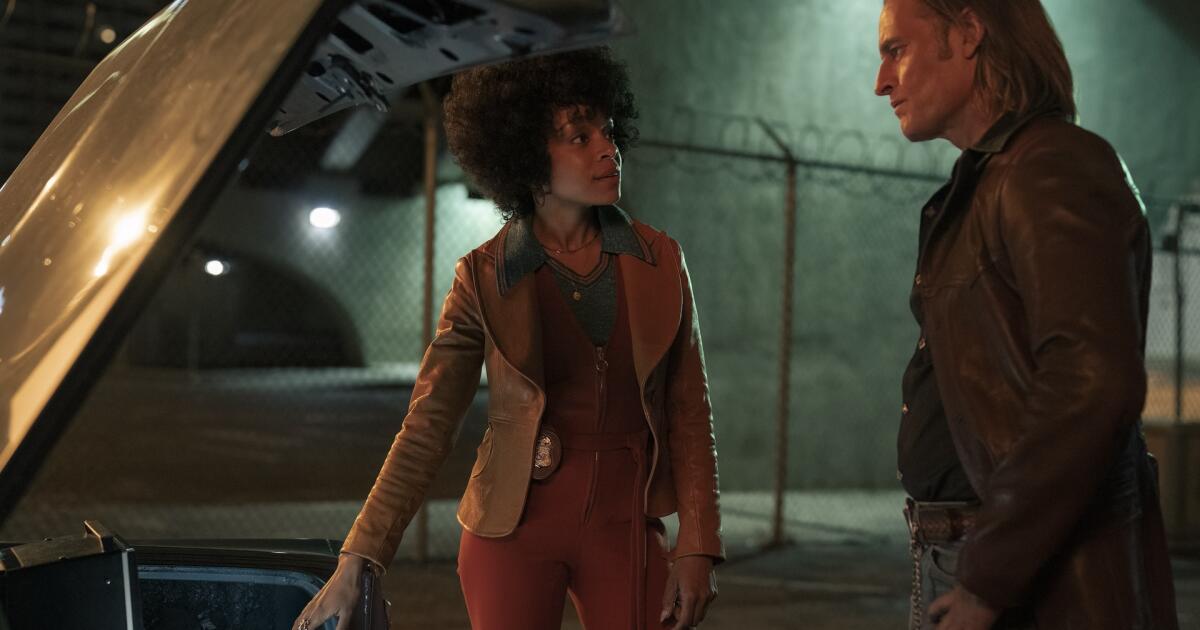
One of the most moving scenes in Joachim Trier's “Sentimental Value” occurs near the end. During an intense moment between sisters Nora (Renate Reinsve) and Agnes (Inga Ibsdotter Lilleaas), who have had to deal with the unexpected return of their estranged father, Gustav (Stellan Skarsgård), Agnes suddenly tells Nora, “I love you.” In a family where such direct and vulnerable statements are rare, Agnes's comment is both a shock and a catharsis.
The line was not written or even discussed. Lilleaas was nervous about saying it spontaneously during filming. But it just came out.
“[In] In Norwegian culture, we don't talk much about what we feel,” explains Lilleaas, who lives in Oslo but is sitting in the Chateau Marmont lounge on a rainy afternoon in mid-November. If the script had contained that phrase “I love you,” she says, “It would have been like, 'What? I would do it never say that. That's too much.' But because it came from a genuine feeling in the moment, I don't know how to describe it, but it was what I felt I wanted to say and what I would like my own sister to know.”
Since its Cannes premiere, “Sentimental Value” has been praised for such scenes, which underscore the subtle power of this clever tearjerker about a frayed family trying to repair itself. And the film's breakout performance belongs to Lilleaas, 36, who has worked steadily in Norway but not often garnered international attention.
Considered a possible Oscar-nominated supporting actress, Lilleaas in person is reserved but thoughtful, someone who prefers to observe the people around her rather than be the center of attention. It's fitting, then, that in “Sentimental Value” she plays the calm, level-headed sister who acts as a mediator between the impulsive Nora and the selfish Gustav. Lilleaas has become quite adept at doing a lot while seemingly doing very little.
“In acting school, some of the best characters I did were silent,” he notes. “They couldn't express the language, but they were very expressive. It was liberating to not have a voice. Agnes, she's present most of the time but she doesn't necessarily have as many lines. To me, that's freedom: the [dialogue] very often it gets in the way.”
Inga Ibsdotter Lilleaas in “Sentimental Value.”
(Kasper Tuxen)
Lilleaas had not met Trier before her audition, but they instantly bonded over the challenges of raising young children. And he was excited about the parent-child script examination. Unlike the restless Nora, Agnes is married with a son, and is able to see her deeply flawed father from the point of view of a daughter and a mother. Lilleaas shares his character's sympathy for the inability of different generations to connect.
“Many relationships between parents and children end at one point,” he says. “It doesn't evolve like a romantic relationship, [where] The mentality is to grow together. With families, it's 'You're the child, I'm the parent.' But we have to grow together and accept each other. And that is difficult.”
Spend time with Lilleaas and you'll notice that he talks about acting in terms of human behavior rather than technique. In fact, he initially studied psychology. “I have always been interested in [experience] of being alive,” he says. “Tremendous pain is very painful, but you can only experience it if you have great love. I tried the more psychological approach of studying people, but it wasn't what I wanted. “Acting is the perfect medium to explore life.”
Other out-of-towners might be disappointed to arrive in sunny Southern California only to be greeted by storm clouds, but Lilleaas is optimistic about the situation. “I could have been on the beach, but that's okay,” she says amused, looking out the nearby windows. “I can go to the movies; the weather is perfect for a movie.”


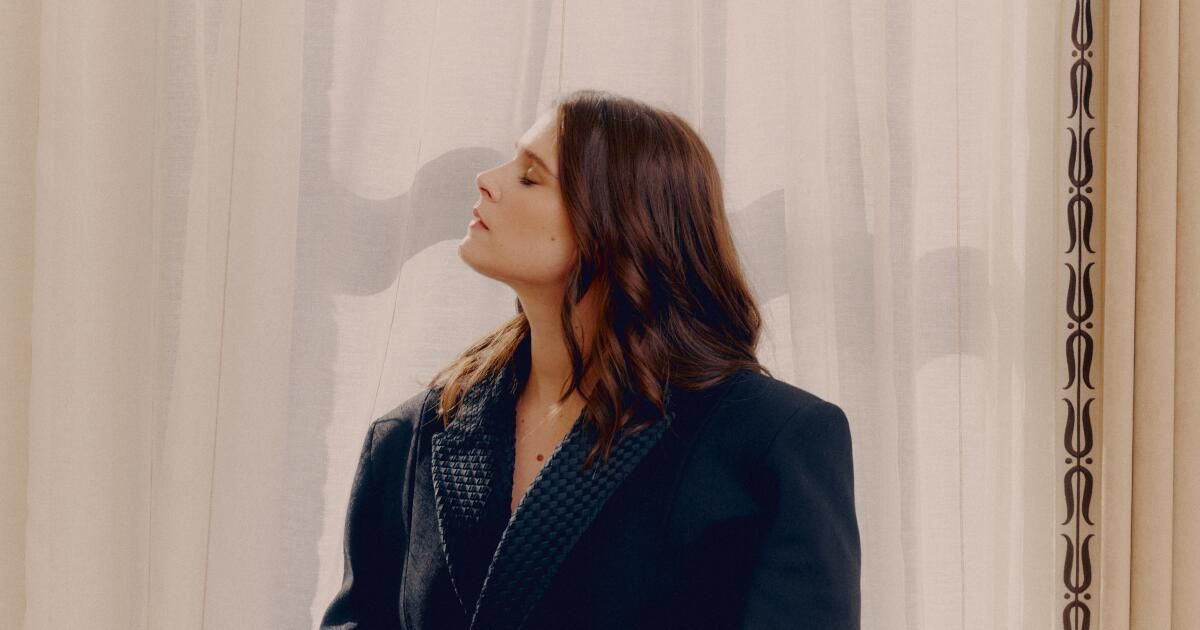
Inga Ibsdotter Lilleaas. (Evelyn Freja / For The Times)
His measured response to both his promotion to Hollywood and a forecast of rain speaks to his generally calm demeanor. During our conversation, Lilleaas's frankness and lack of vanity is striking. How often does a rising star talk about being happy when a filmmaker devotes fewer lines to her? Or fantasize about a life after acting?
“Some days I think, 'I want to quit. I want to have a little farm,'” he admits. “We lived on a farm and had horses and chickens when I grew up. I miss it. But at the same time, I need to be in an urban environment.”
She thinks more about the matter and discovers her mixed feelings. “Maybe as I get older and have kids, I'll feel the need to go back to something that's familiar and safe,” she suggests. “I think that's why I'm looking for small farms. [online] – That's like something dreamy. I need some dreams that are not reality; “It's a way to escape.”
Lilleaas may have decided not to become a psychologist, but she is always questioning her motivations. This desire to have a farm is his ultimate self-exploration, making it clear to him that he loves his profession but not the superficial trappings that come with it.
“Ten years ago, what is happening now might have been a dream,” he says, pointing to the ostentatious surroundings that surround him. “But you realize what you want to focus on and give value to. I don't necessarily want to give this so much value. I appreciate it and everything, but I don't want to put my heart into it, because I know it goes up and down and it's not constant. I put my heart into this movie. Everything that comes after that? “My heart can’t be in it.”