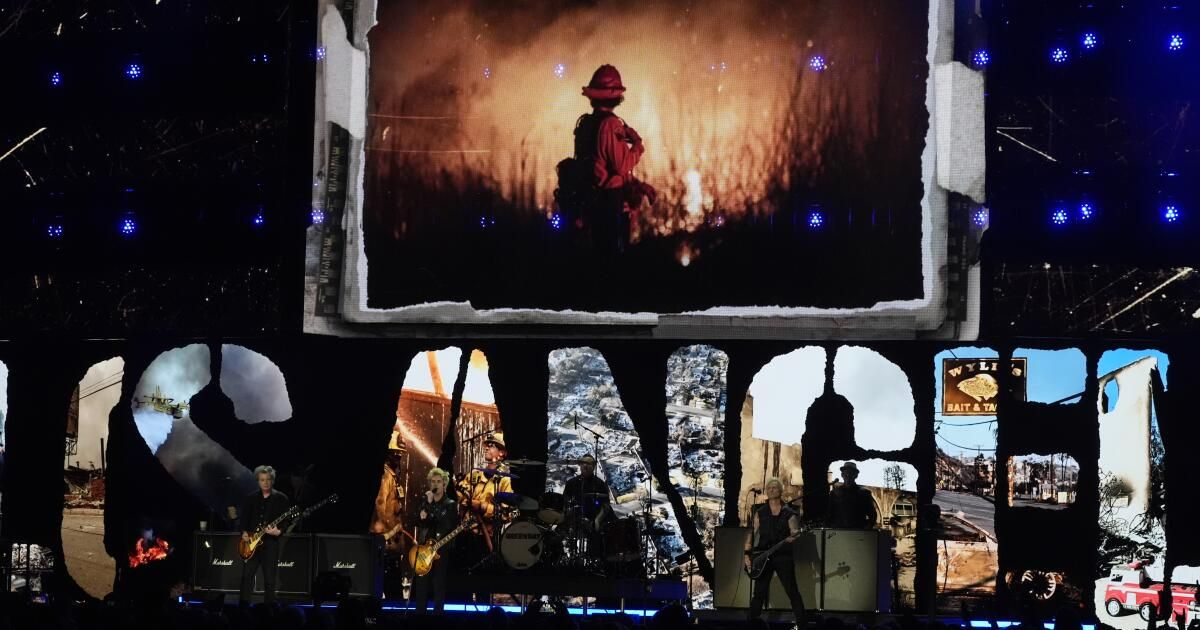
The House Judiciary Committee on Tuesday released a report following its own investigation into FireAid, the charity founded by Clippers executives that raised $100 million for wildfire relief efforts in Los Angeles last January.
The investigation, led by Rep. Kevin Kiley (R-Rocklin) under Committee Chairman Jim Jordan (R-Ohio), began in August when Kiley “sent a letter to FireAid requesting a detailed breakdown of all nonprofits that received money from FireAid.” Kiley expressed concern that the money had gone to local nonprofits instead of more direct aid to affected residents.
FireAid quickly released a comprehensive document detailing its fundraising and grant distribution. After contacting all of the nonprofits mentioned in the document, The Times reported that groups that successfully applied for grants quickly received money to spend in their areas of expertise, as outlined in FireAid's public mission statements. A review by an outside law firm confirmed the same.
The new report from the Republican-led committee is skeptical of nonprofit work done under the auspices of FireAid, but cites relatively few examples of groups deviating from FireAid's stated goals.
FireAid representatives did not immediately respond to a request for comment on the report.
Of hundreds of nonprofits that received millions in FireAid funding, “In total, the Committee found six organizations that allocated FireAid grants to labor, salaries, or other related costs,” according to the report.
The committee singled out for criticism several local nonprofit organizations focused on relief and development for minorities and marginalized groups. It named several long-established organizations such as NAACP Pasadena, My Tribe Rise, Black Music Action Coalition, CA Native Vote Project, and Community Organized Relief Efforts (CORE), whose activities related to fire relief it found “unclear,” without providing specific claims about the misuse of FireAid funds.
The report, while largely citing stories from Fox News, Breitbart and the New York Post, states that “FireAid prioritized and awarded grants to illegal aliens.” The only example of this, however, is a grant earmarked for CORE, citing its mission to help respond to the crisis within “underserved communities,” one of which is “undocumented migrants” who face “a high risk of housing instability, economic hardship, exploitation, and homelessness.”
The report says $500,000 was used by the California Charter School Association, Los Angeles County Neighborhood Legal Services, Los Angeles Regional Food Bank, Los Angeles Disaster Relief Navigator, Association of Community Clinics. from Los Angeles County and the Los Angeles Conservation Corps “to cover labor, salaries or other related costs,” which the committee said ran counter to FireAid's stated goals.
However, examples they cite as suspicious include using the NLSLA's FireAid grant to pay salaries to attorneys who provide free legal assistance to fire victims, the Los Angeles Community Clinic “expanding training in mental health and trauma care” through grants to smaller local health centers, and the Los Angeles Regional Food Bank allocating its funds to “mobilize resources to fight hunger.”
The report highlighted one group, Team Rubicon humanitarian worker Toni Raines' Altadena Talks Foundation. The Altadena Talks Foundation received a $100,000 grant from FireAid, however the report says Altadena Talks' work on a local news podcast, among other efforts, “remains unclear” when it comes to fire relief.
The report’s claims that “instead of helping fire victims, donations made to FireAid helped fund causes and projects completely unrelated to fire recovery, including Native American voter turnout, illegal aliens, podcast shows, and mushroom planting” sound inflammatory. However, the evidence it cites generally shows a variety of established local nonprofits addressing specific community concerns in a rapidly moving disaster, with some small amounts of money possibly going toward salaries or overhead, or groups whose missions the committee viewed skeptically.
FireAid still plans to distribute an additional round of $25 million in grants this year.