California's economy could see a boost from the state's expanded film and television tax credits, but local lawmakers say it's not enough.
Even though Gov. Gavin Newsom authorized an expanded $750 million film and television tax credit program last summer, the looming merger between Paramount and Warner Bros. and the projected budget cuts expected to follow have reignited fears about job losses in Hollywood and U.S.-based productions.
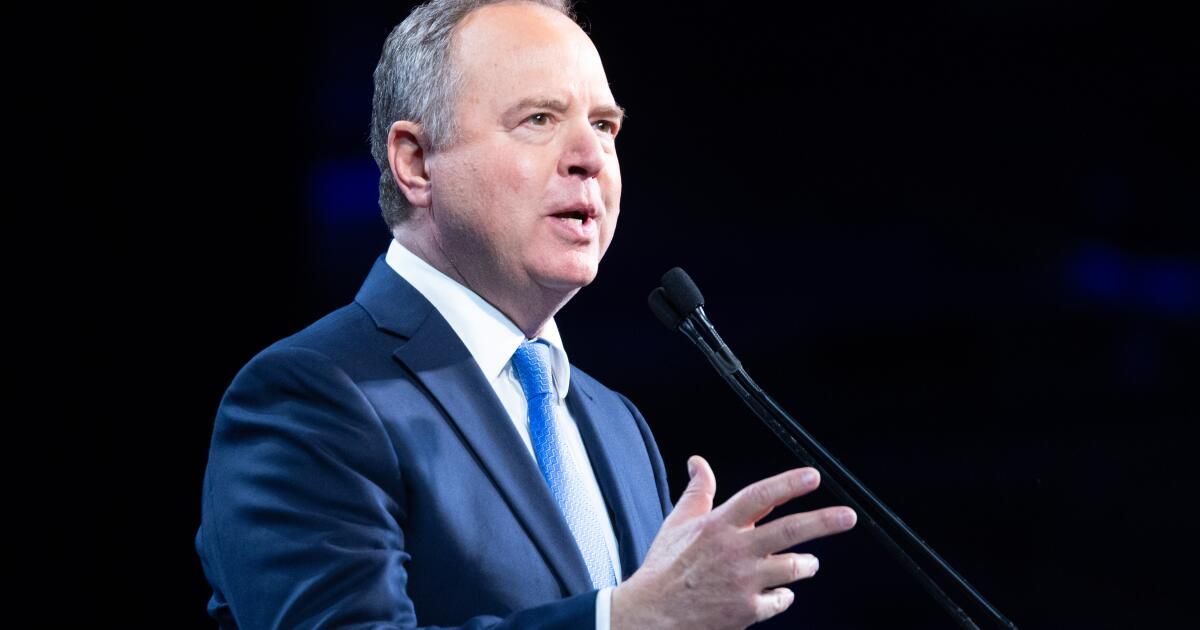
“State programs cannot simply substitute for the kind of comprehensive, federal, competitive tax incentives that are needed to return manufacturing to American soil and stop its offshoring,” said U.S. Senator Adam Schiff (D-Calif.) during a news conference at Burbank City Hall Friday morning.
“We must act, and the urgency could not be greater,” Schiff said, adding that he is working on a bipartisan federal film incentive proposal that would be globally competitive.
He said the film tax credit programs are not about Hollywood stars, but about the jobs the productions create, including the roles of set designers, carpenters and lighting crews.
“These are the people who make that magic happen. We want to keep those jobs here, and many of us are deeply concerned about what this potential merger will do to those jobs,” Schiff said.
Earlier this week, the California Film Commission revealed that 16 shows had recently received tax credits for filming in the state. The projects represent $871 million in qualified state spending and are expected to generate $1.3 billion in economic activity in California. Schiff said the state tax credit has generated more than $29.1 billion in film production wages and supported more than 220,000 jobs.
Los Angeles film activity was still down 13.2% from July to September compared to the same period in 2024, according to FilmL.A. Inc., which manages film permits for the region.
Los Angeles lost 42,000 jobs in the film sector between 2022 and 2024, according to data from the Bureau of Labor Statistics, in part due to international labor migration.
The crisis has put greater financial pressure on independent studios who have struggled to fill their sound stages.
“Federal authorities must act to level the playing field and make the American film and television industry more competitive on the world stage,” said Matthew Loeb, president of the International Alliance of Theatrical Stage Employees. “For us, production that complements state incentives is essential to returning and maintaining film and television jobs in the United States.”
HBO Max medical drama “The Pitt” is filming on the Warner Bros. lot in Burbank and is among the shows benefiting from California's tax incentive.
Noah Wyle, the show's star and executive producer, said during the press conference that the tax incentive was essential for filming “The Pitt” in Los Angeles, which he said is “prohibitively” expensive.
“As an Angeleno with generational roots in this city and a seasoned member of its creative community, championing Los Angeles-based production is something that is very close to my heart,” Wyle said.
“'The Pitt' has fortunately become a test of that speculative concept. I'm pleased to report that we will begin filming the third season this summer and that a rising tide has lifted all boats on the first season under the 3.0 tax program,” he added.
The budget for one episode was approximately $6.6 million, so the show was reimbursed around $760,000 per episode. At the end of the first season, the production was able to save more than 11 million dollars.
Rep. Laura Friedman (D-Glendale), who is working with Schiff on production tax incentives, said that since California is already seeing benefits from the current program, there is no reason a film incentive wouldn't work on a national level. Friedman added that tax incentives are a common practice among many industries in the US.
“Hollywood doesn't ask for special treatment. Whether it's computer chips, the energy sector or pharmaceuticals, this is standard in America,” Friedman said at Friday's event. “In terms of our nation, Hollywood and its ability to tell the American story, it's something worth saving.”