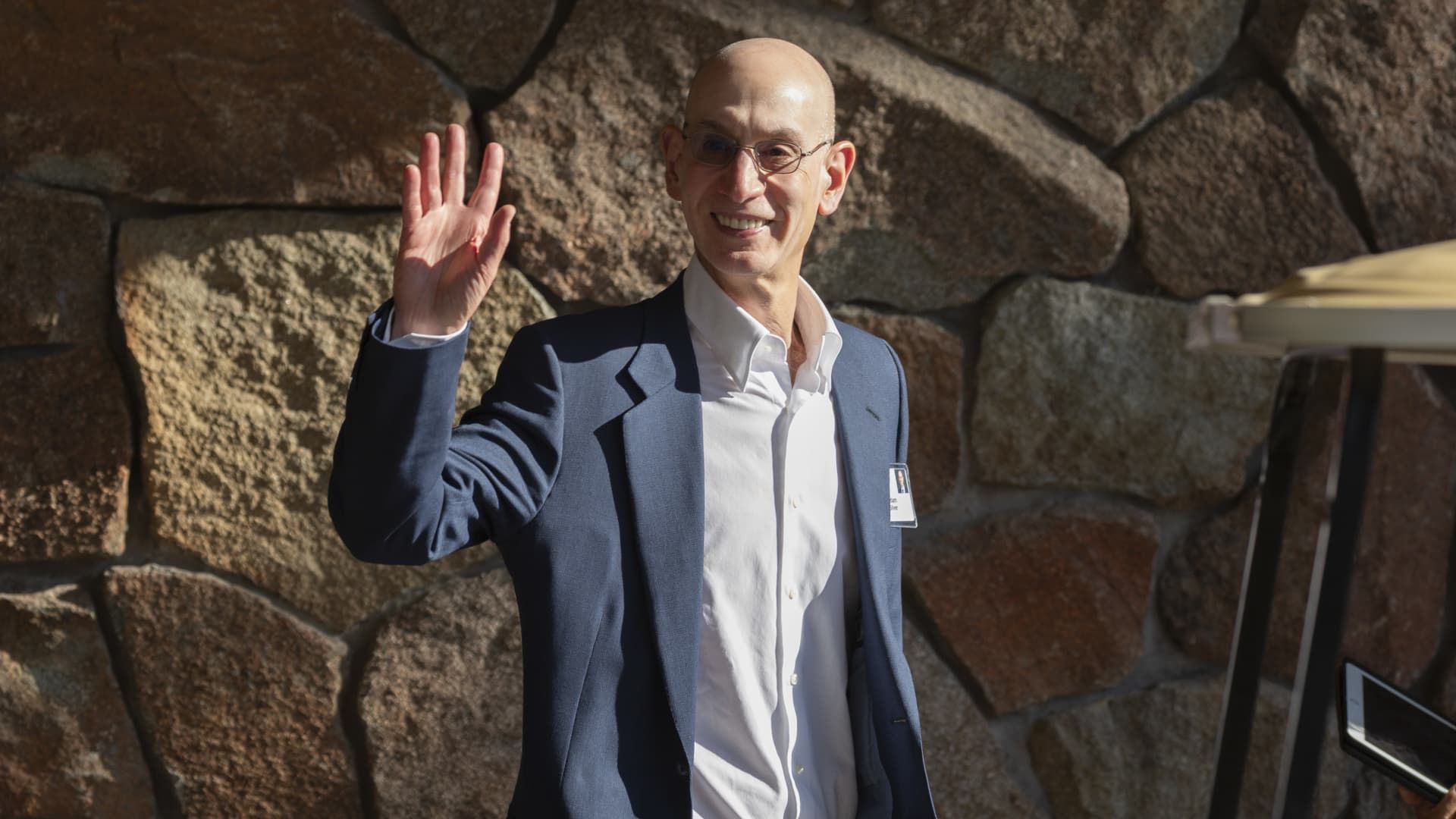
A version of this article first appeared in the CNBC Sport with Alex Sherman newsletter, delivering the biggest news and exclusive interviews from the world of sports media and business. Sign up to receive future issues directly to your inbox. NBA Commissioner Adam Silver has a new pet project with big ambitions: reorganizing European professional basketball with an NBA league at the top of the funnel. The NBA is moving full steam ahead with plans to create NBA Europe, a league with 10 to 12 permanent teams and four to six open spots, available to any FIBA-affiliated team in Europe annually. FIBA is the international governing body of the sport in Europe. According to league sources, the NBA has focused on the largest European markets (London, Paris, Rome, Madrid, Barcelona, Athens, Istanbul and Berlin) as possible venues for permanent teams. Silver would like the organization to be a mix of new teams and existing clubs. While some teams will be backed by new investors, others will derive from football clubs backed by their current owners and investment funds. Real Madrid, which already has a basketball club, has had “direct, high-level talks” about joining NBA Europe, FIBA Europe president Jorge Garbajosa said last month. Other soccer giants that do not have basketball teams could do the same, such as Paris Saint-Germain. League executives spent the last month meeting with dozens of potential investors in franchises in Europe, including wealthy individuals and private equity funds. Non-binding offers for those teams are due by the end of March. I'm told the NBA wants franchise fees of around $1 billion, although some investor groups have objected to that figure and have pushed for fees closer to $500 million. It is possible that the NBA Board of Governors will give the green light to the sale of franchises in some cities and, therefore, to the formation of the league, during its next meeting in March. The NBA has set a goal of October 2027 for the league's debut. The NBA has held talks with several media companies with global aspirations to broadcast the games, including Amazon and YouTube, according to sources familiar with the matter. Spokespeople for Amazon and YouTube declined to comment. According to an NBA spokesperson, no decision has yet been made on the broadcast partner or partners. While a fledgling league without hard viewership data will likely be limited in the media rights money it initially gets, the NBA hopes that anchoring permanent teams in Europe's largest media markets (many of which do not have permanent teams in the EuroLeague, the continent's top basketball league) will make the league interesting to big partners. Currently, some of Europe's best basketball teams (including Turkey's Fenerbahçe Beko and Greece's Olympiacos Piraeus) are not connected to their largest media markets, curbing pervasive continental interest in the sport and reducing its television value. There will be no affiliation between NBA Europe teams and NBA franchises. That means an NBA team won't be able to store a player at an NBA Europe club like it does with the G League. Still, league executives envision NBA teams playing preseason games against NBA Europe clubs. In the long term, NBA Europe teams could play against NBA competitors in the Emirates NBA Cup, the league's midseason tournament, NBA deputy commissioner Mark Tatum said during All-Star weekend. “As the league grows over time, the quality of competition will continue to get better and better, and you could see more crossover between NBA clubs and NBA European League teams,” Tatum said. Creating new incentives Beyond the permanent teams, NBA Europe will have a “participate in our league” component that will be familiar to fans of European soccer, whose major leagues have this same dynamic. This peculiarity is not only an attraction for European fans: it is also key to the league's ambitions. The open rotating spots would go to any club affiliated with a FIBA basketball league across Europe. These teams would play in NBA Europe by winning their respective national league, followed by a tournament of those champions. Another route could be to win or finish second in the FIBA Basketball Champions League, which already exists today. Like the major American leagues, the Euroleague is a closed league. Only about 10% of all European club teams have the chance to play in the organization. The NBA is betting that by opening NBA Europe, it can energize the entire European infrastructure by improving player development, marketing and fan interest across Europe, where basketball is the second most popular sport after soccer. According to NBA data, more than 270 million Europeans are basketball fans. Still, basketball represents less than 1% of Europe's $45 billion sports media and sponsorship market, according to NBA data. The NBA is hoping fans will become more interested in their regional teams, perhaps watching more games on television, knowing there is an opportunity for them to earn a spot in NBA Europe. “What we want to do is make European basketball the best and strongest it can be, both from a product standpoint and from a competitive and commercial standpoint,” Tatum said. “We want this to be beneficial for the entire ecosystem, for the players, the fans and the teams. That is our main goal here.” Silver knows investors are eager to get into the bottom line of sports teams. Many wealthy people, including current or recently retired players, would love to be part of an ownership group, and because of the price, they can't get out of the NBA. Building a successful league in Europe will not only give them opportunities to make permanent teams, but could also be a rising tide that lifts all ships in European basketball. Still, NBA Europe will present a deep-pocketed competitor to the current Euroleague. This dynamic could easily cause tensions between team owners, players, executives and fans. As it happens, the EuroLeague has a new CEO, Chus Bueno, who is a former NBA executive. Well it started just a few weeks ago. NBA senior officials have expressed hope that the EuroLeague and NBA Europe could become partners, including the possibility of a share swap between the two leagues or perhaps even a merger, according to sources familiar with the matter. Tatum said during All-Star weekend that he hopes Bueno will serve as “a bridge between us, FIBA and the EuroLeague clubs” as the NBA tries to conquer new territory.