
At a time when it is increasingly difficult to find employment in the UK, it can pay to have knowledge, especially about which roles are most sought after.
With unemployment above 5 percent and more people applying for each vacancy, it can be demoralizing for those looking for a new job if applications or interviews don't go as planned.
But there are still jobs available, and while unemployment is expected to rise slightly more this year, in the long term that number should decline as interest rates fall, companies start spending more on projects and staff, and industries grapple with what level of hiring their AI plans would benefit from, of course.
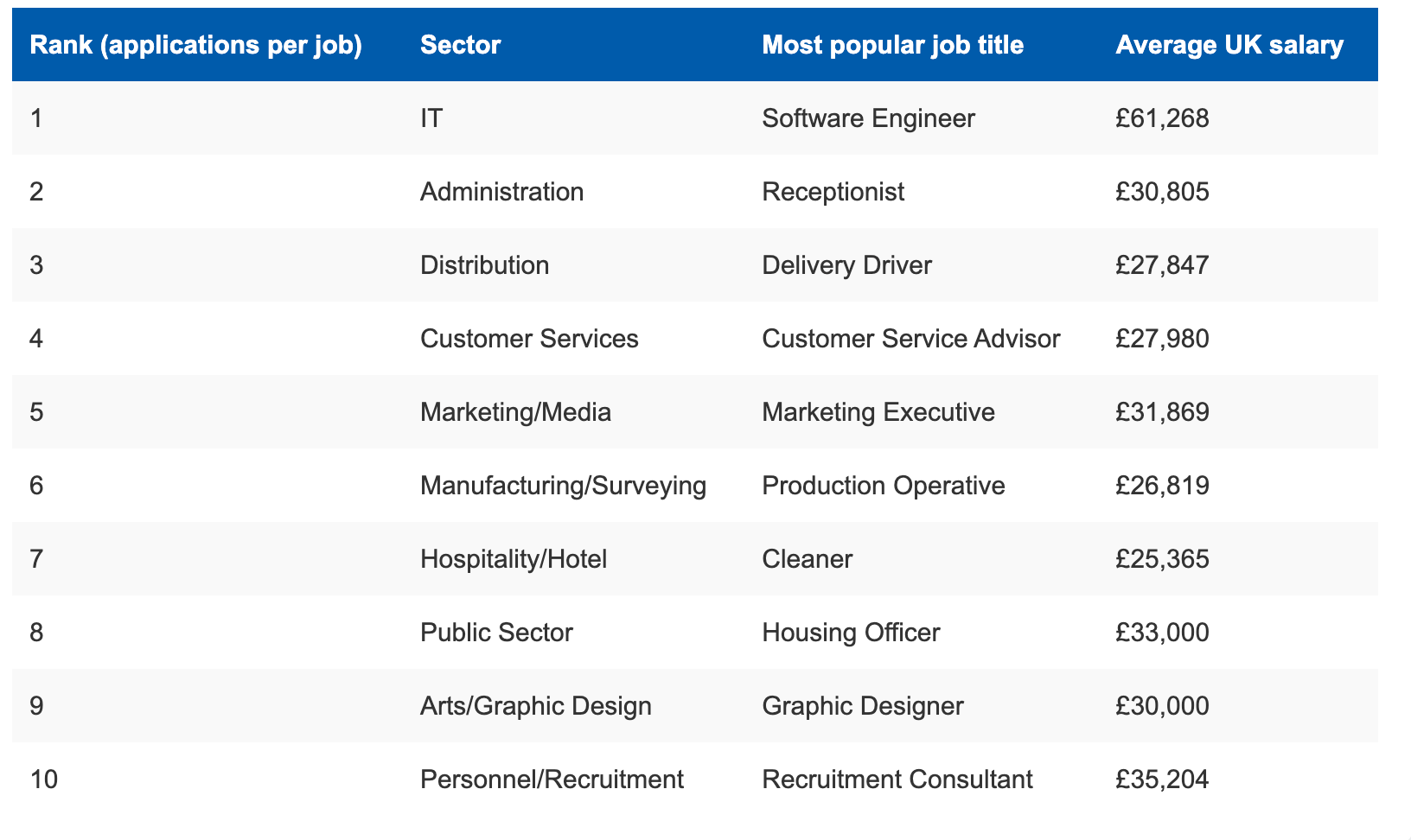
CV-Library has compiled the most in-demand positions that Brits are applying for recently, based on total applications per vacancy and highlighting the average salaries you can expect from them.
The most sought after and best paid
Perhaps not a surprise, but jobs in IT and specifically as a software engineer remain the most sought after position.
It is a skilled, well-paid job that requires particular knowledge and any suggestion that AI could destroy that sector is completely unfounded for now; In fact, it is considered a future-proof job in some roles, given the level of knowledge required.
Furthermore, “clear opportunities for progression” are an important part of the future prospects in this field, as is a hefty salary of over £60,000 a year.
top ten
If technical knowledge is not part of your skills, fear not: the ten most in-demand jobs feature a wide mix of functions.
Management, customer service and hospitality positions feature prominently, along with a number of design and marketing job types.
Get a free fractional share worth up to £100.
Capital at risk.
Terms and conditions apply.
Go to website
ADVERTISEMENT

Get a free fractional share worth up to £100.
Capital at risk.
Terms and conditions apply.
Go to website
ADVERTISEMENT
The cleaner role was the most popular among in-demand hospitality staff, while delivery drivers made the top three, both earning salaries between £25,000 and £26,000.
Receptionists came in second place behind the much-desired software engineer roles, with those jobs averaging around £31,000 a year.
Katie Emerton, recruitment expert at CV-Library, said: “These roles attract such high numbers of applications because they tick so many boxes for today's job seekers: flexibility, stability and clear progression.
“Roles such as software engineer, marketing executive and graphic designer offer future-proof skills and long-term career potential, while others such as receptionists and cleaners appeal because they are widely available, flexible and do not require long entry routes.
“Overall, these jobs are secure but also rewarding, which is key to attracting UK candidates to apply.”
What's next in 2026?
Additional research from CV-Library has shown that while many companies had paused their employment decisions while awaiting clarity in the Autumn Budget, almost three quarters (71 per cent) of companies “were prepared to increase hiring, either moderately or significantly, throughout 2026”.
Among those already doing so, the engineering, hospitality and construction sectors were showing signs of growth by the end of 2025, and engineering as a sector had the highest number of vacant positions: more than 377,000 in the last three months of last year.
Lee Biggins, chief executive of CV-Library, said there were “cautious signs of recovery” but pointed to the wide range of costs businesses face as they weigh whether to hire more staff.

“Higher business rates, labor costs and a workers' rights bill that carries greater risk to hiring may still derail any recovery,” he said. “And it's worrying that Millennials in their prime early career phase are the most affected when it comes to the reduction of employees on the payroll.”
In terms of what people might be looking for, Jobhire.ai conducted an analysis that stated that remote roles were now more than four times more difficult to land than office or hybrid roles, despite the search for remote jobs increasing by 85 percent.
Meanwhile, the British Retail Consortium says its latest survey of CFOs and CFOs showed growing anxiety about labor costs by 2026.
Helen Dickinson, chief executive of the BRC, said: “The economy is expected to remain fragile, with weak wage growth, rising unemployment and low consumer confidence all pointing to falling demand. At the same time, businesses face much higher costs, from rising input prices and wages to new burdens created by government policy.
“We all want more high-quality, well-paying jobs. But retail has already lost 250,000 jobs in the past five years, and youth unemployment is rising rapidly. The Employment Rights Act is the biggest shakeup of labor standards in a generation, and how it is implemented will make or break job opportunities.”