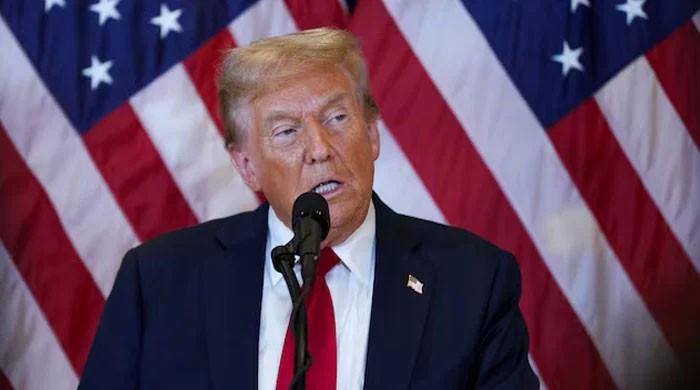
US President Donald Trump's government has asked countries to pay $1 billion for a permanent place on its “Peace Board” aimed at resolving conflicts, according to its statutes, seen by AFP.
The board was originally conceived to oversee the reconstruction of Gaza, but the charter does not appear to limit its role to the occupied Palestinian territory.
What will he do?
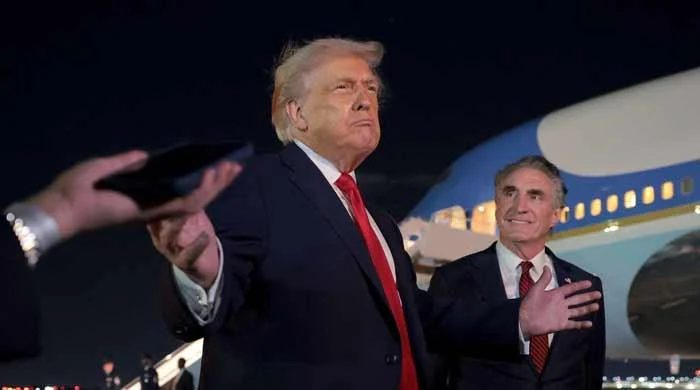
The Peace Board will be chaired by Trump, according to its founding letter.
It is “an international organization that seeks to promote stability, reestablish reliable and legal governance and guarantee lasting peace in areas affected or threatened by conflict,” reads the preamble of the letter sent to the countries invited to participate.
“It will undertake such peacebuilding functions in accordance with international law,” it added.
Who will execute it?
Trump will be president but will also “serve separately as the inaugural representative” of the United States.
“The president will have exclusive authority to create, modify or dissolve subsidiary entities as necessary or appropriate to fulfill the mission of the Peace Board,” the document states.
He will elect members of an executive board to be “world-class leaders” and “serve two-year terms, subject to removal by the president.”
It may also, “acting on behalf of the Peace Board”, “adopt resolutions or other directives.”
The president can only be replaced in case of “voluntary resignation or due to incapacity.”
Who can be a member?
Member states must be invited by the president of the United States and will be represented by their head of state or government.
Each member “shall serve a term of no more than three years,” according to the statutes.
But “the three-year membership period will not apply to member states that contribute more than $1,000,000,000 in cash funds to the Peace Board within the first year of the charter's entry into force,” it adds.
The board “shall convene voting meetings at least once a year” and “each Member State shall have one vote.”
But while all decisions require “a majority of the Member States present and voting,” they will also be “subject to the approval of the president, who may also cast a vote in his capacity as president in the event of a tie.”
Who is on the executive board?
The executive board will “operationalize” the organization's mission, according to the White House, which said it would be chaired by Trump and include seven members:
- United States Secretary of State, Marco Rubio.
- Steve Witkoff, Trump's special negotiator
- Jared Kushner, Trump's son-in-law
- Tony Blair, former Prime Minister of the United Kingdom
- Marc Rowan, American billionaire financier
- Ajay Banga, president of the World Bank
- Robert Gabriel, Trump's loyal aide on the National Security Council
What countries are invited?
Dozens of countries and leaders have said they have received an invitation.
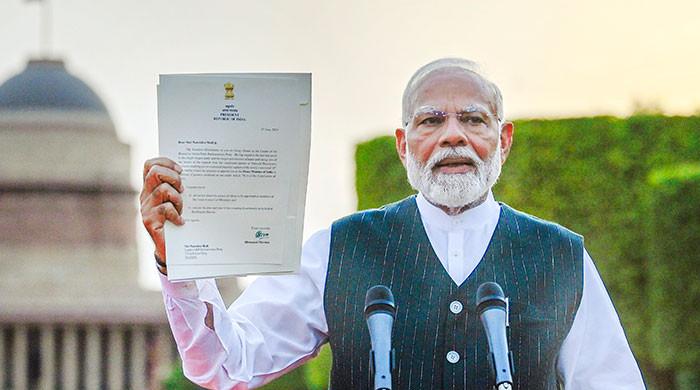
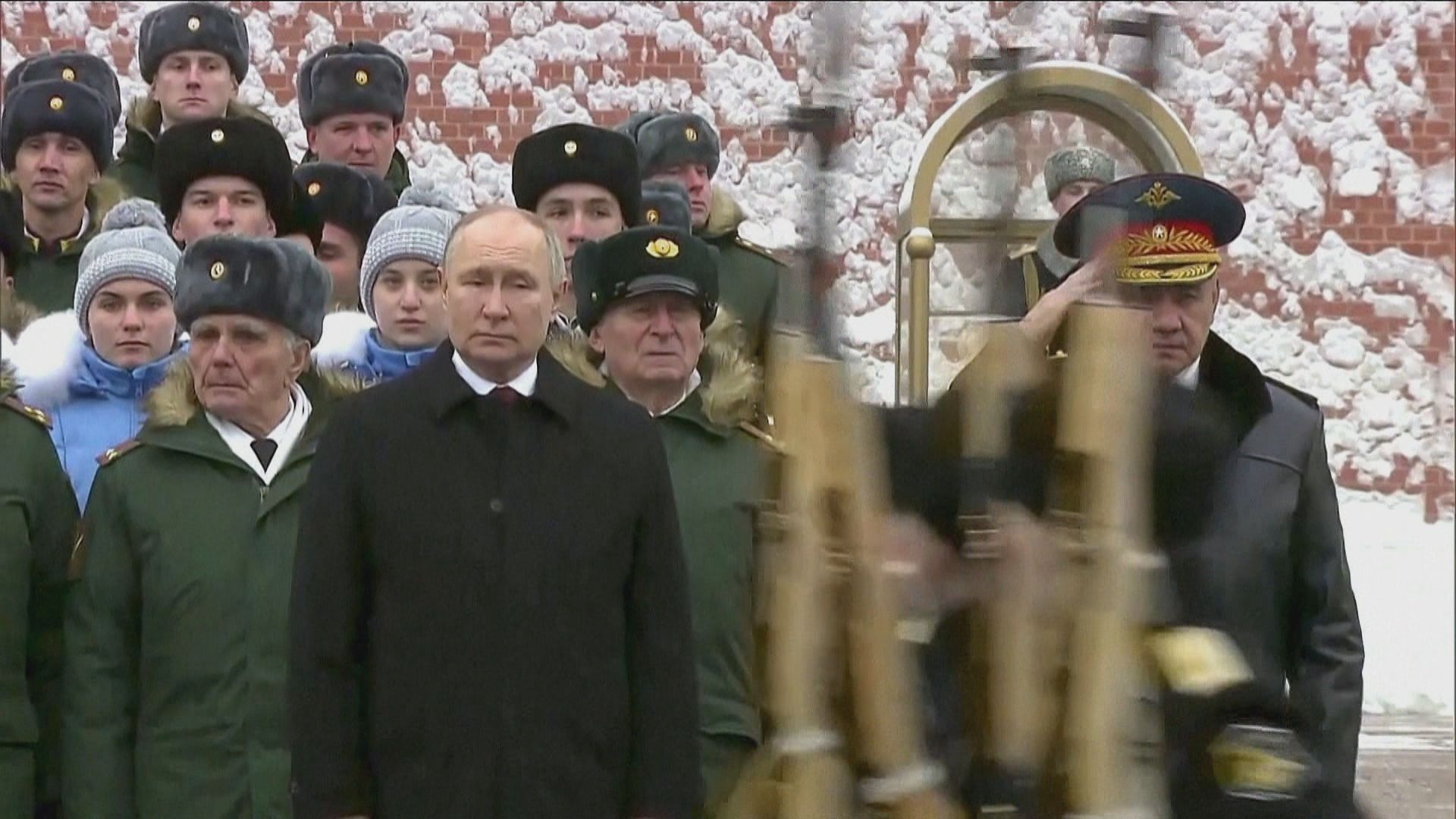
They include China, India, Russian President Vladimir Putin, Ukraine's Volodymyr Zelensky and Canadian Prime Minister Mark Carney.
The president of Egypt, Abdel Fattah al-Sisi, and the president of Argentina, Javier Milei, also confirmed an invitation.
Other countries confirming invitations include Jordan, Brazil, Paraguay, Pakistan and a host of nations in Europe, Central Asia and the Middle East.
Who will join?
Countries from Albania to Vietnam have expressed their willingness to join the junta.
Hungarian Prime Minister Viktor Orban, Trump's most fervent supporter in the European Union, will also be present.
Canada said it would participate, but explicitly ruled out paying the billion-dollar fee to become a permanent member.
It is unclear whether others who have responded positively (including Armenia, Belarus, Kazakhstan, Morocco and Vietnam) would be willing to pay the $1 billion.
Who won't be involved?
France, a former US ally, has indicated it will not join. The response prompted an immediate threat from Trump to impose sky-high tariffs on French wine.
Zelensky said it would be “very difficult” to be a member of a council alongside Russia and diplomats were “working on it.”
When does it start?
The letter says it comes into force “through the expression of consent to be bound by three States.”