WASHINGTON- Russia is emerging as one of the first economic beneficiaries of the war with Iran, as disruptions to energy infrastructure increase demand for Russian exports and the world turns its gaze toward the Middle East and away from Moscow's war in Ukraine.
The United States and its European counterparts imposed severe sanctions on Russia in March 2022, just a month after Russian President Vladimir Putin's large-scale invasion of Ukraine. The effect was a stranglehold on Russian exports, depriving Putin's war effort of at least $500 billion, experts say. But over the past week, as President Trump's war in the Middle East choked energy markets around the world, the White House began easing its restrictions on Moscow.
“It is treasonous conduct for you to help Russia,” California Rep. Ted Lieu (D-Torrance) said in X, demanding that the Trump administration change course. “Russia is providing intelligence to Iran that helps Iran attack US forces.”
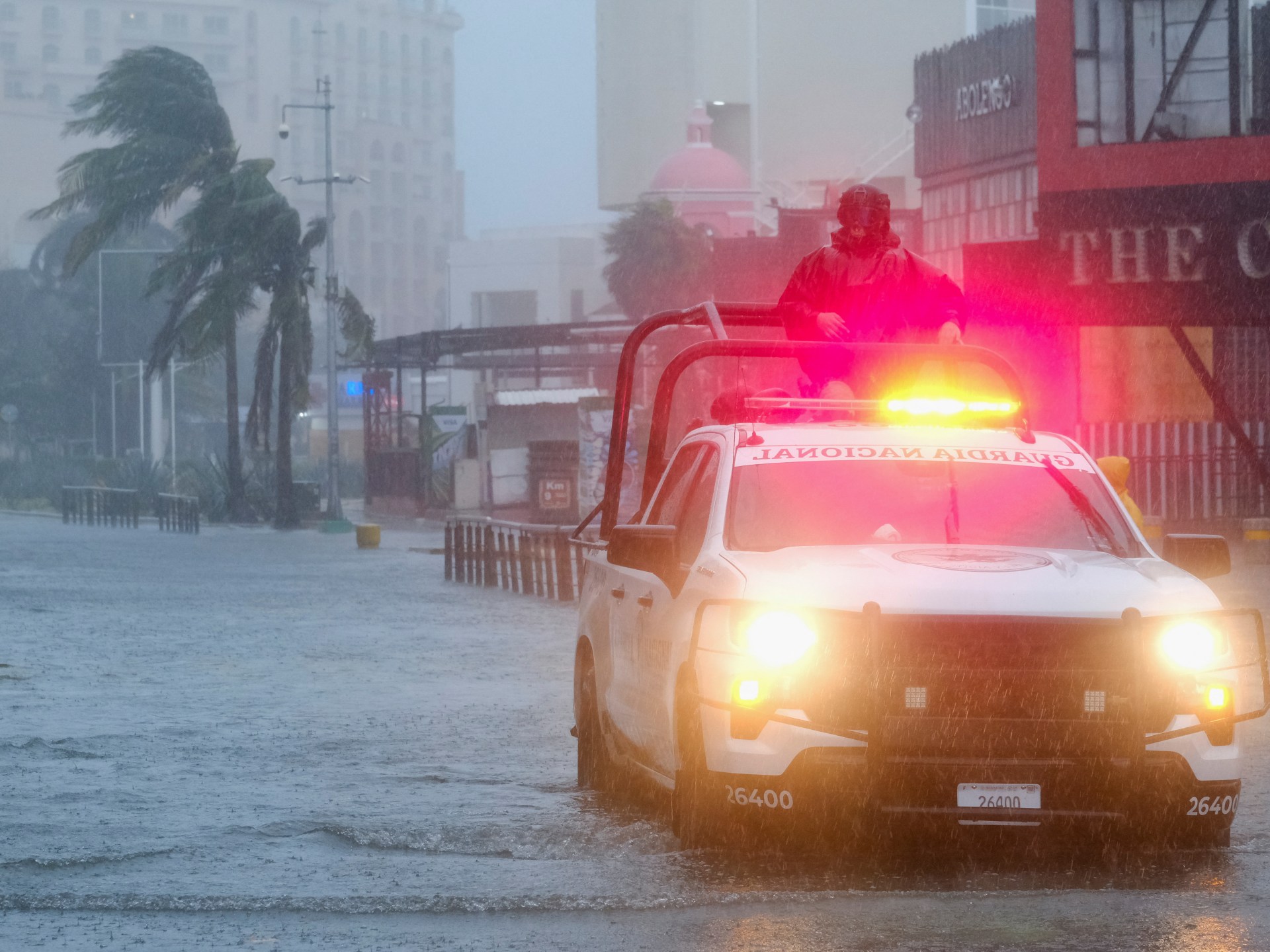
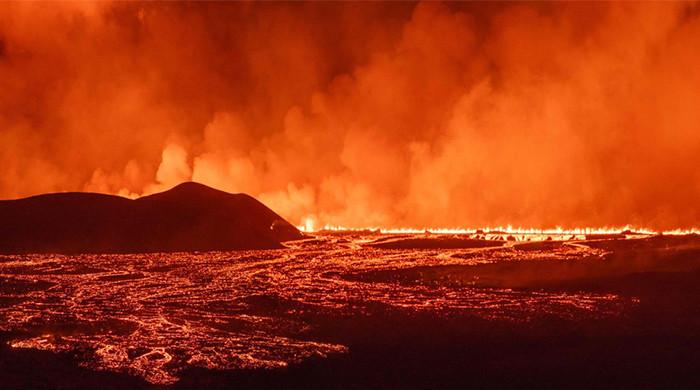
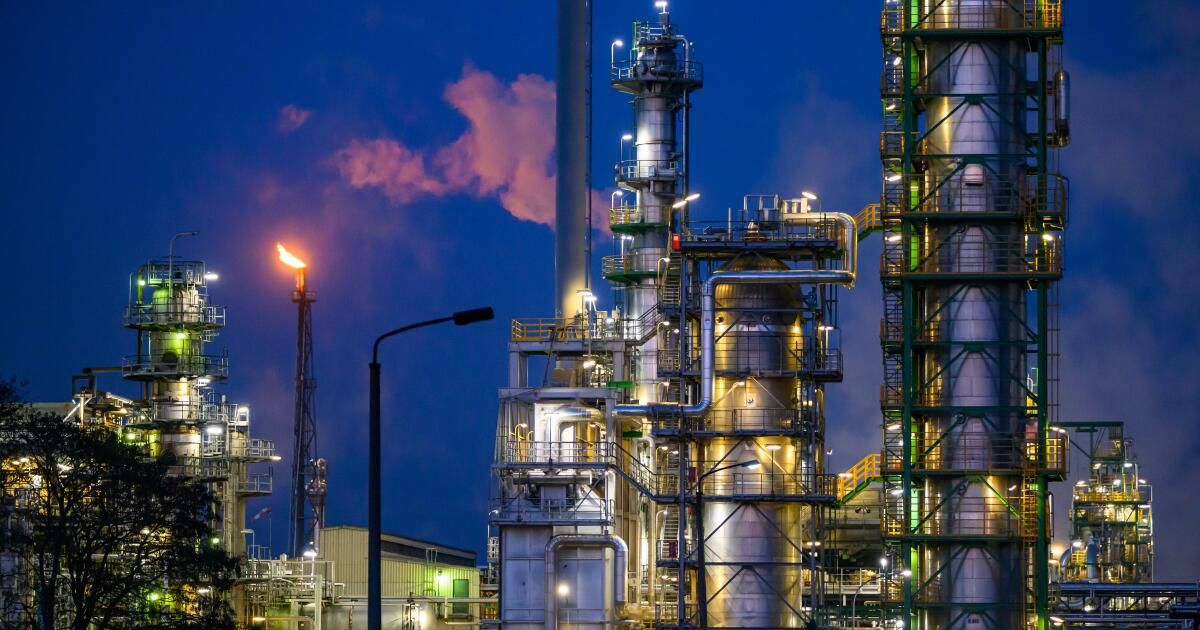
Drops of crude oil rained down on Tehran after Israeli airstrikes decimated oil deposits, blanketing the Iranian capital in dense smog. Iranian counterattacks have also targeted refineries and oil fields in Saudi Arabia and Bahrain. Crude oil prices have soared and traffic through the Strait of Hormuz has virtually ceased, forcing energy importers to look for alternative sources.
Those spikes are giving Russia, one of the world's largest oil and gas exporters, a rare advantage. After spending a decade as the world's most sanctioned nation for its aggression in Ukraine, Putin is finally beginning to regain some influence in global markets.
“In the current economic situation, if we refocus now on those markets that need greater supplies, we can gain a foothold there,” Putin said at a meeting in the Kremlin on Monday, according to Russian state media. “It is important for Russian energy companies to take advantage of the current situation.”
On March 4, the Treasury Department issued a temporary 30-day waiver allowing Indian refiners to buy Russian oil. The Trump administration's appeal was described as a way to ease demand for Middle East oil, but was criticized as a reversal of sanctions imposed against Putin aimed at denying him the capital needed to finance his occupation of eastern Ukraine.
Now, Moscow is set to press that advantage even further, after Trump said Monday he will further lift sanctions on oil-producing countries to ease trade friction and reintroduce additional supplies of oil and gas. The only countries with US oil sanctions are Russia, Iran and Venezuela.
“So, we have sanctions on some countries. We're going to remove those sanctions until this is fixed,” Trump said at a news conference at his golf club in Doral, Florida. “Then who knows, maybe we won't have to impose them; there will be a lot of peace.”
The surprise concession to Moscow comes as reports suggest Russia is helping Iran attack American personnel.
Trump's announcement came after an unscheduled hour-long call with Putin about the situation in the Middle East.
The war has also set the stage for Russia to make gains in Ukraine, as hostilities divert world attention from kyiv and its struggle to contain Russia's largest military. US-brokered talks between the two adversaries have been sidelined as Washington turns its attention to its war in Iran.
“At the moment, the priority of partners and all attention is focused on the situation around Iran,” Ukrainian President Volodymyr Zelensky said on X. “We see that the Russians are now trying to manipulate the situation in the Middle East and the Gulf region for the benefit of their aggression.”
Putin is unlikely to intervene militarily on Iran's behalf, according to Robert English, an international foreign policy expert at USC. Instead, Putin is expected to play his position cautiously, reap the economic benefits and remain firmly focused on Ukraine at a time when key air defense systems are diverted from Ukraine to the Persian Gulf.
“Russia is winning the war between Iran, the United States and Israel, at least so far. Oil and natural gas prices have skyrocketed, filling Putin's war chest in Ukraine,” he said. “Russia is gathering forces for a major spring offensive in eastern Ukraine, and it's not even front-page news.”
Ukraine has sent drone interceptors and ordered its anti-drone experts to abandon its war with Russia to help Western allies intercept Iranian attacks. Zelensky's loyalty may not bear fruit, English said.
“When will Ukraine see the benefits of helping the United States with anti-drone technology? Apparently it won't be anytime soon,” he said.
Even several weeks of disruption in Gulf energy supplies could bring the biggest windfall to Russia, the Associated Press reported, citing energy analysts.
The economic upheaval caused by the war has exposed the vulnerabilities of the European energy system, particularly its persistent dependence on Russian fuel.
Despite the sanctions, the European Union remains a major buyer of Russian natural gas and crude oil. Russian gas accounted for about 19% of EU gas imports in 2025. European allies have agreed to stop importing Russian liquefied natural gas, oil and pipeline gas by the end of 2027.
Putin expressed no desire Monday to rescue the European market now that escalations between the United States and Israel and Iranian retaliation have stifled oil production and transportation. Instead, the Russian president proposed diverting volumes from the European market “to more promising areas” such as the Asia-Pacific region, Slovakia and Hungary, which he said were “reliable counterparts.”
European leaders have been criticized for being “dazed, marginalized and disunited” since hostilities began in late February. Excluded from initial US and Israeli military planning, Europe entered the conflict with gas storage at just 30% of its capacity, the lowest levels in years. Instead of taking bold action, English said, European leaders have squabbled over internal divisions and rivalries.
“Soaring energy prices are the underlying cause of many of these frictions, as Europe struggles now more than ever to find affordable alternatives to cheap Russian oil,” English said.
Antonio Costa, president of the European Council, told European leaders in Brussels on Tuesday that rising energy prices and the world's shifting attention risk strengthening the Kremlin at a critical moment in the war in Ukraine.
“So far, there is only one winner in this war,” Costa said. “Russia.”