- Trump says Iran canceled mass hangings of protesters.
- Thank you Tehran, the calls for movement are “highly respected.”
- According to him, more than 800 executions were scheduled.
DUBAI: US President Donald Trump thanked Iran's leaders for canceling what he said were hundreds of planned executions of protesters after a crackdown.
On his social media platform, he said the mass hangings had been canceled and praised Tehran for the move, as deadly unrest across the country appears to be subsiding after a harsh crackdown.
US President Donald Trump, whose repeated threats to act included a promise to “take very strong action” if Iran executed protesters, said leaders in Tehran had canceled the mass hangings.
“I greatly respect the fact that all the scheduled hangings, which were supposed to take place yesterday (more than 800 of them), have been canceled by the leaders of Iran. Thank you!” posted on social media.
Iran has not publicly announced plans for such executions or said it has canceled them.
Protests broke out on December 28 over economic hardship and grew into widespread demonstrations calling for the end of the current government, culminating in mass violence late last week. More than 2,000 people died in the worst internal unrest since Iran's 1979 Islamic Revolution, according to opposition groups and an Iranian official.
But several Tehran residents contacted by Reuters said the capital had been comparatively quiet for four days. Drones flew over the city, but there were no signs of major protests on Thursday or Friday. Another resident of a northern city on the Caspian Sea said the streets there also seemed quiet. The residents declined to be identified for their safety.
Prospect for withdrawal from US attacks
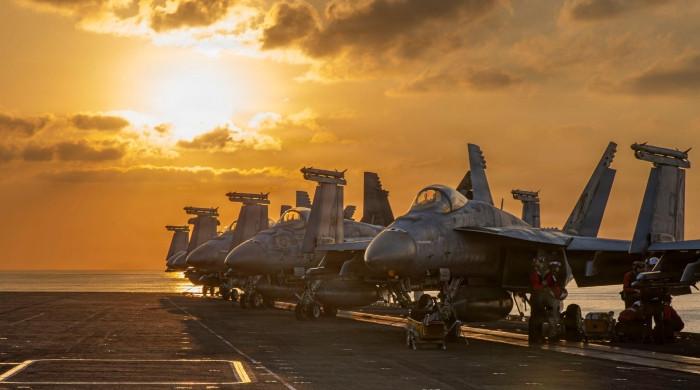
The prospect of a US attack has diminished since Wednesday, when Trump said he had been told that killings in Iran were decreasing. But more US military assets were expected to arrive in the region, demonstrating continued tensions.
U.S. allies including Saudi Arabia and Qatar conducted intense diplomacy with Washington this week to prevent a U.S. attack, warning of repercussions for the broader region that would ultimately affect the United States, a Gulf official said.
Israel's intelligence chief David Barnea was also in the United States on Friday for talks on Iran, according to a source familiar with the matter, and an Israeli military official said the country's forces were in “maximum readiness.”
As the internet blackout eased this week, more accounts of the violence have emerged.
A woman in Tehran said Reuters by phone that his daughter was murdered a week ago after joining a demonstration near his home.
“She was 15 years old. She was not a terrorist or a rioter. The Basij forces followed her when she tried to return home,” he said, referring to a branch of the security forces often used to quell unrest.
The United States is expected to send additional offensive and defensive capabilities to the region, but the exact composition of those forces and the timing of their arrival were still unclear, a U.S. official said, speaking on condition of anonymity.
The U.S. military's Central Command declined to comment, saying it does not discuss ship movements.
Pahlavi calls for more pressure
Reza Pahlavi, the U.S.-based son of Iran's last shah who has gained increasing prominence as an opposition figure, on Friday urged the international community to increase pressure on Tehran to help protesters overthrow the current system.
“The Iranian people are taking decisive action on the ground. The time has come for the international community to fully join them,” said Pahlavi, whose level of support inside Iran is difficult to measure.
Trump this week appeared to play down the idea of the United States backing Pahlavi, expressing uncertainty that the exiled royal heir who has sought support among Western countries can muster significant backing inside Iran. Pahlavi met with US envoy Steve Witkoff last weekend. axios reported.
The Iranian-Kurdish human rights group Hengaw said there had been no protest gatherings since Sunday, but that “the security environment remains very restrictive.”
“Our independent sources confirm a strong military and security presence in cities and towns where protests previously took place, as well as in several locations that did not experience major demonstrations,” Norway-based Hengaw said in comments to Reuters.
Reports of sporadic disturbances
However, there were still signs of unrest in some areas. Hengaw reported that a nurse was killed by direct fire from government forces during protests in Karaj, west of Tehran. Reuters could not independently verify the report.
State media outlet Tasnim reported that rioters had set fire to a local education office in Falavarjan county in the central province of Isfahan on Thursday.
An elderly resident of a city in Iran's northwestern region, where many Kurdish Iranians live and which has been the focus of many of the largest outbreaks, said sporadic protests had continued, although not as intense.
Describing the violence at the start of the protests, he said: “I have never seen scenes like that before.”
A video circulating on the Internet, which Reuters was able to verify had been recorded at a forensic medical center in Tehran, showed dozens of bodies lying on the ground and on stretchers, most in bags but some uncovered. Reuters could not verify the date of the video.
State television Press TV quoted Iran's police chief as saying that calm had been restored across the country.
The death toll reported by the US-based human rights group HRANA has increased little since Wednesday and now stands at 2,677 people, including 2,478 protesters and 163 people identified as affiliated with the government.
Reuters has not been able to independently verify HRANA's death toll. An Iranian official told the news agency earlier this week that about 2,000 people had been killed.
The casualty figures dwarf the death toll from previous episodes of unrest that have been repressed by the state, including those in 2009 and 2022.