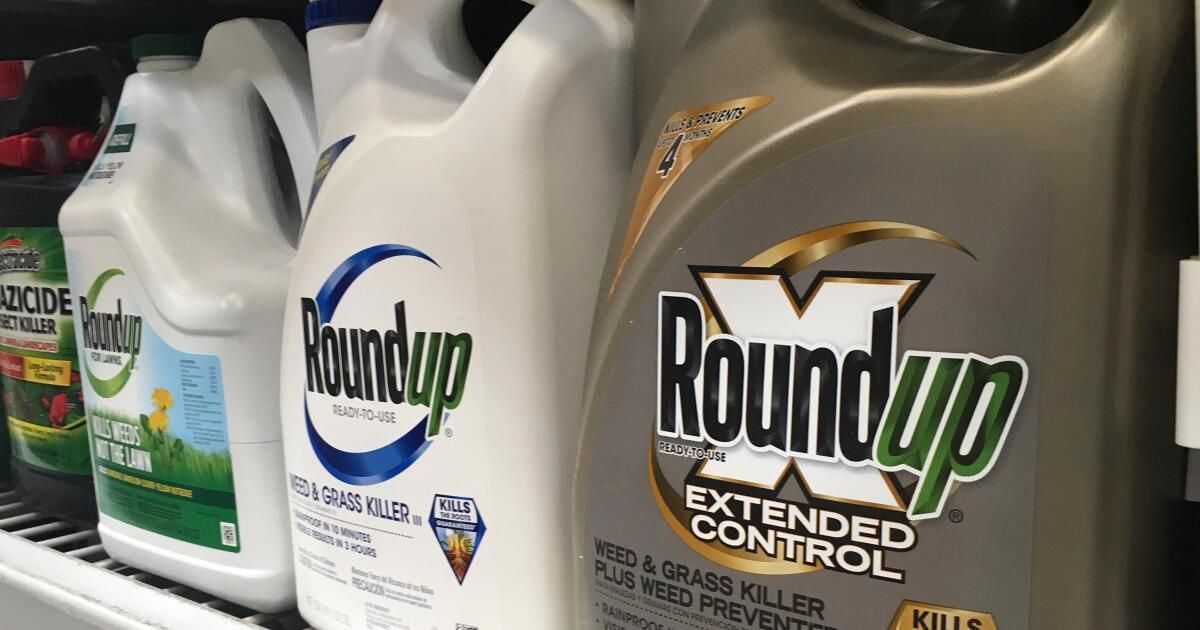
WASHINGTON- The Supreme Court announced Friday that it will hear Monsanto's claim that it should be protected from tens of thousands of lawsuits over its Roundup herbicide because the Environmental Protection Agency has not required a warning label that it can cause cancer.
The judges will not resolve the decades-long dispute over whether Roundup's key ingredient, glyphosate, causes cancer.
Some studies have found it to be a possible carcinogen and others concluded that it does not pose a true cancer risk to humans.
However, the court can free Monsanto and Bayer, its parent company, from lawsuits by more than 100,000 plaintiffs who sued over his cancer diagnosis.
The legal dispute involves whether federal regulatory laws protect the company from being sued under state law for failing to warn consumers.
In product liability lawsuits, plaintiffs typically seek to hold product manufacturers liable for failing to warn them of a known danger.
John Durnell, a Missouri man, said he sprayed Roundup for years to control weeds without gloves or a mask, believing it was safe. He filed a lawsuit after being diagnosed with non-Hodgkin's lymphoma.
In 2023, a jury rejected his claim that the product was defective, but ruled in his favor on his “strict liability claim for failure to warn,” a state court concluded. He was awarded $1.25 million in damages.
Monsanto appealed, arguing that this state law verdict conflicts with federal law regulating pesticides.
“EPA has repeatedly determined that glyphosate, the most widely used herbicide in the world, does not cause cancer. EPA has consistently reached that conclusion after studying the extensive body of science on glyphosate for more than five decades,” the company told the court in its appeal.
They said the EPA not only refused to add a cancer warning label to Roundup products, but said such a warning would be “mislabeled.”
However, the “premise of this lawsuit, and thousands like it, is that Missouri law requires Monsanto to include the precise warning that the EPA rejects,” they said.
On Friday, the court said in a brief order that it would decide “whether the Federal Insecticide, Fungicide, and Rodenticide Act preempts a label-based claim for failure to warn when EPA has not required the warning.”
The court is likely to hear arguments in Monsanto v. Durnell in April and issue a ruling at the end of June.
“The Supreme Court's decision to take up the case is good news for American farmers, who need regulatory clarity,” said Bayer CEO Bill Anderson. “It is time for the American legal system to establish that companies should not be punished under state laws for complying with federal warning label requirements.”
Monsanto says it has removed Roundup from its consumer products, but it is still used on farms.
Last month, Trump administration lawyers urged the court to hear the case.
They said the EPA “has approved hundreds of labels for Roundup and other glyphosate-based products without requiring a cancer warning,” but state courts are accepting lawsuits based on the lack of warning.
Environmentalists said the court should not intervene to protect manufacturers of dangerous products.
EarthJustice attorneys said the court “could let pesticide companies off the hook, even when their products make people sick.”
“When people use pesticides in their fields or on their lawns, they don't expect to get cancer,” said Patti Goldman, senior attorney. “However, this happens, and when it does, lawsuits in state courts provide the only real path to accountability.”