- Sri Lanka's president says the planes were carrying anti-ship missiles.
- The United States made the request to the Sri Lankan government on February 26.
- Dissanayake says the US wanted to land planes in southern Sri Lanka.
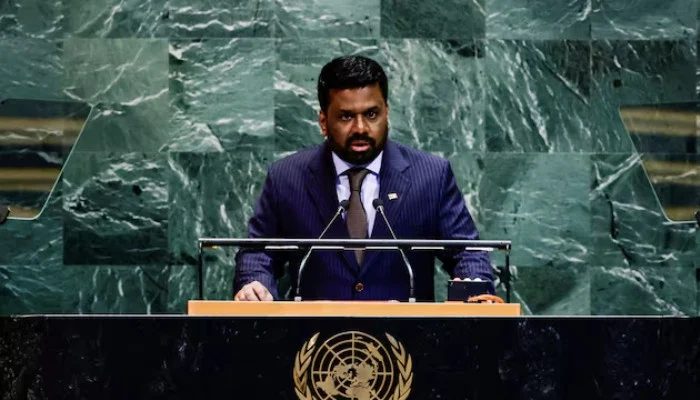
Sri Lanka denied permission for two US fighter jets to land at a civilian airport earlier this month, President Anura Kumara Dissanayake told parliament on Friday.
The United States had requested permission for the two planes to land at the Mattala Rajapaksa International Airport in the southern part of the country from March 4 to 8, Dissanayake told lawmakers.
“They wanted to bring two fighter jets armed with eight anti-ship missiles from a base in Djibouti,” he said in a statement.
“We reject the request to maintain Sri Lanka's neutrality,” he added to applause from parliamentarians.
The United States had made the request on February 26. On the same day, Iran requested three of its ships to pay a goodwill visit to Sri Lanka from March 9 to 13 after participating in an Indian naval exercise. That request was also denied.
The United States and Israel launched attacks on Iran on February 28, triggering a regional war that has severely restricted energy supplies and rattled markets.
“We were considering this request. If we had said 'yes' to Iran, we would have had to say 'yes' to the United States as well,” he added.
The Sri Lankan navy rescued 32 Iranian crew members off the IRIS Dena on March 4 after it was torpedoed by a US submarine, in an attack that killed at least 84 people.
A second ship, IRIS Booshehr, and its crew were rescued by the Sri Lankan navy after it developed technical problems beyond the island nation's territorial waters.
US Special Envoy for Central and South Asia Sergio Gor is currently visiting Sri Lanka and met with Dissanayake on Thursday.
Sri Lanka, which is recovering from a severe financial crisis that peaked in 2022 and was caused by a dollar shortage, is facing a supply shortage linked to the US-Israel war against Iran.
The United States is Sri Lanka's largest export market, while Iran is one of its main tea buyers.