- STC says to begin two-year process towards referendum.
- Saudi-backed forces recaptured parts of Hadramout on Friday.
- The Yemen crisis triggers a dispute in the Gulf region.
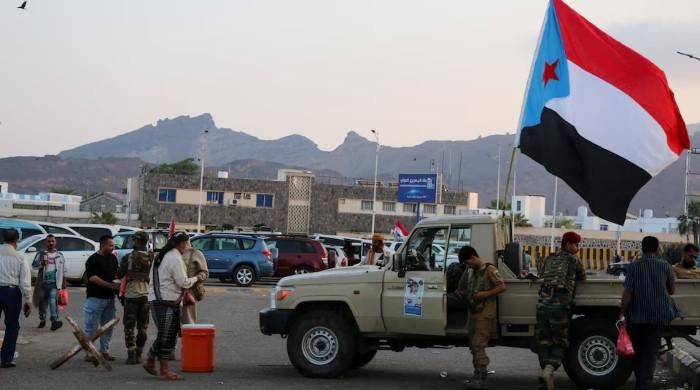
Yemen's southern separatist movement said on Friday it intended to hold a referendum on the north's independence within two years, as Saudi-backed forces fought to recapture areas the separatists seized last month in a move that sparked a major dispute between Gulf powers.
The statement by the UAE-backed Southern Transitional Council was the clearest indication yet of its intention to secede, but may be seen by Yemen's internationally recognized government and its Saudi backers as an escalation of the crisis.
It came hours after the government said it had launched an operation to recapture the crucial Hadramout province, one of the main areas captured by the STC last month, with Saudi military support.
Big power shift
The separatists' surprise advance in early December shifted power in Yemen, which has been at war for more than a decade, fractured the anti-Houthi coalition and laid bare divisions between Gulf allies Saudi Arabia and the United Arab Emirates.
Yemen has been divided for years between the northern highlands, held by the Iran-backed Houthi group, and forces including southern separatists supported by Gulf states under the internationally recognized government.
OPEC members Saudi Arabia and the United Arab Emirates, once the twin pillars of regional security, have in recent years seen their interests diverge on issues ranging from oil quotas to geopolitics.
Neither the internationally backed government nor Saudi Arabian officials could immediately be reached for comment on the STC statement.
Saba The news agency reported early Saturday that Rashad al-Alimi, head of Yemen's Saudi-backed presidential council, submitted a request to Saudi Arabia to host a forum aimed at resolving the southern issue.
Al-Alimi said he hopes the forum will bring together all southern factions “without distinction,” including the southern separatist movement backed by the United Arab Emirates.
The request comes after several southern factions and political figures urged Al-Alimi to submit a request to Riyadh to host a forum after they condemned what they described as “unilateral measures” on the southern issue by STC leader Aidarous Al-Zubaidi.
Saudi Arabia's Foreign Ministry welcomed the request and called on southern factions to participate in the planned forum.
On Friday, the governor of Hadramout under the internationally recognized government said he had launched an operation to restore control over the area, and later said his forces had taken control of a key military base.
A local tribal group backed by Saudi Arabia and the STC said the operation had been supported by airstrikes.
An STC spokesman, Mohammed al-Naqeeb, said his forces were on high alert across the region and warned they were ready to respond with force.
Oil-producing Hadramout borders Saudi Arabia and many prominent Saudis trace their roots to the province, giving it cultural and historical importance to the kingdom. His capture by the STC last month was seen by the Saudis as a threat.
Saudi Arabia did not immediately respond to a request for comment on the airstrikes and it was unclear if there were any casualties.
The United Arab Emirates, without directly addressing Friday's events, said the country had approached the recent escalation with restraint, coordination and a deliberate commitment to de-escalation.
Tensions persist after UAE troop withdrawal
The UAE Ministry of Defense announced on Saturday the completion of the return of all UAE Armed Forces personnel from the Republic of Yemen.
The ministry stated that the return of UAE forces follows the implementation of a previously announced decision to conclude the remaining missions of counter-terrorism units. The process was carried out in a manner that ensured the safety of all staff and was carried out in coordination with all relevant partners.
Last week, the United Arab Emirates said it was withdrawing its remaining forces from Yemen, after Saudi Arabia backed a call for its forces to withdraw within 24 hours, in one of the biggest disagreements between the two Gulf oil powers to play out publicly.
The move briefly eased tensions, but disagreements between different groups on the ground in Yemen have persisted.
Saudi Arabia and the United Arab Emirates are major players in the OPEC group of oil exporters, and any disagreement between them could hamper consensus on oil production.
They and six other OPEC+ members will meet online on Sunday, and OPEC+ delegates have said they will extend a policy of keeping first-quarter output unchanged.
Meanwhile, flights remain suspended at Aden International Airport, the main gateway to regions of the country outside of Houthi control, as the STC and Saudi Arabia trade blame over who was responsible for shutting down air traffic.
The stoppage was linked to new restrictions imposed by the internationally recognized government on flights between Aden and the United Arab Emirates, although there were conflicting accounts about who had ordered all air traffic to stop.