Victims of the January 2025 wildfires, unhappy with how insurers handled their claims, filed lawsuits, protested and complained to local and state officials.
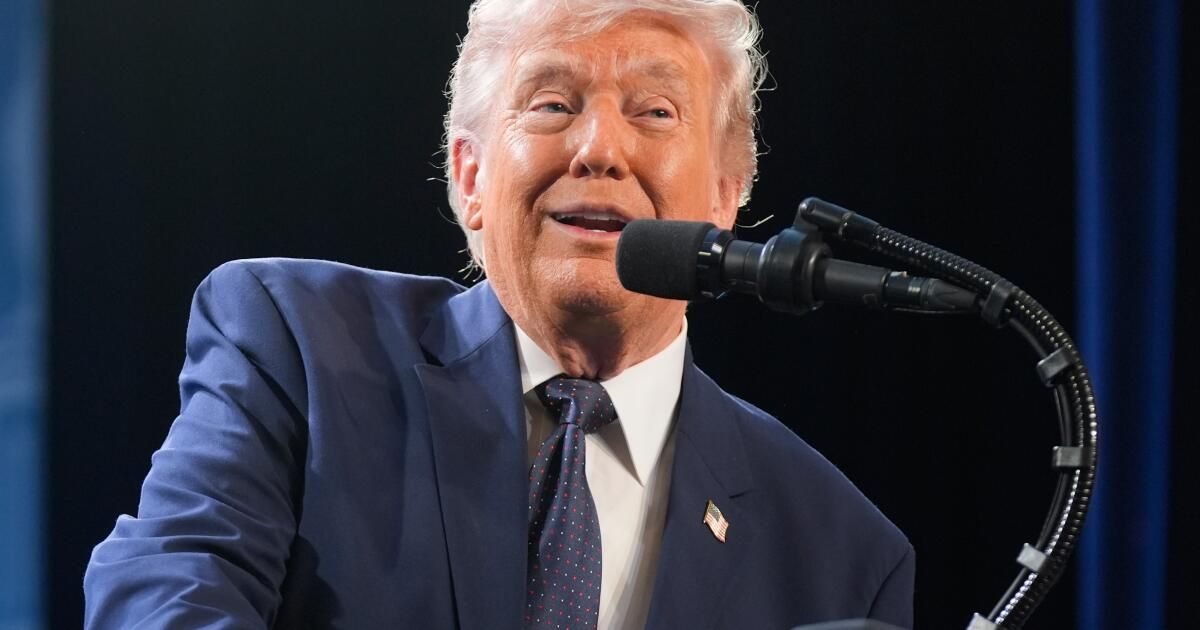
This week they gained the support of an unexpected ally: President Trump.
“It has been brought to my attention that insurance companies, particularly State Farm, have been absolutely horrible to people who have been paying them high premiums for years, only to find out that when tragedy struck, these horrendous companies were not there to help!” Trump posted on Truth Social.
He also asked U.S. Environmental Protection Agency Administrator Lee Zeldin to give him a list of insurers that “acted quickly, boldly, and courageously” to meet their legal obligation and another list of those that were “particularly bad.”
State Farm, California's largest home insurer, is under investigation for how it handled claims from the January 2025 wildfires. In a statement responding to the president's post, it said it received 13,700 claims, paid out $5.7 billion and expects total payments could reach $7 billion.
“Our leadership position in the California homeowners insurance market means that State Farm General Insurance Company, the State Farm company that offers homeowners insurance in California, insured more people affected by this disaster than anyone else,” the statement read.
Tuesday's post originated from a Feb. 4 visit Zeldin and small business administrator Kelly Loeffler made to the Los Angeles area, where they met with Los Angeles Mayor Karen Bass, Los Angeles County Supervisor Kathryn Barger and victims of the Pacific Palisades fire, among others.
The visit was prompted by Trump's criticism of the slow rebuilding process and by a Trump executive order allowing victims of the Los Angeles wildfires to rebuild without having to deal with “unnecessary, duplicative or obstructive” permit requirements.
Aerial image of a neighborhood along Rambla Vista in Malibu taken in December.
(Allen J. Schaben/Los Angeles Times)


1. A view of destroyed beachfront properties that remain free of construction after the Palisades Fire destroyed them last year in Malibu. 2. Aerial image of the remains of a beachfront neighborhood in Malibu taken in December after the massive Palisades Fire destroyed hundreds of homes and businesses last year. (Allen J. Schaben/Los Angeles Times)
At the time of the order, Bass dismissed it as a “pointless political stunt,” saying the president has no authority over local permits but could help by speeding up funding for the Federal Emergency Management Agency.
The American Property Casualty Insurance Association. The industry trade group, in its response to Trump's post, continued to point fingers at the government. He noted that the fires were the third worst natural disaster in U.S. history in terms of insured losses, at $40 billion.
“Granting permits can be a frustrating process and there is always room for improvement,” he said in a statement. “Los Angeles has been approving permits three times faster than before the fire. However, permit issuance continues to lag.”
Barger, whose district includes the Eaton fire zone in and around Altadena, said this week that he defended the local permitting process to Zeldin. But he said he also pointed to complaints about how insurers, and State Farm in particular, have handled claims.
“A lot of people feel like the insurance industry has let them down, and the number one company we hear about is State Farm,” he said. “Obviously, Administrator Zeldin met with the president and explained what I told him.”
Bass, who also spoke by phone with Trump last month, issued a statement saying he “recently requested that the president intervene with insurance companies to ensure they pay claims so survivors can afford to rebuild.”
“I want to thank President Trump and EPA Administrator Zeldin for taking action and working alongside us to help survivors get the support they need and deserve,” she said.
A White House official said Friday that the EPA was working to produce the list of insurers “as quickly as possible for the president” and that “the best way for insurance companies to help is to immediately pay what they owe so victims can rebuild their lives.”

Construction crews rebuild homes that were destroyed in the Eaton Fire in Altadena on March 20.
(Allen J. Schaben/Los Angeles Times)
“Administrator Zeldin, on behalf of the president, will hold insurance companies accountable to the great people of California,” the official said.
The federal government has played a major role in the recovery, including leading debris cleanup and, as of February, approving 12,600 Small Business Administration loans for fire victims totaling $3.2 billion.
However, a 1945 federal law, the McCarran-Ferguson Act, delegates authority to regulate the insurance industry primarily to individual states.
Joy Chen, executive director of the Eaton Fire Survivor's Network, which represents fire victims in the Eaton fire zone in Altadena and elsewhere, said her group believes the federal government has a bigger role to play.
“President Trump has the opportunity to restore accountability to this broken system. Federal agencies have the tools to act,” said Chen, who has been a sharp critic of State Farm's claims practices and how California Insurance Commissioner Ricardo Lara has handled complaints against the company.
He specifically called for the Federal Trade Commission to examine “deceptive sales practices” that have left Americans underinsured and for the Justice Department to investigate “industry-wide claims practices that delay, deny, or underpay payments owed to policyholders.”
Lara has defended his treatment of the company, noting that regulators opened an investigation into State Farm's claims practices last year.
Martin Grace, a University of Iowa business professor and insurance regulation expert, said that aside from the “bully pulpit” Trump wielded in his social media post, the federal government's hands are largely tied.
“He can intimidate people, and Trump is good at that. And I think the federal government, at one level, just has that. Now, Congress and the president together could say, 'Listen, we don't like what the states allow insurers to do, and we're going to change the regulatory system,'” he said.
Grace noted that there was a solvency crisis in the insurance industry in the 1970s and 1980s that led to a congressional report in 1990 and federal pressure to improve regulation at the state level, which was carried out.
“Congress basically said, 'Get your act together or we'll take action.' [regulation] “And then the states came together and did a much better job of that,” he said.
Los Angeles attorney Richard Giller, who represents plaintiffs in lawsuits against insurers, said the federal government could still take steps to improve the market.
These could include establishing a federal reinsurance program that shares natural disaster risks with insurers, or covering the risk itself similar to how the National Flood Insurance Program works.
“The catastrophe insurance industry in California is incredibly broken and needs serious repair,” he said.