- Hezbollah stops attacks as Israel presses campaign.
- France's Macron urges Lebanon's inclusion in ceasefire.
- The UN “strongly condemns” the Israeli attacks in Lebanon.
Israel carried out its most intense attacks on Lebanon since the conflict with Hezbollah erupted last month, even as the Iran-aligned group halted attacks on northern Israel and Israeli troops in Lebanon under a two-week ceasefire between the United States and Iran.
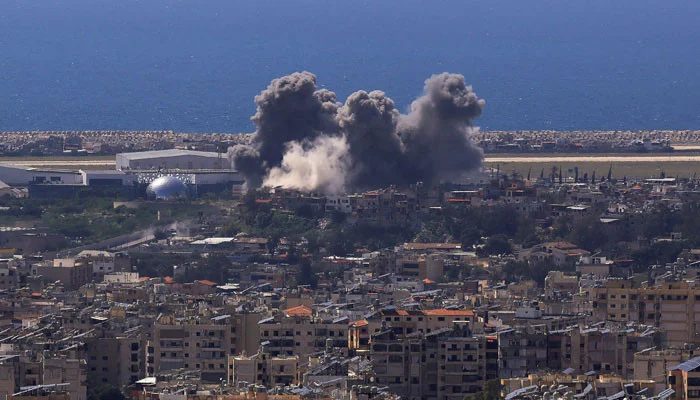
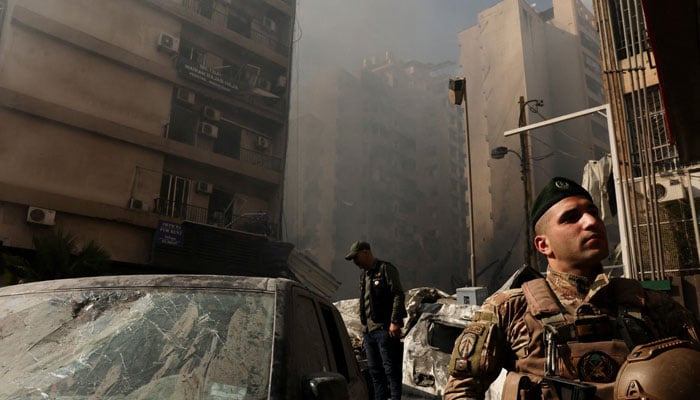
Back-to-back explosions rocked Beirut, sending clouds of smoke across the capital, as Israel's military said it had launched the largest coordinated attack of the war. More than 100 Hezbollah command centers and military sites were attacked in Beirut, the Bekaa Valley and southern Lebanon, he said.
The attacks killed 89 people, including a dozen doctors, and injured 700 across the country, Lebanon's Health Ministry spokesman said. Reuters.
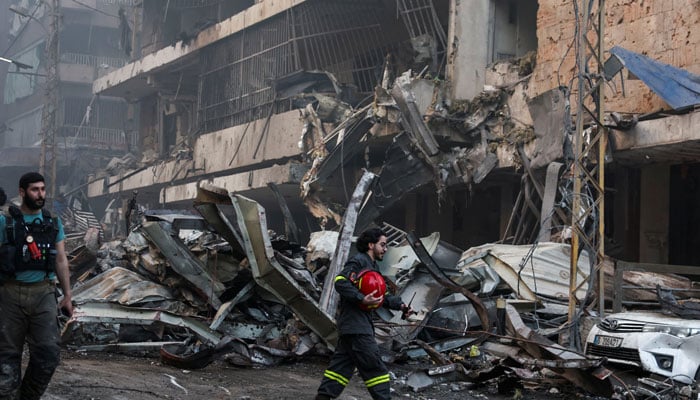
In Beirut, Reuters Journalists saw people on motorcycles picking up the injured and transporting them to hospitals because there were not enough ambulances to take them in time. A group of firefighters worked to put out flames in a parking lot after a fire left more than a dozen cars scorched and destroyed.
The head of Lebanon's doctors' union, Elias Chlela, called in a written statement for “all doctors of all specialties” to go to any hospital they can to offer help. One of Beirut's largest hospitals said it needed donations of all blood types.
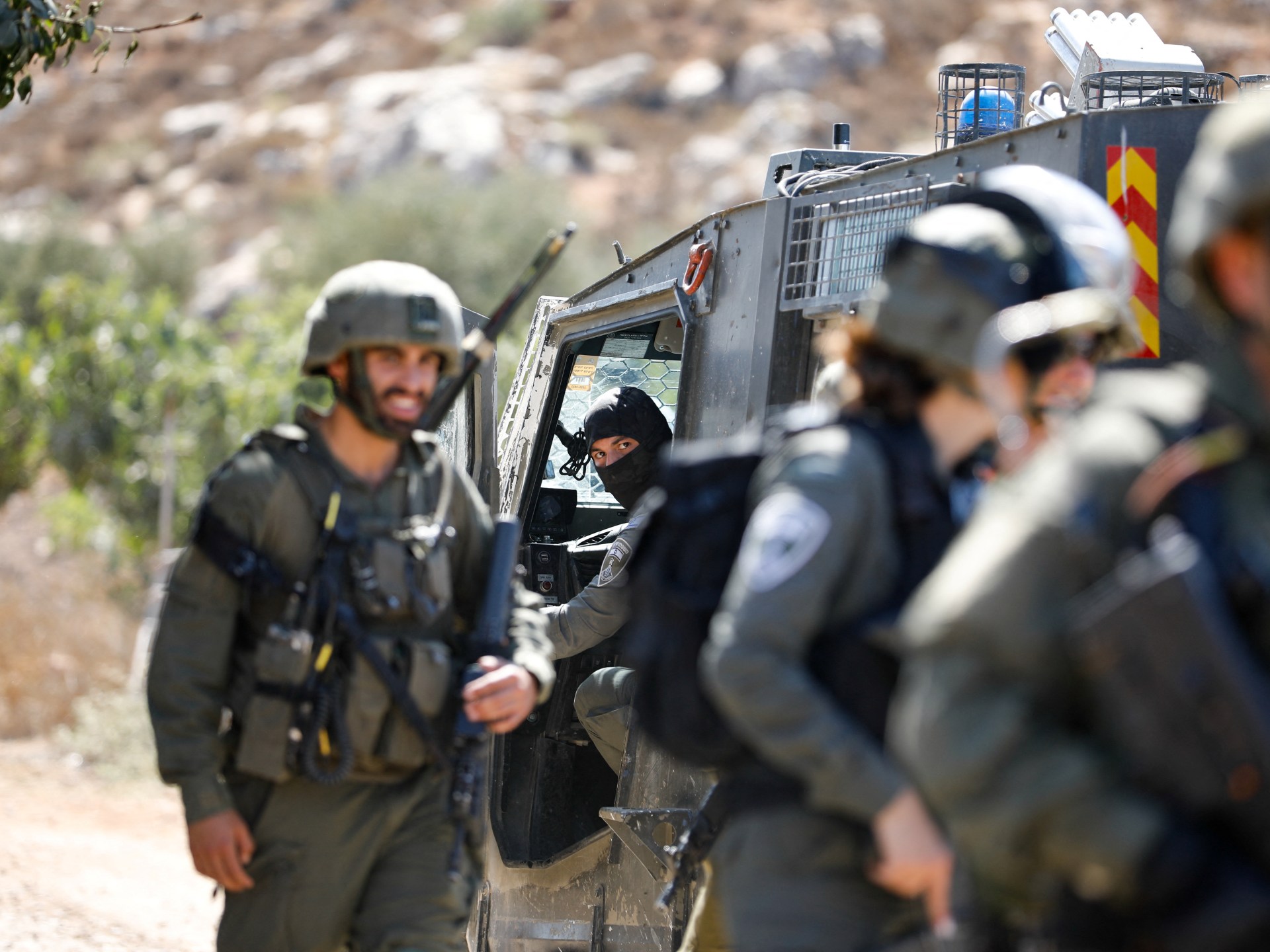
Israeli Prime Minister Benjamin Netanyahu said overnight that the ceasefire suspending the six-week US-Israel war against Iran did not apply to Lebanon, and the Israeli military said operations against Hezbollah there would continue.
That position contradicted comments by Prime Minister Shehbaz Sharif, a key broker in the US-Iran ceasefire talks, who had said the truce would include Lebanon.
Lebanese state news agency ANN had reported continued Israeli attacks in southern Lebanon that same day, including artillery shelling and a dawn airstrike on a building near a hospital that killed four people. An Israeli attack on the southern city of Sidon killed eight people and wounded 22 others, Lebanon's Health Ministry said.
Another attack occurred in central Beirut in the early afternoon, ANN reported.
'A serious violation'
Hezbollah stopped attacking Israeli targets early Wednesday, three Lebanese sources close to the group said. Reuters. The group's last public statement on its military activity was published at 1 a.m. (2200 GMT Tuesday), saying it had attacked Israeli troops inside Lebanon on Tuesday night.
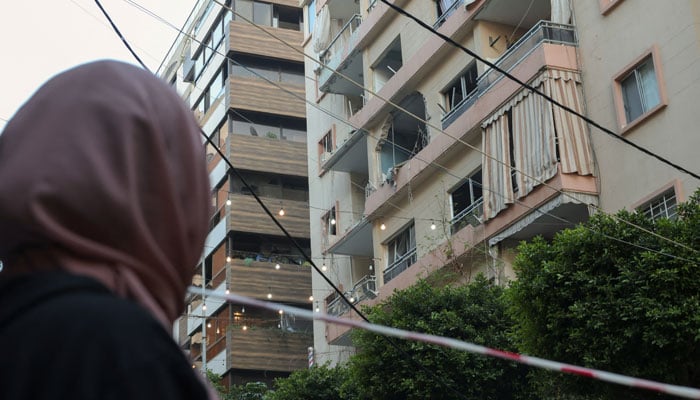
“Hezbollah was informed that it is part of the ceasefire, so we respect it, but Israel, as usual, has violated it and committed massacres throughout Lebanon,” said senior Hezbollah lawmaker Ibrahim al-Moussawi. Reuters.
Another Hezbollah lawmaker, Hassan Fadlallah, said Reuters The Israeli attacks were “a serious violation of the ceasefire” and that there would be “repercussions for the entire agreement” if they continued.
The group is likely to issue a statement outlining its formal position on the ceasefire and on Netanyahu's claim that Lebanon is not included, the three Lebanese sources said.
Lebanese President Joseph Aoun, welcoming the US-Iran ceasefire, said Beirut would continue its efforts to ensure Lebanon was included in any lasting regional peace agreement.
Most of Wednesday's attacks occurred in areas populated by civilians, Israel's military said. Hours before the attack, the army had issued warnings for some areas of southern Beirut and southern Lebanon. No such warning was given for central Beirut, which was also affected.
Following the attacks, Israeli military spokesman Avichay Adraee stated in X that Hezbollah had moved from its stronghold in the Dahiyeh neighborhood of southern Beirut to mixed areas of the city, including the north.
Addressing Hezbollah, he said, Israel's army “will pursue you and act with great force against you wherever you are.”
“Lebanon can't take it anymore”
More than 1,500 people have been killed in Israel's air and ground campaign across Lebanon, including more than 130 children and more than 100 women, since March 2, when Hezbollah began firing rockets at Israel in solidarity with Tehran.
Israel has since issued evacuation orders covering around 15% of Lebanese territory, mainly in the south and the southern suburbs of Beirut. According to Lebanese authorities, more than 1.2 million people have been displaced.
Israel has also pledged to occupy southern Lebanon up to the Litani River as part of a “security zone” it says is intended to protect its northern residents.
“Hopefully a ceasefire will be reached,” said Ahmed Harm, a 54-year-old displaced from Beirut's southern suburbs. “Lebanon can't take it anymore. The country is collapsing economically and everything is collapsing.”
Outside a school housing displaced people in Sidon, pillows and blankets were piled on cars as some families hoped to return home soon. On an artificial grass soccer field, a family had packed plastic bags with clothes, pots and pans, towels, sheets and blankets.
“We are just waiting for the official decision from above, so we can return,” said Samar al-Saibany, who was displaced from a village in the south.
Local mayor Mustafa al-Zein said more than 28,000 people were sheltering in the area as of Tuesday night. He warned residents not to attempt to return before an official signal.
“In the south, give someone a signal to come back and he will come back,” Zein said.