The Israeli government is cracking down on critical media outlets, giving it unprecedented control over how its actions are presented to its citizens.
Among the measures is the so-called Al Jazeera Law, which allows the government to close foreign media outlets for national security reasons. On Tuesday, the Israeli parliament approved extending the law for two years after it was introduced during Israel's genocidal war in Gaza to essentially stop Al Jazeera's operations in Israel.
Recommended stories
list of 4 itemsend of list
Separately, the government is also taking steps to shut down the popular Army Radio network, one of two publicly funded Israeli news outlets. The radio station is often criticized by the Israeli right, who consider Army Radio to be biased against them.
Israelis still rely on receiving their news through traditional media, with about half relying on news broadcasts for information on current affairs and about a third similarly relying on radio stations.
The tone of the media that can publish and transmit is important. According to analysts within Israel, the selective broadcast of Palestinian suffering during Israel's war on Gaza has helped sustain the carnage and reinforced a sense of grievance that enables Israel's continued attacks on Gaza, as well as countries in the region, such as Syria, Yemen and Lebanon.
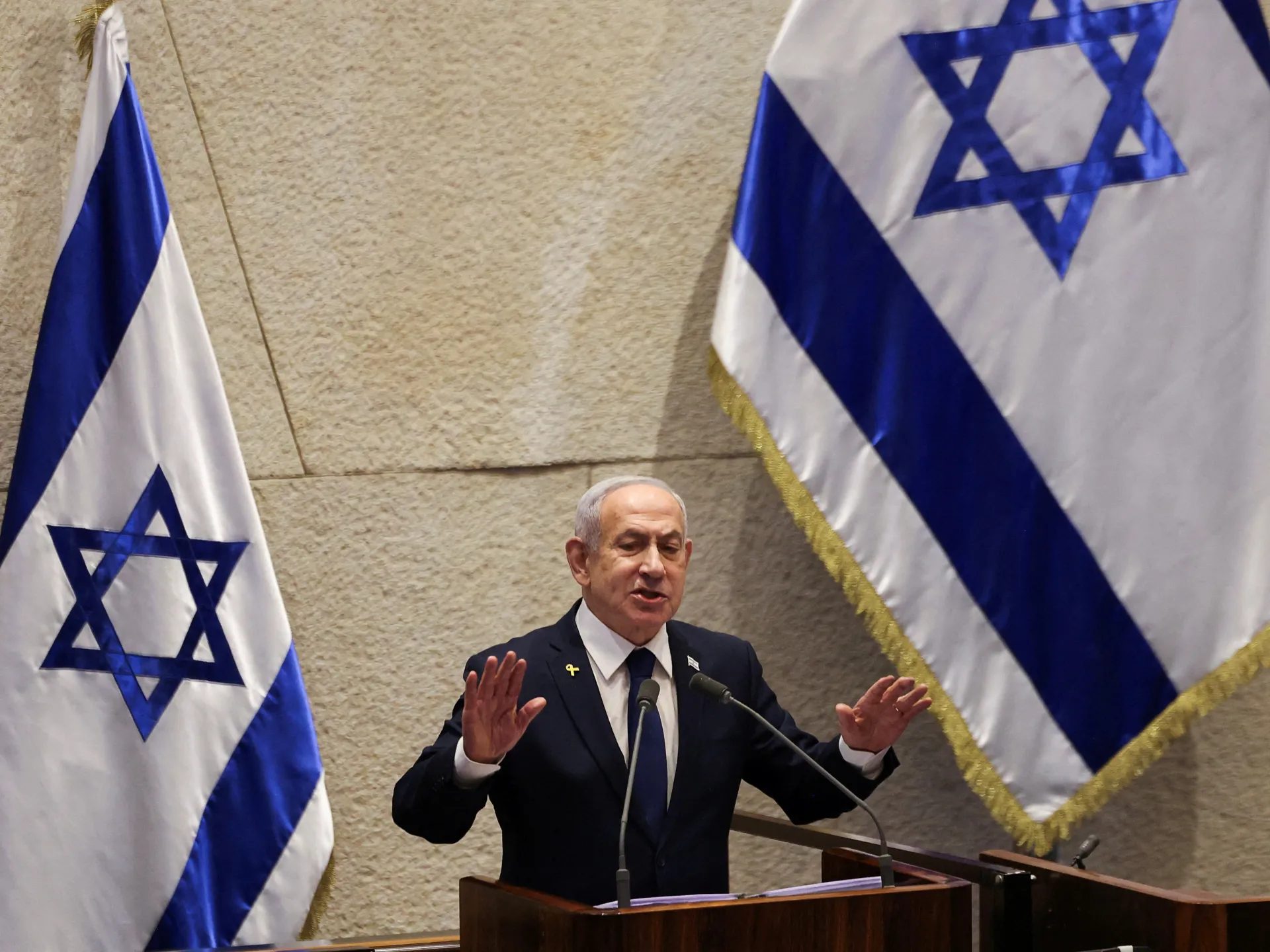
Despite what observers characterize as a media environment firmly rigged in its favor, Prime Minister Benjamin Netanyahu's far-right government, which includes ministers convicted of “terrorism” offenses and others who have repeatedly called for the illegal annexation of the occupied West Bank, is seeking to circumvent legal checks on its control of the media and bring more information from Israel under its control.
Let's take a closer look.
Because the government believes it is too critical.
Israeli politicians have long complained about how national and international media have covered the war in Gaza.
But the government added a new allegation in November, partly blaming the media for the Hamas-led attacks on southern Israel on October 7, 2023.
“If there had not been the media fully mobilized to encourage the rejection [to volunteer to reserve duty] “And the reckless opposition to judicial reform, there would not have been such division in the nation that led the enemy to take advantage of the opportunity,” Communications Minister Shlomo Karhi said as he introduced a bill to increase government control of the information environment, referring to the Israeli government's attempts to reduce the independence of the judiciary..
In addition to the 'Al Jazeera Law', there are three pieces of legislation underway: a plan to privatize Israel's public broadcaster Kan, the move to abolish Army Radio and an initiative to put the media regulator under government control.
Both Army Radio and Kan, the other state-funded outlet with editorial independence, have published numerous reports critical of the government.
This week, Kan aired an interview with former Netanyahu spokesman Eli Feldstein, who told the broadcaster that the prime minister had ordered him to develop a strategy to help evade responsibility for the October 7 attacks.
Meanwhile, Israeli Defense Minister Israel Katz, justifying the decision to close Army Radio, said on Monday that the outlet had become a platform to attack the Israeli army and its soldiers.
Israel is also potentially changing the way it regulates its media. In November, the Israeli parliament moved forward with a bill that would abolish existing media regulators and replace them with a new government-appointed authority, potentially allowing for even greater state interference.

Finally, Israel has also codified into law emergency legislation banning foreign media outlets whose production it does not agree with. It was first enacted as emergency legislation in May 2024, when Israel used it to ban Al Jazeera from its territory, and was later used that same month to stop The Associated Press after the government accused the US-based news agency of sharing images with Al Jazeera.
Under the new law, the Minister of Communications – with the approval of the Prime Minister and the support of a ministerial committee – can stop the transmissions of a foreign broadcaster if the Prime Minister accepts a professional assessment that the outlet represents a security threat. The minister can also close the station's offices, confiscate the equipment used to produce its content and block access to its website.
Have the measures been criticized?
The International Federation of Journalists (IFJ) and the UK's National Union of Journalists have criticized Israel's decision to legislate against foreign media platforms which it sees as a security threat.
In a statement, IFJ Secretary General Anthony Bellanger said: “Israel is openly waging a battle against media outlets, both local and foreign, that criticize the government's narrative – that is typical behavior of authoritarian regimes. We are deeply concerned that the Israeli parliament will pass this controversial bill, as it would be a serious blow to freedom of expression and the press, and a direct attack on the public's right to know.”
The attempt to shut down Army Radio has also been heavily criticized, with Israeli Attorney General Gali Baharav-Miara declaring the move illegal and accusing Netanyahu's coalition of leaving public broadcasting “institutionally weakened, threatened and silenced and its future shrouded in fog.”
Baharav-Miara also criticized the move to place media regulation under government control, saying the bill “endangers the very principle of press freedom.”
Not much.
The Israeli media has overwhelmingly and consistently applauded the Israeli government's actions in Gaza, where more than 70,000 Palestinians have been killed by Israel, and in the occupied West Bank.
The suffering of the Palestinians is rarely shown, and when it is, it is often justified.
Even as Israel has killed more than 270 journalists and media workers in Gaza, the Israeli media has provided coverage for the actions of its government and its military.
That means Israelis often fail to recognize the hypocrisy of their government's statements.
One example came in June, after Iran attacked a hospital evacuated during the 12-day war between Israel and Iran. The Israeli government called the incident a war crime and the Israeli media reflected that outrage.
But the attack came after Israel was accused by a range of organisations, including the United Nations, of systematically destroying Gaza's health system with medical workers targeted for arrest and frequently tortured despite their protection under international law.
“The Israeli media… considers its job not to educate, but to educate and shape a public that is willing to support war and aggression,” journalist Orly Noy told Al Jazeera from West Jerusalem following the attack on the Israeli medical center. “It's really seen as having a special role in this.”