For Palestinians, maintaining their land and heritage, which has been under Israeli occupation since 1948, became a national priority. The Palestinian Authority has taken formal steps to register 14 new cultural and natural sites on UNESCO's provisional World Heritage list in a bid to safeguard its cultural and historical sites from Israeli appropriation and attacks.
“Palestine is not just a space of political conflict, but a civilization rooted in human history,” Marwa Adwan, acting director general of World Heritage at the Palestinian Ministry of Tourism, told Al Jazeera.
Recommended stories
list of 4 itemsend of list
“This diversity is the strongest response to attempts to monopolize the historical narrative,” he said, referring to Israeli attempts to appropriate symbols of Palestinian culture and history.
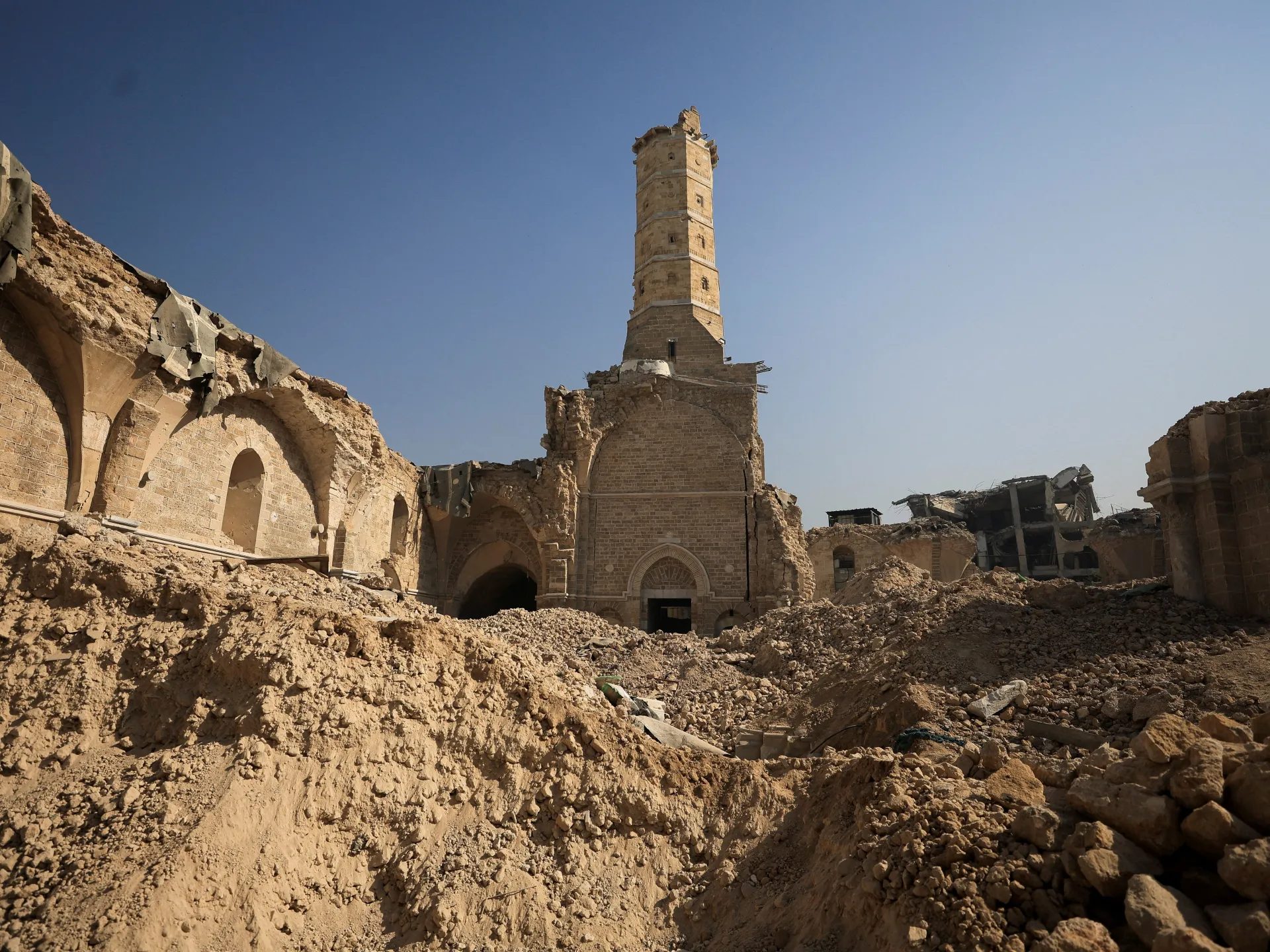
The presentation announced by the Ministry of Tourism and Antiquities on January 1 aims to grant international recognition to endangered sites in the occupied West Bank and Gaza Strip, which have been devastated by Israel's genocidal war. More than 200 historic sites were destroyed by Israeli bombing in what experts called a “cultural genocide.”
The new list brings the total number of Palestinian sites on the tentative list to 24, covering a broad timeline from the Canaanite city-states dating back to 3,000 BC to the Old City of Gaza.
The 14 sites presented
The Ministry of Tourism and Antiquities confirmed the full list of sites submitted to the United Nations Educational, Scientific and Cultural Organization (UNESCO). The list covers prehistoric caves, religious routes and modern architecture. The sites are:
- The historic center of Gaza, including the Great Omari Mosque and the Church of Saint Porphyry
- The Byzantine Church of Jabalia (Mukheitim)
- Canaanite city-states
- The historic city of Nablus and its surroundings.
- The Holy Miracles of Jesus Christ in Palestine
- Jerusalem Desert Monasteries (El-Bariyah)
- Maqamat (shrines) in Palestine
- Jerusalem Qanat es-Sabeel water system
- Jabal al-Fureidis / Herodium
- The Lower Jordan River Valley
- Archaeological Palaces of Tulul Abu el-'Alayiq
- Wadi Kharitoun Prehistoric Caves Cultural Landscape
- Inhabited caves (Al-Maghayir) of Palestine
- Modern architecture in Palestine
![Marwa Adwan, Acting Director General of World Heritage at the Palestinian Ministry of Tourism [Courtesy of Marwa Adwan]](https://www.aljazeera.com/wp-content/uploads/2026/01/WhatsApp-Image-2026-01-14-at-12.20.17-PM-1-1768387181.jpg?w=770&resize=770%2C513&quality=80)
Saving Gaza history
A crucial component of the bid is the protection of heritage in Gaza, which has faced catastrophic destruction during Israel's genocidal war. The list includes the Great Omari Mosque, built almost 1,400 years ago, and the Church of Saint Porphyry, both attacked during Israeli bombings. The Greek Orthodox Church was built in the year 425.
Adwan described the move as a strategic step for the “day after” the war.
“Including sites like the Omari Grand Mosque… is an initial international recognition of their global value and urgent need for protection,” he explained.
“We count on UNESCO not only for funding, but also to document the damage as an international legal source to preserve our cultural rights.”
'Heritage is a bridge'
The initiative has provoked a strong response from the Israeli government, particularly with regard to sites located in Area C of the West Bank, such as Herodium (Jabal al-Fureidis), which is under full Israeli military control. Area C makes up more than 60 percent of the West Bank.
According to Israel's Channel 14, Israeli Heritage Minister Amichai Eliyahu sent an urgent letter to Prime Minister Benjamin Netanyahu on Tuesday, calling the Palestinian move “archaeological terrorism.”
Eliyahu demanded the formation of a government working group to block the bid, arguing it is a “strategic arena for a political fight” aimed at seizing sites of “Jewish historical importance.”
“The lack of response will be interpreted internationally as silent acceptance,” Eliyahu warned, stating that the measure is a prelude to “international legal interventions.”
Israel has been accused of erasing Palestinian cultural heritage and using archeology as a weapon to seize Palestinian land. It has designated dozens of Palestinian archaeological sites in the occupied West Bank as “Israeli heritage sites” to seize Palestinian lands and entrench its occupation.
In September 2024, the UN General Assembly passed a resolution calling on Israel to end its occupation of Palestine within one year. The resolution came after the International Court of Justice ruled that Israel's occupation of the Palestinian territories was illegal.
Palestinian officials have rejected the Israeli characterization.
“Heritage is not a weapon, but a bridge,” Adwan told Al Jazeera. “Trying to link heritage to security or calling it 'terrorism' is a deliberate distortion.”
He noted that the archives were selected based on technical criteria to highlight the religious and cultural diversity of Palestine, including the “Miracles of Jesus” route and the Jerusalem Desert Monasteries (El-Bariyah).
“This reflects a rare cultural and religious pluralism that must be preserved for all humanity,” Adwan added.
Breaking ties with the UN
The heritage dispute unfolds as Israel seeks to completely sever ties with the United Nations system.
On Monday, Israeli Foreign Minister Gideon Saar announced that Israel would “immediately cut off all contact” with several UN bodies, including UN Women and the Office of the Special Representative of the Secretary-General for Children and Armed Conflict, citing “anti-Israel bias.”
Last year, Israel banned the United Nations Relief and Works Agency for Palestine Refugees (UNRWA), which is seen as a lifeline for Palestinians in the occupied territories, as well as in neighboring countries hosting Palestinian refugees. More than 750,000 Palestinians were ethnically cleansed from their homeland before the creation of Israel in 1948.
This follows the recent decision by US President Donald Trump's administration to withdraw from UNESCO for the second time. The United States, Israel's closest regional ally, has also cut funding to UNRWA.
Despite the hostile diplomatic climate, Adwan insisted that the Palestinian candidacy is a “sovereign right.”
“It's not a race against time,” he said, referring to the expansion of Israeli settlements. “It is a strategic step to integrate these sites into protection plans before it is too late.”