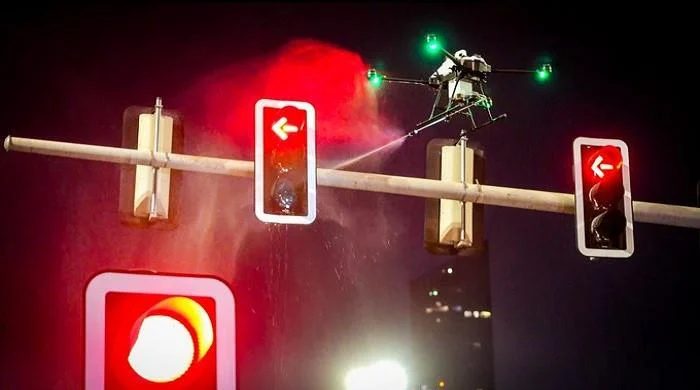
Dubai's Roads and Transport Authority (RTA) has launched a pilot initiative using drones to clean traffic lights, as part of efforts to modernize its operational systems.
According to an official statement, the initiative aligns with the authority's future-focused vision of improving efficiency, optimizing resource use and improving road safety.
The measure aims to eliminate the need for cranes and heavy machinery, reducing safety risks during maintenance.
Officials say the use of drones will also reduce costs, save fuel and water and help reduce environmental pollution.
The statement said that in the first phase, drones were tested at traffic signs along Morocco Street and other key intersections.
During the tests, traffic was temporarily closed.
It says drones can clear a section of a traffic sign in just three to four minutes, reducing cleaning time by 25 to 50%, while the initiative is also expected to reduce costs by around 15%.
The project reduces operating costs by limiting the use of heavy equipment, while supporting sustainability goals through lower fuel and water consumption and a reduction in emissions from conventional machinery, the RTA said in its statement posted on its website.
Abdullah Ali Lootah, director of RTA's Road and Facilities Maintenance Department, said: “The authority aims to adopt cutting-edge technologies to improve maintenance work and ensure sustainable operational efficiency across Dubai's road network.”
“The pilot phase involved comparing drone cleanup to traditional methods in terms of time, cost, quality of execution, and compliance with safety requirements.”
Lootah added that the first phase included several tests at the intersection of Marrakech and Rabat streets, with limited traffic closures to ensure safety during the initial testing period.
“Preliminary results showed a reduction in operational time of between 25% and 50%, with the drone clearing one side of a traffic sign in just three to four minutes,” the official said.
He noted that operating costs are estimated to have decreased by up to 15% compared to traditional methods, a figure that is expected to increase to 25% in the future with the use of more advanced drone technologies.
Lootah confirmed that the pilot project would continue to ensure the effective use of drones in maintenance work.
“The next phase will focus on refining cleaning methods to maximize safety and avoid disrupting traffic flow, helping to improve operational quality and strengthen Dubai's road infrastructure and transportation network,” he said.