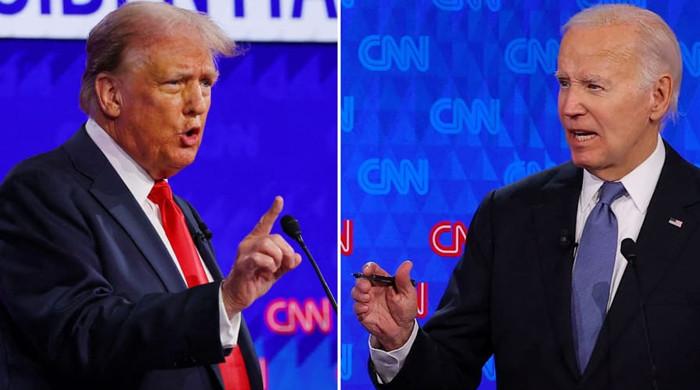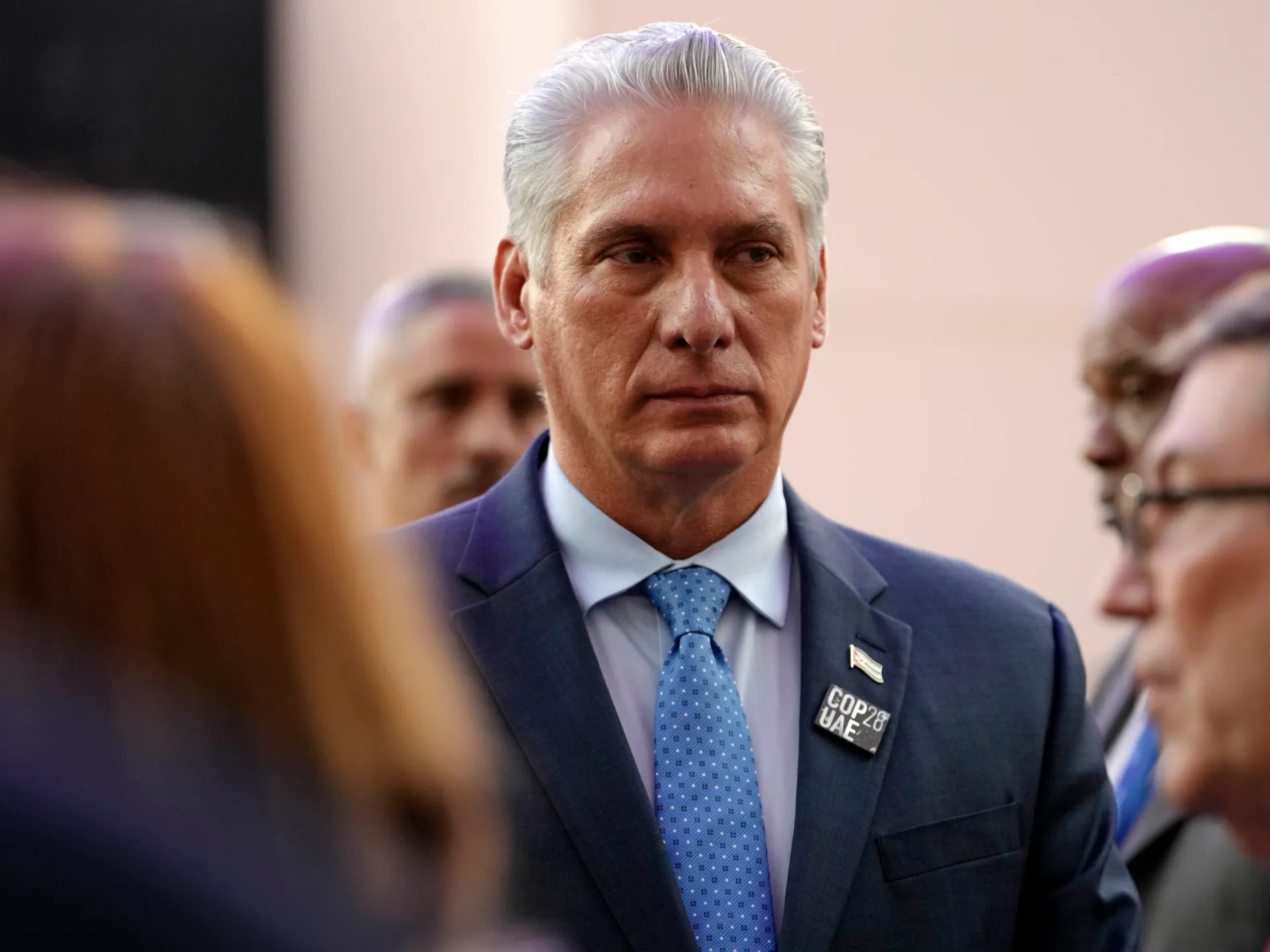
Cuba's Díaz-Canel vows to resist US pressure to resign as Trump escalates threats and tightens oil blockade on the island.
Published April 10, 2026
Cuban President Miguel Díaz-Canel says he will not give in to pressure from the United States to resign.
“Resigning is not part of our vocabulary,” he said Thursday in an interview with US broadcaster NBC News.
Recommended stories
list of 4 itemsend of list
The president described communist-ruled Cuba as a “free and sovereign state” with the right to “self-determination,” adding that the island is not “subject to the designs of the United States.”
“In Cuba, the people who hold leadership positions are not chosen by the United States government,” he said.
The president since 2018 has faced increasing pressures and demands for regime change from President Donald Trump's administration.
Trump has hinted that Cuba could face the same fate as Venezuela and Iran.
“I built this great army. I said, 'You'll never have to use it.' But sometimes you have to use it. And Cuba is next,” the US president said last month.
Cuba's main oil supply was cut off after Trump overthrew Venezuelan leader Nicolás Maduro in January. The United States has since imposed an oil blockade on the island and threatened to impose tariffs on any country that sells oil to Cuba.
“Hostile policy”
Díaz-Canel condemned the United States' “hostile policy” that has left Cuba reeling from widespread power blackouts, fuel shortages and disruptions to the distribution of water and food.
He also said the Trump administration has “deprived the American people of a normal relationship with Cuba.”
Since returning to power last year, Trump has called Cuba an “unusual and extraordinary threat” to U.S. national security and threatened a “takeover” of the island.
Current tensions date back to the Cold War, when the United States adopted an adversarial stance toward leftist governments throughout the American continent.
The Cuban Revolution of the 1950s led to the overthrow of a US-backed military government. In the early 1960s, Washington had imposed a comprehensive trade embargo aimed at weakening revolutionary leader Fidel Castro.
'We cannot betray Cuba'
Despite American pressure, Russia has remained a close ally of Cuba.
“We cannot betray Cuba. That is out of the question. We cannot leave it alone,” Russian Deputy Foreign Minister Sergei Ryabkov said at a news conference in Havana on Friday.
Last month, a Russian-flagged tanker carrying 730,000 barrels of oil docked in Cuba, the first to arrive on the island in three months.