Wars really allow you to distinguish between friends and enemies.
As U.S. airstrikes devastated Iran's dangerous nuclear and ballistic missile capabilities, Iran and its proxies targeted U.S. military bases, U.S. allies, and sea lanes across the Middle East. Ukraine ran to our defense. Russia, which had helped the ayatollahs for decades, continued to help Tehran.
Ukraine's assistance in this conflict is valuable and could be critical.
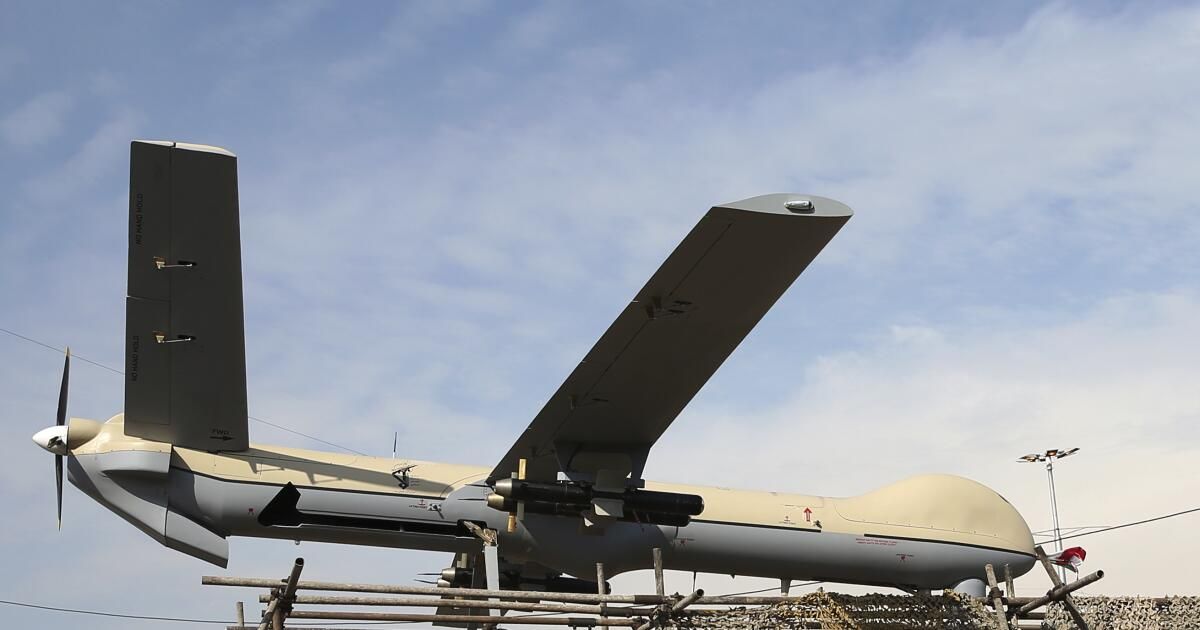
More than 70% of Iranian attacks (more than 2,000 as of mid-March) came from Shahed drones. Capable of carrying 100-pound payloads, the drones attacked Camp Arifjan in Kuwait, killing six U.S. service members; US Fifth Fleet Headquarters in Bahrain; the US $300 million high-altitude terminal defense battery in Jordan; three US embassies and consulates; allied air bases; and oil refineries, fuel tanks, desalination plants, cargo ships, airports and seaports.
The US military has been shooting down about 90% of drones, but 10% of Iran's fleet is a major threat. Iran reportedly had about 80,000 Shaheds in storage before the war and could still make about 1,000 a month. Drones can be hidden better than missile complexes or nuclear facilities. Any decrease in drone strikes could be misleading, as Iran is stockpiling them for another swarm attack.
Plus, for about $25,000, a Shahed drone costs between one tenth and one four hundred as much as the interceptors that the United States and its allies have used against them. As of mid-March, U.S. forces had reportedly expended about 1,000 Patriot (PAC-3) interceptors, nearly double America's annual production and more than Ukraine used in four years of fighting. Russia. This pace is difficult to sustain. Fast shipment of 10,000 cheaper ($10,000) Merops interceptor drones made in the United States, the brainchild of a Ukrainian sergeant and former Google CEO. Eric Schmidt – is helping. But that's still far below Iran's pre-war drone inventory.
Ukraine knows the danger and the challenge better than anyone. It has suffered 65,000 attacks with Shahed-type drones from Russia over three years. more than 150 one day on average last year. Despite those staggering volumes, Ukraine maintains the lead. It has developed highly effective Bullet interceptor drones. While not as sophisticated as the Merops, the Bullet costs about a tenth as much and is up to 100 mph faster. Ukraine is on track to produce 1,000 bales a day.
The battle-hardened experience of the Ukrainians is priceless. They didn't hesitate to share it. In response to the requests, Ukrainian President Volodymyr Zelensky immediately sent specialists and troops to the Gulf, including the US military base in Jordan. They has been assess defenses, train U.S. and allied forces, and assist with electronic warfare, sonic sensors, and software.
Ukraine is helping the U.S. military achieve critical objectives, which should reduce the uncertainty currently driving up gas prices and the cost of living here at home.
Russia looks the other way, or worse.
In January, Moscow increased military shipments to Iran, which likely included attack helicopters, air defense systems, spare parts for Su-35 fighter jets, radio-electronic equipment and sniper rifles. The armored vehicles it previously provided helped Tehran brutally suppress protests this Januarychallenging President Trump.
Furthermore, Western intelligence demonstrated Russia reveals the locations to Tehran of American troops, planes and ships and give advice on how to best use the Shaheds against Americans and allied objectives. It could be more than advice. In Dubai, remains of a Russian-made Shahed-type drone shot down over the largest port in the Middle East were found.
Moscow has every incentive to help Iran maintain its control over the Strait of Hormuz. It undermines the US economy and leverage. Washington has already lifted sanctions on Russian oil, allowing India to resume its purchases. At around $100 a barrel, these sales increase Putin's war coffers faster than before.
The money will boost Russia's efforts to upgrade the Shaheds, which can be safely shipped to Iran via the Caspian Sea.
Instead of allowing Russia to expand its reach, this is also a moment when, to end the war against Ukraine, Trump could revert to the powerful tools he used earlier in his presidency: demanding that Moscow agree to a 90-day ceasefire for peace talks, repositioning US submarines to expose Russia's nuclear deception, and revisiting the idea of providing more powerful, long-range weapons to Ukraine.
The conflicts in Iran and Ukraine are intertwined. Inaction would harm America's national interest: Not helping Ukraine stop Moscow would mean allowing Russia to help Iran stop the United States in the Middle East. A partnership with Ukraine would serve America's national interest: With Ukraine's expertise and drones, American and allied forces can unleash more sophisticated interceptors that kyiv could use against Russian ballistic missiles currently destroying Ukraine's infrastructure.
There is a deeper reason why Ukraine is helping the United States and why we need to help Ukraine more. My surveys conducted at the Institute of Sociology of the National Academy of Sciences of Ukraine continue to show that Ukrainians are determined to defend the same fundamental values on which our nation was founded 250 years ago: freedom and independence. Maintaining ties with those nations is vital.
Mikhail Alexseev, professor of international relations at San Diego State University, is the author of “Without Warning: Threat Assessment, Intelligence, and Global Struggle” and principal investigator of the multi-year “War, Democracy, and Society” survey in Ukraine.