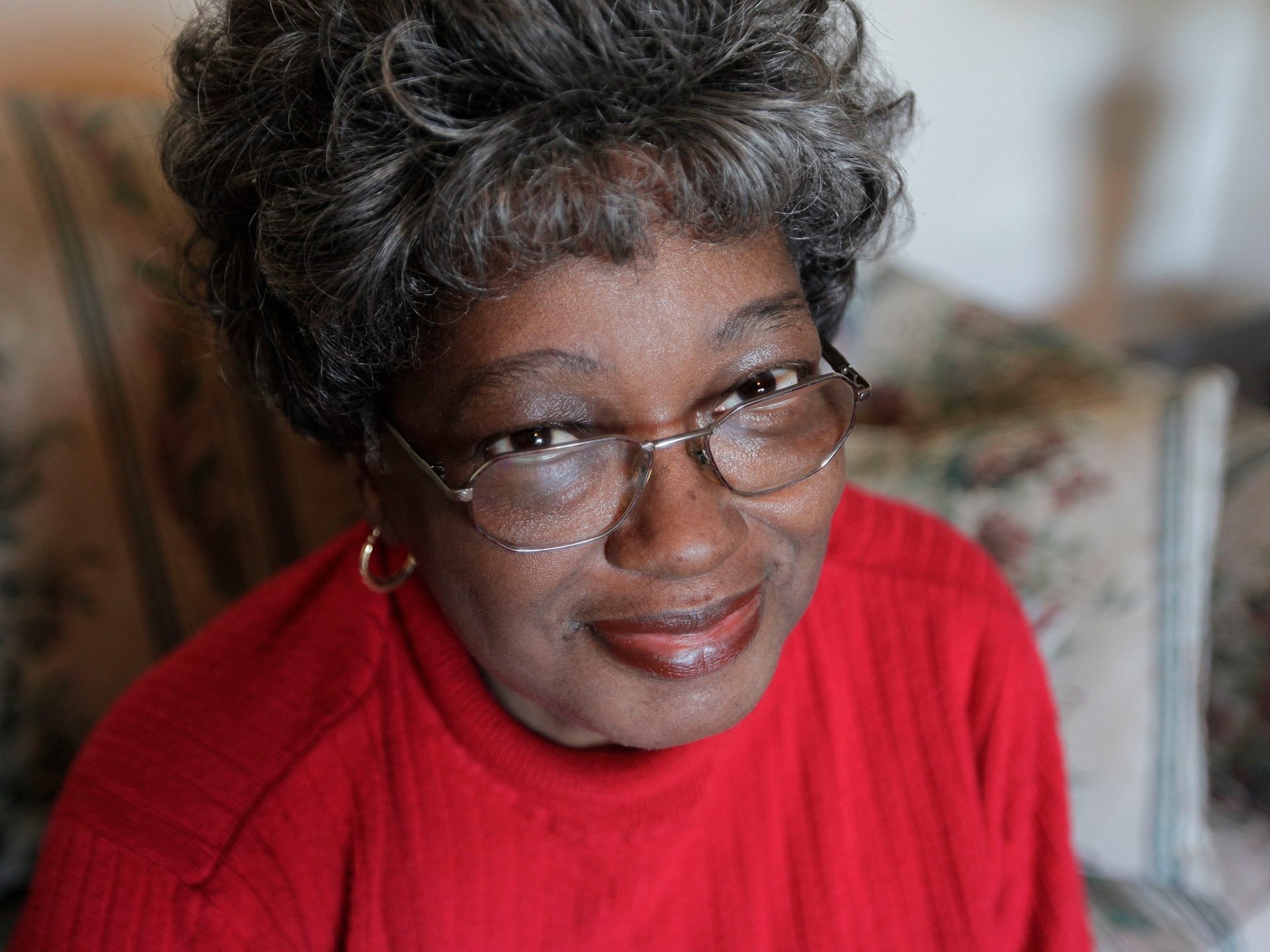
Colvin's arrest for refusing to give up her seat to a white person on a segregated bus helped fuel the modern civil rights movement in the United States.
Claudette Colvin, who helped spark the modern civil rights movement in the United States after refusing to give up her seat to a white woman on a segregated bus, has died aged 86.
Colvin was 15 when she was arrested on a bus in Montgomery, nine months before Rosa Parks gained international fame for also refusing to give up her seat.
Recommended stories
list of 3 itemsend of list
Colvin died of natural causes in Texas, according to a statement from her legacy foundation Tuesday.
Colvin was arrested on March 2, 1955, after a bus driver called the police to complain that two black girls were sitting near two white women, in violation of segregation laws. Colvin refused to move when asked, leading to his arrest.
“I stayed seated because the lady could have sat in the seat in front of me,” Colvin told reporters in Paris in April 2023.
“She refused because… a white person wasn't supposed to sit near a black person,” Colvin said.
“People ask me why I refused to move and I say the story had me glued to my seat,” he added.
Colvin was briefly jailed for disturbing the peace. The following year, she became one of four black plaintiffs who filed a lawsuit challenging segregated bus seating in Montgomery.
The case was successful and affected public transportation throughout the United States, including trains, airplanes, and taxis.
Colvin's arrest came at a time of growing frustration over how blacks were treated on the Montgomery bus system. Parks' arrest in December 1955 triggered the start of the year-long Montgomery Bus Boycott.
The boycott propelled the Rev. Martin Luther King Jr. into the national spotlight and is considered the beginning of the modern civil rights movement.
“She leaves behind a legacy of bravery that helped change the course of American history,” the Claudette Colvin Legacy Foundation said in a statement.
“Too often overlooked”
Montgomery Mayor Steven Reed said Colvin's action “helped lay the legal and moral foundation for the movement that would change America.”
Colvin's role in helping spark the modern civil rights movement is often overshadowed by Parks' actions, and Reed said her bravery was “too often overlooked.”
“Claudette Colvin's life reminds us that movements are built not only by those whose names are most familiar, but also by those whose courage emerges early, quietly and at great personal cost,” Reed added.
While Colvin's arrest helped end racial segregation in the United States, civil rights groups fear that President Donald Trump is seeking to reverse policies of social progress.
On Tuesday, the largest U.S. civil rights group said Trump was being misleading by claiming that civil rights harm white people.
In an interview last week published by The New York Times, Trump said he believed civil rights-era protections resulted in whites receiving unfair treatment.
The comments came after Trump was asked whether protections that began in the 1960s with the passage of the Civil Rights Act resulted in discrimination against white men, according to the newspaper.
“He accomplished some wonderful things, but he also hurt a lot of people: People who deserved to go to college or get a job couldn't get them,” Trump said.
“It was reverse discrimination,” he said.
In response, NAACP President Derrick Johnson said Trump was “lying through his teeth.”
“Trump does this all the time. He deliberately invents a false reality to lay the foundation for policies that further benefit the top one percent by privatizing government services and stripping resources from underserved communities,” Johnson said.