California and three other states on Wednesday sued the Trump administration over its plans to cut $600 million from programs designed to prevent and track the spread of HIV, including in the LGBTQ+ community, arguing that the move is based on “political animus and disagreements over unrelated issues, such as federal enforcement of immigration laws, political protests and clean energy.”
“This action is illegal,” lawyers from California, Colorado, Illinois and Minnesota said in a complaint filed in federal court in Illinois against President Trump and several of his officials.
Centers for Disease Control and Prevention funds were allocated to disease control programs in all four states, although California Atty. Gen. Rob Bonta's office said his state faces “the brunt” of the cuts.
That includes $130 million owed to California under a Public Health Infrastructure Block Grant, which the state and its local public health departments use to fund their public health workforce, monitor the spread of disease and respond to public health emergencies, Bonta's office said.
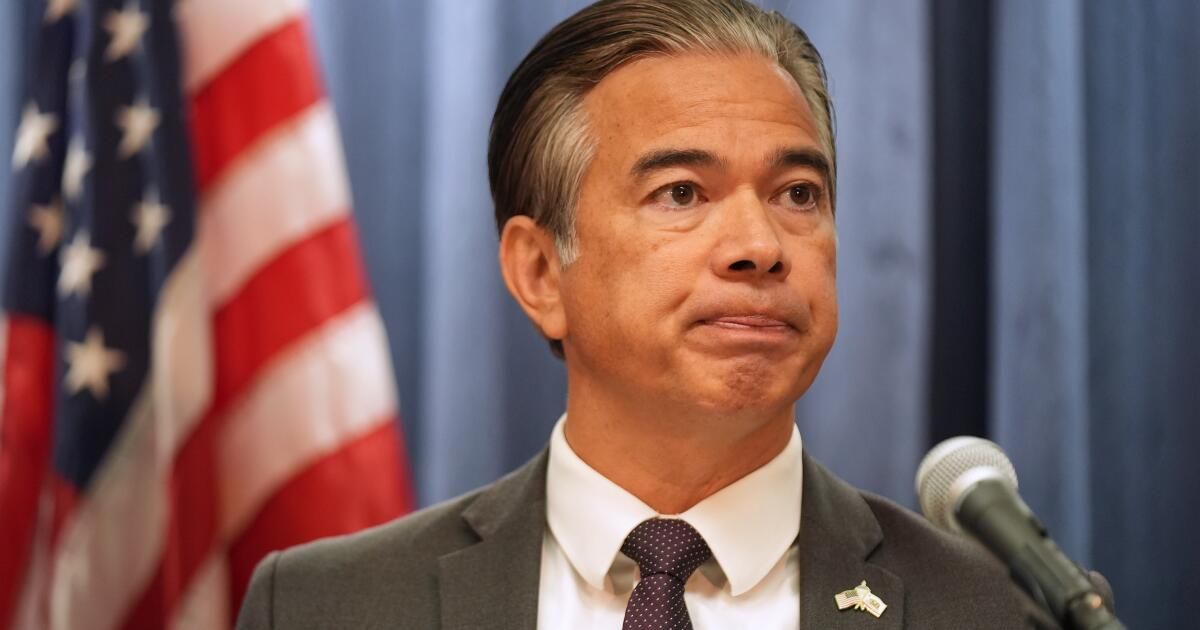
“President Trump… is using federal funds to force states and jurisdictions to follow his agenda. All of those efforts have failed before, and we hope that happens once again,” Bonta said in a statement.
Health and Human Services Secretary Robert F. Kennedy Jr., one of the named defendants, has repeatedly moved his agency away from evidence-backed HIV prevention and monitoring programs over the past year, and the Trump administration has widely attacked federal spending directed at blue states or allocated to initiatives geared toward the LGBTQ+ community.
The White House justified the latest cuts by stating that the programs “promote DEI and radical gender ideology,” but gave no further explanation. Health officials said the cuts went to programs that did not reflect the CDC's “priorities.”
Neither the White House nor Health and Human Services immediately responded to requests for comment.
The Los Angeles County Department of Public Health said the cuts would derail approximately $64.5 million for 14 county grant programs, resulting in “increased costs, more preventable illnesses and deaths,” the department said.
Those programs focus on responding to disasters, controlling outbreaks of diseases such as measles and flu, preventing the spread of diseases such as West Nile, dengue and hepatitis A, monitoring and treating HIV and other sexually transmitted diseases, combating chronic diseases such as diabetes and obesity, and supporting community health, the department said.
Those cuts would also include about $1.1 million for the department's National HIV Behavioral Surveillance Project, which focuses on detecting emerging HIV trends and preventing outbreaks.
Dr. Paul Simon, an epidemiologist at the UCLA Fielding School and former scientific director of the county public health department, said cutting the program was a “dangerous” and “shortsighted” move that would leave public health officials in the dark about what is happening with the disease on the ground.
Significant cuts are also planned for the city of Long Beach, UCLA and nine community health providers that provide HIV prevention services, including $383,000 for the Los Angeles LGBT Center's community-based HIV prevention programs, local officials said.
Top California Democrats criticized the cuts. Sen. Alex Padilla (D-Calif.) said the measure was an illegal attempt by Trump to punish Democratic states that “do not submit to his extremist agenda.”
“His message to the 1.2 million Americans living with HIV is clear: their lives are not a priority, but political retribution is,” Padilla said in a statement.
The states argue in the lawsuit that the administration's decision “singles jurisdictions for disapproval based not on any rational purpose related to the objectives of any program, but rather on partisan animus.”
The lawsuit asked the court to declare the cuts illegal and prohibit the administration from implementing them or “engaging in future retaliatory conduct with respect to federal funding or other participation in federal programs” based on states exercising their sovereign authority in unrelated matters.