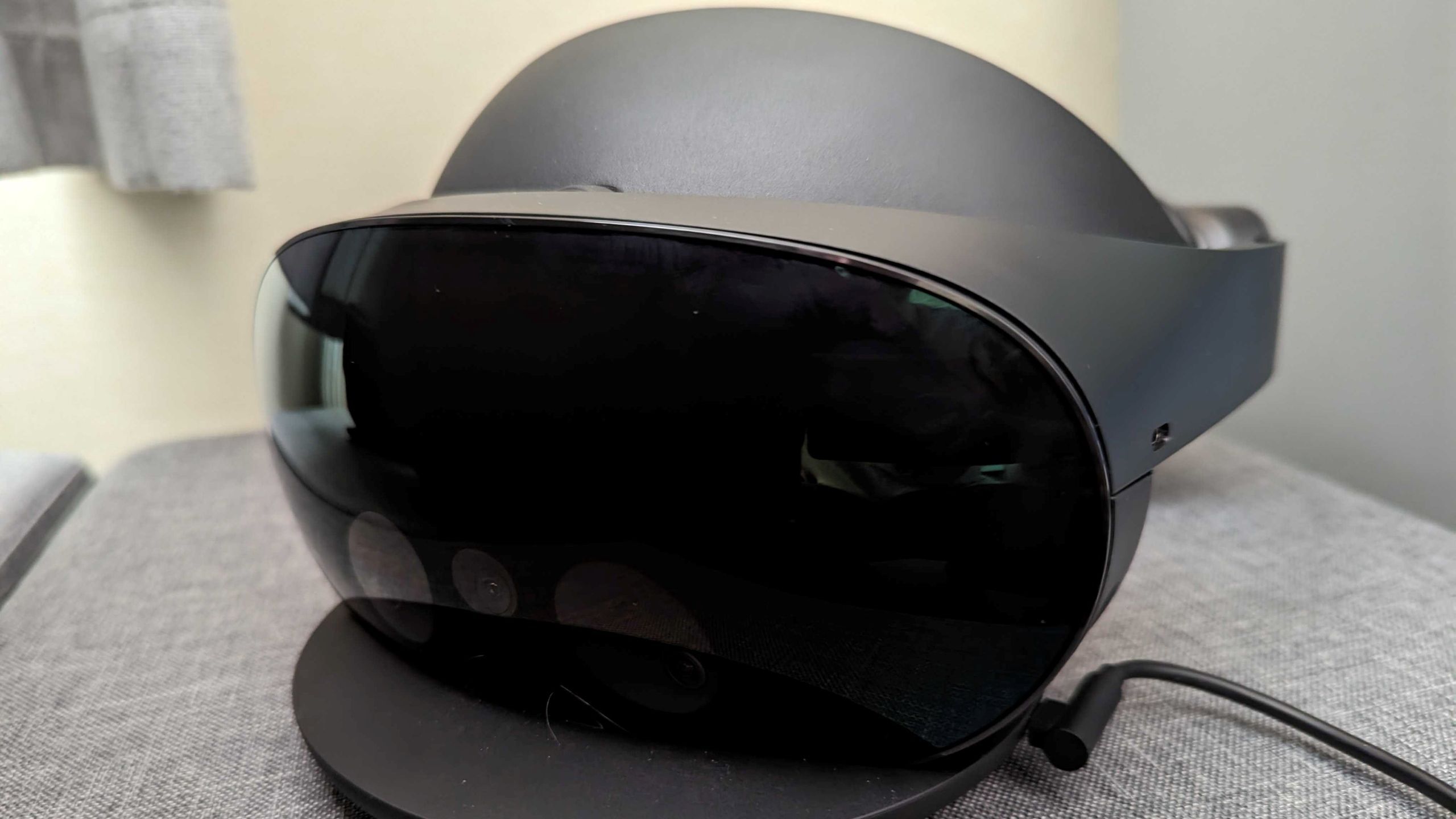
It was promised as a new era for businesses. Virtual reality, augmented reality, mixed reality – whatever form it took, this was going to be a game-changer for the 21st century. No more staring at screens or using the mouse. That is an old thought, from the 20th century.
This new reality would see the advent of true hands-free computing and unparalleled remote experiences, wherever professionals are located in the world. From prototyping to healthcare diagnostics, it heralded a new era. And, like those trapped in CasablancaWe hope. And he waited. And he waited.
When Facebook acquired Oculus in 2014, it seemed as if the social giant was looking to conquer new worlds to continue growing, even if it had to invent them. A decade later, it turned out to be Meta's equivalent of Google's purchase of Android.
While the company never characterized the Quest as a video game console, and neither Meta nor the major console makers referred to the other as significant competition, Meta's developer events invariably highlighted new games as the leading third-party content on the headset.
A vision larger than your field of vision.
There are several reasons for the lack of acceptance in the professional (and indeed gaming) world.
It turned out that those big promises were all fog. As tangible and as real as dreams. That over-promise of capabilities inevitably led to a backlash from users when it was discovered that they could not effectively deliver what businesses needed.
Features like X-ray vision simply didn't exist. And what existed seemed as limited as the field of view offered by many devices. Software compatibility remained an ongoing problem: the VR/AR software itself was often unreliable and unresponsive. Integrating that with existing IT architecture was time-consuming, expensive, and nearly impossible to scale.
There were issues with the comfort of the headphones during extended use: eight hours of a work day wearing one was almost impossible, assuming motion sickness didn't hit you first.
Then there was the cost. Developing and manufacturing headsets like HoloLens was a big task. For the consumers who bought them, they were absolutely prohibitive.
This has a major knock-on effect across the entire VR/AR market, like gaming.
For example, Quest unit sales have represented a small fraction of smartphone sales, making it difficult for developers to generate revenue from free games (at least for exclusive titles). Even Microsoft's Xbox Series
And while the economics of Meta's long-subsidized Quest business include epic losses, it also cleared the field, relegating nearly all other players to the more professional space.
For example, the latest HTC Vive launched in early 2023 and the lowest-cost option in the current lineup costs around $1,000.

What's next then?
With companies like Meta and
That said, Google can offer a silver lining.
Because it licenses Android
At the end of last year, TechRadar Editor-at-large Lance Ulanoff tested a pair of Android XR smart glasses prototypes. In his article he said: “I think we are almost done with our flirtations with overly expensive episodic use immersive devices. The time has come for AI-powered AR glasses.”
Of course, Google hasn't had much success with Android in categories beyond smartphones, and PC vendors including Acer and HP were hurt by Microsoft's Windows Mixed Reality headset initiative.
But if brands like Dell, HP, Lenovo, Acer, and Asus can put professional-grade business tools and enhanced AI to work, there's the potential to sustainably match or surpass what Meta spent a lot to create and is now moving quickly to abandon.
We have tested the best virtual reality headset and the best smart glasses.