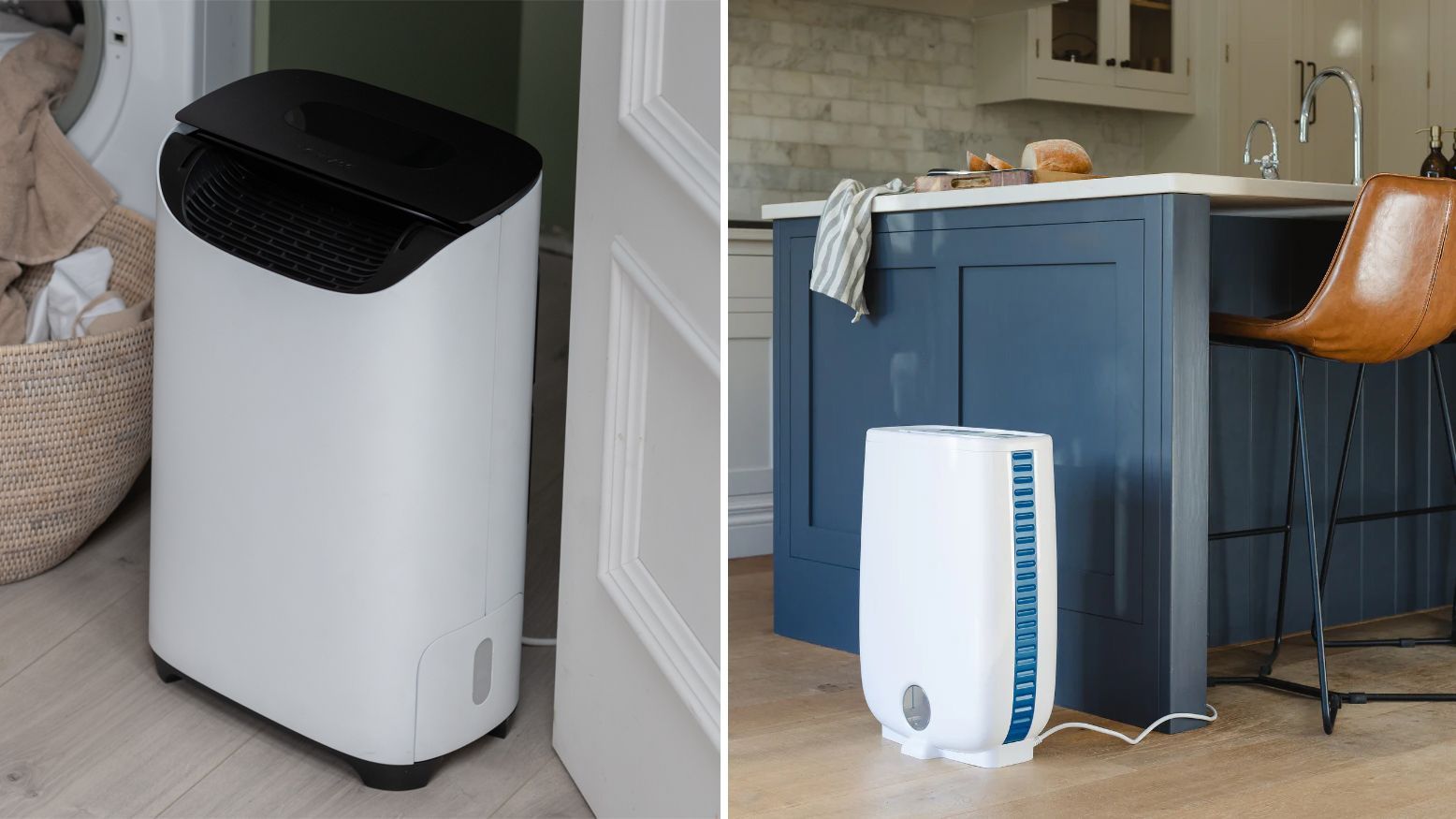
Looking for a dehumidifier to help with humidity or condensation in your home? There are two main types to choose from: a compressor dehumidifier and a desiccant dehumidifier.
They look alike and do the same job: removing moisture from the air. However, they work in different ways and as a result will suit different people and situations. Here's a quick rundown of what you need to know, with insight from Chris Michael, co-founder and chief product officer of air care brand, Meaco.
What is a compressor dehumidifier and how does it work?
In a compressor dehumidifier, air enters the machine and through a cold metal surface. Here the moisture in the air condenses and turns into water which can then drip into the collecting container. Once the excess water has been removed, the air is passed through a warm surface to return to room temperature. Then return to the room through the vents.
At the point where air first enters the machine, there may be a filter. This may be removable. It allows the dehumidifier to function as an air purifier, but it will make it a little less efficient to use, because the machine will have to work harder to get the air out.
What is a desiccant dehumidifier and how does it work?
In a desiccant dehumidifier, air enters the machine. It passes through condensate tubes and comes into contact with desiccant material, where it is absorbed. Chris explains in more detail: “The desiccant rotates continuously on a wheel. The wheel becomes wet with moisture and needs to be dried to be useful again.
“At this point, the wheel is met by a second, smaller fan and a heater. Between the two, they dry the wheel and move hot, moist air into the condensate tubes. These tubes get quite hot, so the room air passing through them from the start of the process is enough to create condensation in the tubes, and for it to drip into the bucket to empty it.” The heat created through this process returns to the room.
As with the compressor dehumidifier, a filter may be added when air first enters the machine.
Desiccant vs Compressor Dehumidifier – Key Differences
#1. A desiccant dehumidifier generates heat
Both types of dehumidifiers will expel the now dry air into the room. In a compressor dehumidifier, that air will be about room temperature, but in a desiccant dehumidifier, it will be about 18°F / 10°C warmer.
“This is a nice addition of heat to the space, but not enough to call it a room heater,” explains Chris. It means that the desiccant type of dryer is especially good at helping dry clothes quickly.

#2. Large compressor dehumidifiers are cheaper to run
Chris says that, in general, compressor dehumidifiers are more cost-effective to operate. However, there are big caveats: in cold conditions (below 59°F / 15°C), they become noticeably less efficient. More on that in my next point.
The size will also influence. Choosing the right size dehumidifier for your needs is key to cost-effective operation.
#3. Compressor dehumidifiers do not work well in cold weather
“With compressor dehumidifiers, the colder the air, the less water they collect,” explains Chris. “That's where the desiccant comes in. They don't care about the ambient temperature, their performance remains the same and they are more than happy below 50°F/10°C.” So if you have a cold garage, caravan, boat, greenhouse or just want something for an unheated room, a desiccant will probably be your best option.
Follow TechRadar on Google News and add us as a preferred source to receive news, reviews and opinions from our experts in your feeds. Be sure to click the Follow button!
And of course, you can also follow TechRadar on YouTube and tiktok for news, reviews, unboxings in video form and receive regular updates from us on WhatsApp also.