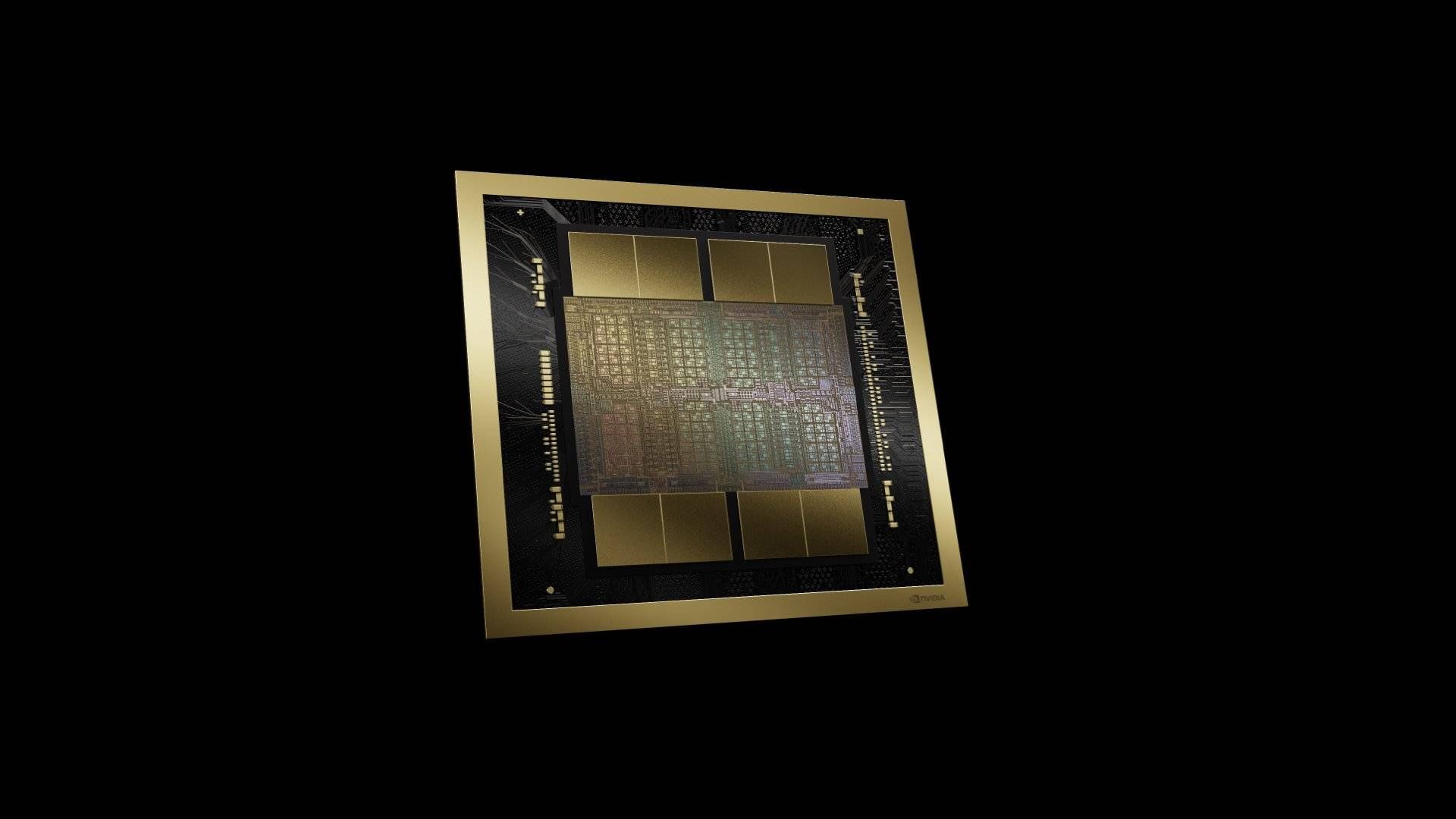
- Chinese photonic chips reportedly outperform conventional GPUs in narrow, specialized generative AI tasks
- ACCEL combines photonic and analog electronic components to achieve high computational performance
- LightGen uses more than two million photonic neurons for all-optical generative AI processing
Chinese research institutions have described new AI photonic chips that reportedly outperform conventional GPUs by a very wide margin under specific conditions.
Institutions and researchers say these chips show dramatic improvements in speed and power efficiency when running narrowly defined generative workloads.
China's light-based AI chips reported to deliver 100x faster speed than Nvidia GPUs in some tasks, particularly in areas such as image synthesis, video generation, and vision-related inference.
Extreme speed claims from optical computing research
These claims are framed in laboratory evaluations rather than commercial deployment scenarios, but the performance gap is closely related to fundamental architectural differences.
Nvidia GPUs, including widely used accelerators like the A100, rely on electronic circuits where electrons move through transistors to execute programmable instructions.
This approach allows flexibility in many workloads, but results in high power consumption, significant heat production, and a reliance on advanced manufacturing nodes.
Instead, Chinese photonic chips rely on light-based signal processing, where photons replace electrons as the computing medium, enabling massive parallelism through optical interference rather than sequential digital execution.
One of the reported chips, ACCEL, was developed at Tsinghua University as a hybrid system that combines photonic components with analog electronic circuits.
It reportedly works using older semiconductor manufacturing processes while achieving extremely high theoretical performance figures measured in petaflops.
These calculations are limited to predefined analog operations rather than general-purpose code execution.
Therefore, ACCEL is designed for tasks such as image recognition and vision processing.
These workloads are based on fixed mathematical transformations and tightly controlled memory access patterns.
A second system, LightGen, was developed through collaboration between Shanghai Jiao Tong University and Tsinghua University.
LightGen is described as an all-optical computing chip containing more than two million photonic neurons.
Research articles claim that it can perform generative tasks such as image generation, denoising, three-dimensional reconstruction, and style transfer.
Experimental results reportedly show performance improvements exceeding two orders of magnitude compared to leading electronic accelerators.
These measurements are based on time and energy consumption under restricted conditions.
These systems are not described as replacements for GPUs in general computing, training large models, or running arbitrary software.
They function as specialized analog machines designed for narrow categories of computing.
Reported claims suggest that optical computing can deliver exceptional gains when workloads are carefully tailored to the hardware.
The gap between lab demonstrations and usable AI tools remains large, with task-specific versus general-purpose capability critical to evaluating these claims.
Via Interesting Engineering | China Daily | EurekAlert
Follow TechRadar on Google News and add us as a preferred source to receive news, reviews and opinions from our experts in your feeds. Be sure to click the Follow button!
And of course you can also follow TechRadar on TikTok for news, reviews, unboxings in video form and receive regular updates from us on WhatsApp also.