Published
December 26, 2025
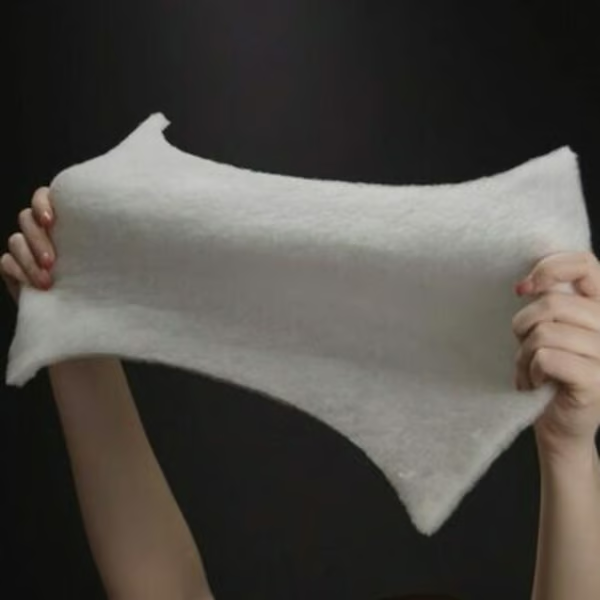
Thermore, a manufacturer of thermal insulation for clothing, is entering the fashion industry. “We started in the technical segment. Synthetic insulation was initially used in ski suits. As the style evolved, fashion adopted technical materials and today it represents the majority of our business,” CEO Patrizio Lorenzo Siniscalchi tells FashionNetwork.com.
The company, founded in Milan by his father, Lucio, in 1972, has become the industry's leading ingredient brand and today supplies down-free insulation to a wide range of fashion and luxury brands. Under the leadership of Siniscalchi Jr., it has strengthened its relationship with the increasingly demanding end consumer. “When we develop a new insulating product, we do not think about our direct customer, but about the end user,” says the general director.
The latest collaboration is with Jaked, featuring Thermore insulation in the brand's new outerwear collection for Fall/Winter 2025. Designed for racing, fitness and sportswear, Impact Evo jackets combine style and functionality, taking advantage of Ecodown Fibers Ocean technology, which is bluesign and OEKO-TEX certified.
Currently, Thermore generates revenues of 13 million euros, with the United States and Europe being its main markets. “Approximately 10% of sales come from Asia, mainly Korea and Japan. We have offices in New York and Tokyo. About 90% of production occurs in the Far East, because insulating clothing is manufactured there,” continues Siniscalchi.
Regarding the pressing issue of the impact of fast fashion, “there needs to be a change. We must be more aware of our consumption,” says the CEO. “We do not use down, but recycled fibers from bottles thrown into the ocean, which helps prevent the formation of huge islands of plastic in the ocean. We have been investing in this for 40 years. We launched our first recycled product in the 80s. At first it was difficult to find raw materials of the same quality as virgin polyester. Today, 98% of our insulation is made from recycled material. The chips used to make PET bottles are better than those used for fibers,” Siniscalchi concludes.
This article is a machine translation. Click here to read the original article.
Copyright © 2025 FashionNetwork.com All rights reserved.