Gross profit amounted to SEK 121,821 million and gross margin remained unchanged at 53.4 percent. Selling and administrative expenses decreased 4 percent to 103.292 million Swedish krona (~$11.7 billion).
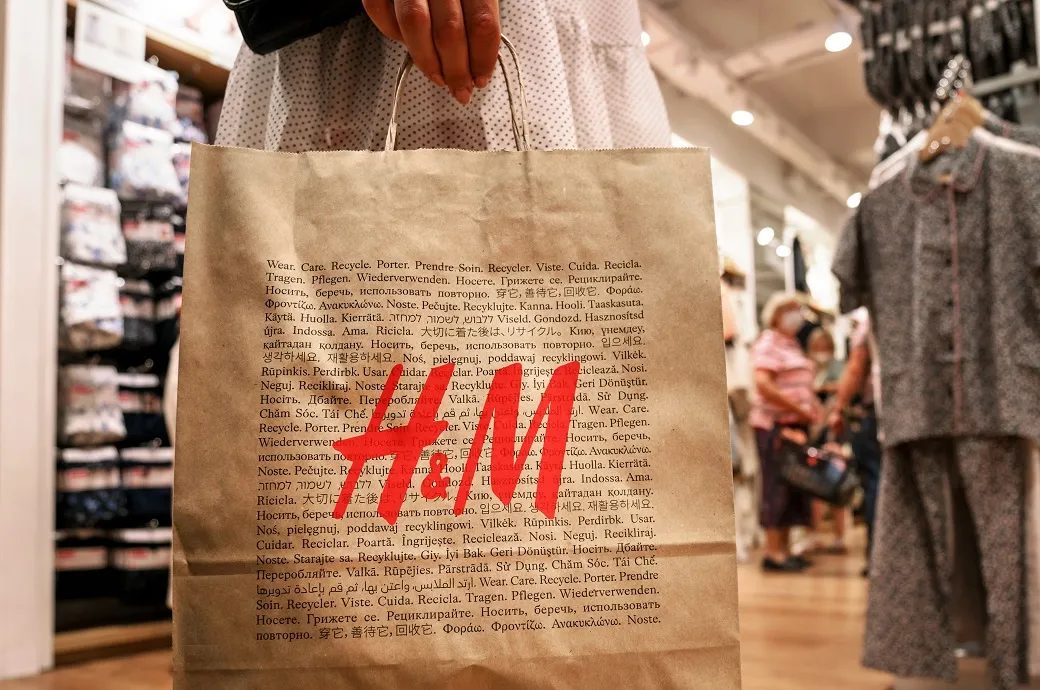
H&M has improved its profitability in FY25 despite currency headwinds, with local currency sales rising 2 percent and operating margin rising to 8.1 percent. Cost control, inventory optimization and strong European demand supported earnings. Fourth quarter margins strengthened markedly, while store rationalization and progress on sustainability remained key strategic pillars.
Operating profit increased to SEK 18,395 million from SEK 17,306 million, raising the operating margin to 8.1 percent from 7.4 percent. Profit after tax amounted to SEK 12,085 million, corresponding to earnings per share of SEK 7.58. Cash flow from operating activities after changes in working capital amounted to SEK 31.12 billion, H&M said in a press release.
Regionally, Western Europe remained the largest market at SEK 79.195 million, with flat sales in SEK but growth of 2 percent in local currencies, indicating stable core demand. Eastern and Southern Europe recorded the strongest underlying growth, with local currency sales rising 4 percent and 5 percent respectively for the full fiscal year. The Nordic countries recorded a 1 percent drop in their local currencies, reflecting a more mature domestic market. North and South America experienced weaker demand, with sales falling 5 percent in SEK and 1 percent in local currencies, while Asia, Oceania and Africa declined 7 percent in SEK and 1 percent in local currencies, impacted by weaker markets and currency effects.
The store network continued to be optimized, with total stores falling from 4,253 to 4,101, a net reduction of 152 stores year-on-year. The largest closures were in Asia, Oceania and Africa, followed by Western Europe, while North and South America were the only regions to add stores.
In Q4FY25, sales rose 2 percent in local currencies, even as the store base was about 4 percent smaller year-on-year. In Swedish krona terms, fourth quarter net sales decreased to SEK 59,221 million from SEK 62,193 million, reflecting a negative currency translation impact of around 7 percentage points due to the strength of the krona.
Gross margin improved to 55.9 percent from 54.6 percent, while operating profit increased 38 percent to SEK 6,364 million, raising the operating margin to 10.7 percent. Profit after tax rose to SEK 4,332 million, or SEK 2.72 per share. Inventory levels decreased 12 percent year-on-year to SEK 35,427 million, indicating greater stock efficiency.
On sustainability, H&M said its Scope 3 greenhouse gas emissions fell by around 30 percent in 2025 compared to the 2019 baseline, keeping the group on track to meet its 56 percent reduction target by 2030. The company was included in CDP's A-list for climate and water during the year.
Looking ahead, H&M expects sales between December 1, 2025 and January 31, 2026 to decline 2 percent in local currencies, citing strong Black Friday sales, weaker demand in December and a negative calendar effect linked to the timing of the Chinese New Year. Capital expenditure for 2026 is planned between SEK 9 billion and SEK 10 billion, focused on store improvements, technological infrastructure and the gradual rollout of new logistics solutions in Europe.
“Our work in 2025 has gradually contributed to positive development towards all of our long-term goals. The sales trend is positive throughout the year and profits strengthened in the second half,” he said. Daniel Erver, CEO of H&M.
Fiber2Fashion News Desk (SG)