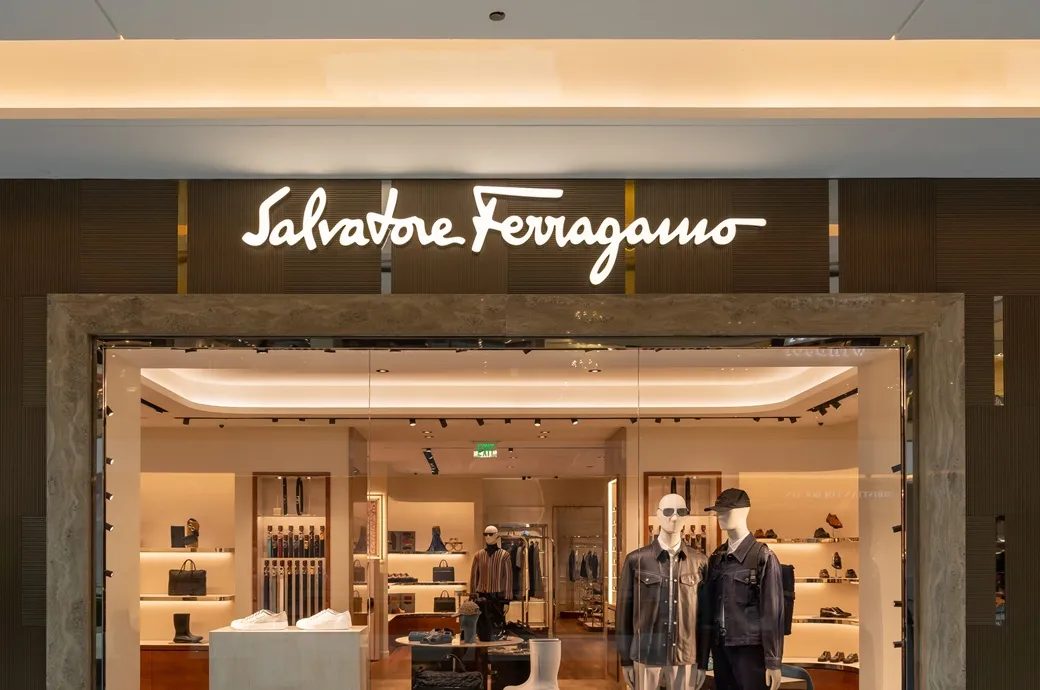
The company's direct-to-consumer (DTC) channel, which includes retail stores and e-commerce, posted 0.4 percent growth at constant exchange rates, while the wholesale business remained weak, falling sharply as the brand pursued a more selective distribution strategy aligned with its repositioning.
Salvatore Ferragamo has reported revenue of €977 million (~$1.13 billion) in 2025, down 5.7 percent year-on-year as currency pressures and weaker wholesale weighed on performance. However, the DTC channel showed resilience, supporting better results in the second and fourth quarters. The brand focuses on selective wholesale, leather goods and digital engagement to drive recovery in 2026.
Gross profit decreased by 10.1 percent to 665 million euros, and gross margin decreased to 68.1 percent from 71.5 percent a year earlier. The company said the decline was primarily due to negative currency impacts and the liquidation of older collections.
Ferragamo posted a gross operating profit (EBITDA) of 166 million euros, down 23 percent from 215 million euros in 2024. The EBITDA margin contracted to 17 percent, compared to 20.8 percent a year earlier, Salvatore Ferragamo said in a press release.
Adjusted operating profit (EBIT) reached €24 million, compared to €35 million in 2024. When impairment charges are included, operating profit turned negative by €21 million, although this represented an improvement from a loss of €49 million recorded in 2024.
On balance, adjusted net profit stood at a loss of €3 million, compared to a profit of €16 million in 2024. Including impairment charges, the net loss narrowed to €49 million, compared to a loss of €68 million the previous year.
Despite weaker profitability, the group maintained a strong balance sheet. The net financial position remained positive at €144 million at the end of December 2025, compared to €119 million at the end of June 2025.
In the second half (2H) of 2025, Ferragamo's revenue reached €503 million, down 1.8 percent from €512 million in the second half of 2024, but only down 0.4 percent at constant exchange rates. The improvement was largely due to the DTC channel, which grew 5.5 percent at constant exchange rates compared to the same period last year. Gross profit increased to 344 million euros, compared to 321 million euros in the first half of the year, and gross margin improved to 68.5 percent from 67.7 percent in the first half of 2025.
EBITDA for the second half of 2025 amounted to €93 million, compared to €73 million in the first half of 2025. The EBITDA margin improved to 18.5 percent, compared to 15.3 percent in the first half.
The change was particularly visible at the operational level. Adjusted EBIT reached €27 million in the second half of 2025, reversing a loss of €3 million in the first half of 2025. Similarly, adjusted net profit returned to €13 million, compared to a loss of €16 million in the first half.
Meanwhile, in the fourth quarter (Q4) of 2025, Ferragamo reported consolidated revenue of €282 million, representing a year-on-year decline of 3.2 percent at current exchange rates and 2 percent at constant exchange rates.
The DTC channel continued to outperform, posting 6.3 percent growth at constant exchange rates during the quarter and accelerating compared to the third quarter despite a tighter comparison base. The company said its online channel maintained strong momentum, supported by increased website traffic, order volumes and average transaction values on its official site.
In contrast, the wholesale business remained under pressure, with net sales falling 30.6 percent at constant exchange rates, reflecting Ferragamo's strategy to reduce distribution and focus on key retail partners.
In Europe, the Middle East and Africa (EMEA), DTC sales increased at a mid-single-digit pace in the fourth quarter, supported by higher conversion rates and average transaction values, although wholesale weakness led to an overall sales decline.
North America posted a modest increase in fourth-quarter sales at constant exchange rates, driven by strong retail performance despite weaker overall performance. Central and South America recorded the strongest regional growth, with wholesale and DTC sales increasing at mid-single-digit rates during the fourth quarter. In Asia Pacific, retail performance improved in Korea, China and Southeast Asia in the fourth quarter, although the wholesale contraction continued to weigh on overall results.
The company is particularly focusing on its core leather categories, including footwear icons such as Vara and Tramezza, as well as expanding leather goods collections such as the Hug and Soft bag lines. It is also investing in accessories and silk products to increase store traffic and cross-sell opportunities.
Ferragamo has simultaneously adopted a more selective wholesale strategy, prioritizing key accounts, while improving its retail network, digital platforms and data-driven customer engagement tools, including the use of artificial intelligence in marketing and customer management.
Looking ahead to 2026, the group said it intends to capitalize on early signs of improvement in its DTC business while continuing to strengthen the appeal and profitability of the brand amid the current geopolitical and macroeconomic uncertainty.
Fiber2Fashion News Desk (SG)